The Books on My Shelves
By Pooja Marwah
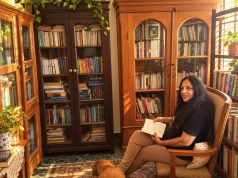
My bookshelf would probably give a librarian an identity crisis.
Sidney Sheldon sits comfortably next to Mitch Albom. Dan Brown rubs shoulders with James Clear. Nicholas Sparks is somewhere in there too, because I am perfectly capable of enjoying a good cry, usually followed by Atomic Habits telling me to get over myself and improve by one percent.
There is no alphabetical order. No separation between fiction and non-fiction and definitely no colour coordination. But there are memories, so I picked my favourites – the stories that defined me to be the woman I am today.
Somewhere between those spines is my life. I don’t remember exactly when I first read ‘Tuesdays with Morrie’, but I remember how it made me feel. Here was a dying professor talking to his former student about all the things we spend our lives complicating: love, family, work, ageing, death. Morrie had a way of reducing life to what mattered.
Perhaps that is why, as I have grown older, I have become increasingly interested in books that make me examine how I am actually living the life I keep planning.
Atomic Habits does that in an entirely different way.
James Clear reminds me that dreams eventually require you to get up the next morning and do the work. Again. And again. I am naturally attracted to big ideas, big plans and the occasional big leap taken before I have quite worked out where I am going to land.
This book reminds me that most big changes are built through very small, rather boring actions repeated consistently.
But I don’t always want my books to improve me. Sometimes I want them to kidnap me.
Enter Dan Brown. I remember ‘The Da Vinci Code’ as one of those glorious “just one more chapter” books. Suddenly you are solving codes, examining paintings, questioning history and behaving as though the fate of Western civilisation depends upon you staying awake until 2 a.m.
I loved the pace of it. And perhaps that love of sheer storytelling began much earlier with Sidney Sheldon.
There was a phase when I could devour Sidney Sheldon. ‘The Other Side of Midnight’ had everything: ambition, betrayal, revenge, desire and people making spectacularly bad decisions. Years later, when I became a writer myself, I understood what Sheldon had taught me without ever intending to.
Make me turn the page. That is it.
A book can be clever, lyrical and profound, but somewhere inside it I need to care desperately about what happens next. Sometimes, of course, I cared far too much.
I love to read stories of friendship, guilt, betrayal and redemption. So I read Nicholas Sparks. Happily. Unapologetically. ‘The Notebook’ gave me permission to surrender to emotion. Love, memory, loss and that particular ache some stories leave behind after you close them.
I think we sometimes become far too serious about reading. Every book doesn’t have to improve our productivity, teach us leadership or explain the meaning of life. Some are allowed to make us laugh, cry, fall in love with fictional people and lose an afternoon.
And love in books doesn’t always have to be quite so romantic.
Paulo Coelho’s ‘Eleven Minutes’ explores it from a far more complicated place. Through Maria’s journey, Coelho writes about love, desire, loneliness, intimacy and the search for connection.
Perhaps that is what I have always liked about Coelho. He takes emotions we think we understand and turns them around until we are forced to look at them differently. Eleven Minutes is uncomfortable in places, tender in others, and deeply human in its understanding that knowing another person often begins with knowing yourself.
And maybe that is what good fiction does. It allows us to inhabit lives very different from our own and still recognise something familiar inside them.
If Coelho made me think about adulthood and connection, some of the books I loved much earlier were about something else entirely: growing up.
‘Little Women’ was one of them.
Four sisters. Four personalities. Four different ideas about what a life should look like. And Jo, of course, wanting to write.
It is strange how we meet certain characters long before we understand why they might matter to us. A girl determined to tell stories meant one thing when I was younger.
It means something quite different today.
Especially because, somewhere along the way, there were two other girls growing up in my house.
My daughters.
Books started appearing that I hadn’t bought for myself. They were younger, brighter, different. And because I am incapable of leaving other people’s worlds alone, I started wandering into theirs.
That was how books like John Green’s ‘The Fault in Our Stars’ began to mean something to me. I discovered that young adult fiction wasn’t a diluted version of adult literature. Teenagers weren’t experiencing smaller emotions because they were younger. If anything, everything was enormous. Friendship was enormous. Love was enormous. Rejection was catastrophic. Being understood could feel like survival.
By then, I was no longer reading these books only as a reader.
I was reading them as a mother.
And that changes everything.
You read a teenager in a story and somewhere, inevitably, you see your own.
Perhaps that is why Harry Potter and the ‘Philosopher’s Stone’ belongs on this list too. Not simply because of Hogwarts, wizards or magic, but because of the magic I witnessed outside the book.
Children disappearing into reading.
There is something wonderful about seeing your child curled up on a couch, oblivious to everything because a fictional world has become more interesting than the real one.
Especially when you recognise the posture they learnt from you.
There were days in our house when all of us would be sitting in the same room, saying absolutely nothing to one another. Each holding a book. Each somewhere else entirely.
And somewhere in those years, something curious happened.
I began listening differently to the teenagers around me.
Their conversations. Their friendships. Their insecurities. Their phones. Their need for privacy. Their spectacular eye rolls. The closed bedroom doors. The arguments that began with “Mum, you don’t understand” and occasionally ended with me accepting that perhaps I didn’t.
I had spent years entering worlds created by other writers.
Now my children were giving me one.
And eventually that world became ‘Being an Indian Teenager’.
There is something surreal about seeing your own book sitting on a shelf that has held the people who taught you to love stories.
I used to think the nicest thing I could give my children was a love of reading. I didn’t realise that one day they would return the favour.
They brought me into their world of books, characters and teenage conversations. Somewhere between their shelves and mine, I found a story I wanted to tell too.
So when I look at my bookshelf today, I don’t see ten books I recommend.
I see different ages of myself.
The girl who discovered Jo March. The one who devoured Sidney Sheldon. The romantic who happily cried over Nicholas Sparks. The reader who stayed up too late with Dan Brown. The woman learning from Morrie what matters. The one still figuring out love and life with Coelho. The mother who watched her daughters disappear into books.
And eventually, the woman who sat down and wrote one. Maybe that is what a bookshelf really is.
An autobiography you never consciously wrote.
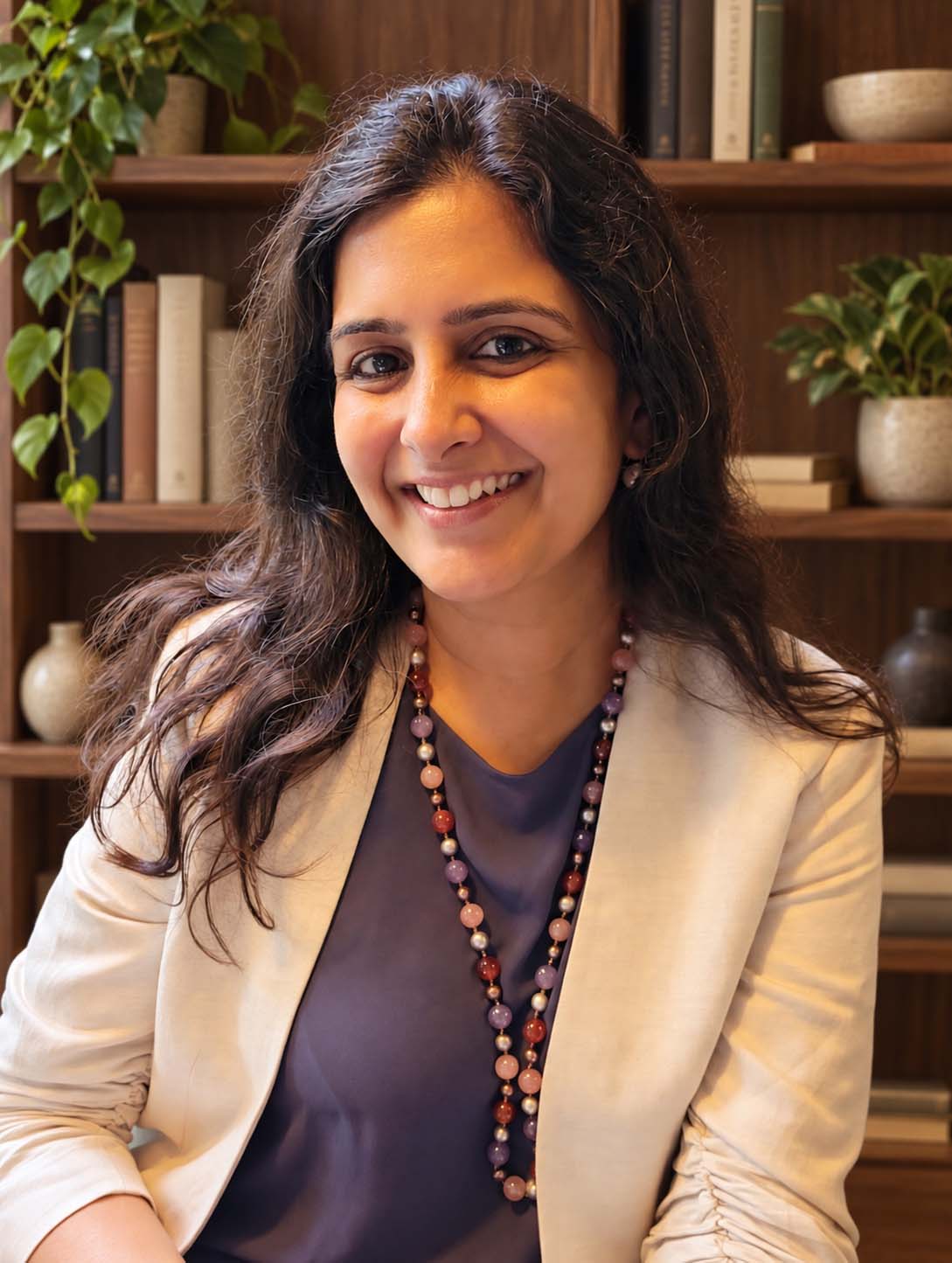
(Pooja Marwah is a celebrated YA author and content strategist to Global Leaders. She has been featured in Forbes, Business Standard, Femina, India Today, ANI and is a regular keynote speaker at corporate events.)