Garhwal Post Bureau
HARIDWAR, 7 Nov: A one-tusked wild elephant, estimated to be around 55 years old and well known for its frequent movement through human settlements and agricultural fields around Haridwar, has died in the Devpura Beat area of Haridwar Forest Division. The carcass was found in a forested area near the under-construction Ring Road, prompting an investigation by the Forest Department into the circumstances surrounding its death.
According to the forest officials, the elephant had been regularly moving around the Jagjeetpur area and adjoining human habitations over the past two weeks. The animal had repeatedly entered populated areas, at times breaching fencing and venturing close to Haridwar city. Videos of its movement near residential localities had also surfaced on social media. Given the risk of human-elephant conflict, the Forest Department’s elephant monitoring task force had placed the animal under continuous surveillance.
As part of an ongoing exercise to identify conflict-prone elephants for radio collaring, a special task force comprising officials of the Forest Department, scientists from the Wildlife Institute of India (WII), experts from WWF and experienced wildlife veterinarians had been monitoring the tusker’s movements. The team had already identified 18 elephants for tracking, with plans to fit radio collars on six of them.
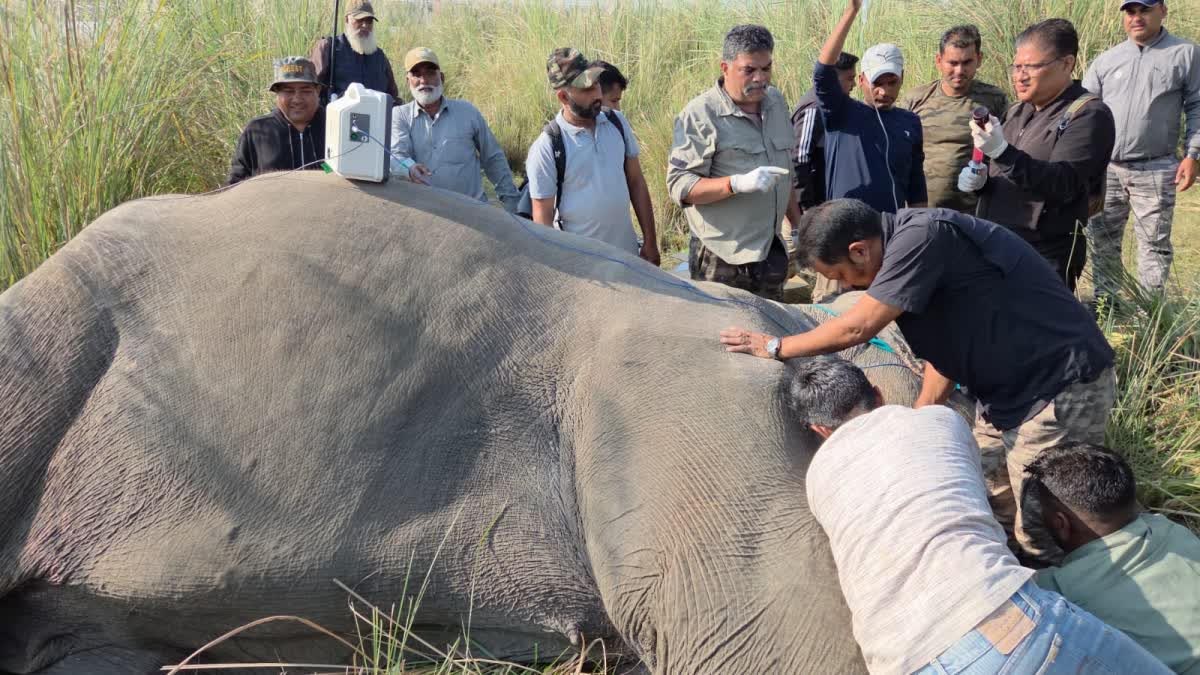
Forest officials said that after information emerged about the elephant’s deteriorating health, a joint team of wildlife experts and veterinarians examined the animal and, yesterday tranquilised it under expert supervision. The procedure was carried out as part of efforts to assess its condition and facilitate treatment. However, during the course of treatment, the elephant’s condition suddenly worsened.
Officials said the animal was immediately provided oxygen support, CPR, reversal medication and other emergency veterinary care. Despite extensive efforts by the veterinarians, wildlife specialists and forest personnel, the elephant could not be revived and was subsequently declared dead.
A post-mortem examination was later conducted by an independent panel of veterinary experts. Preliminary findings suggest that the elephant was suffering from a serious cardiac ailment. Forest officials said the animal appeared normal externally, making it difficult to detect any underlying illness through visual observation alone. However, the internal examination reportedly revealed significant heart-related abnormalities, including myocardial fibrosis and cardiomyopathy, which are suspected to have caused its death.
Divisional Forest Officer Swapnil Aniruddha said the elephant had been under constant monitoring and every possible effort was made by the Forest Department, WII, WWF and veterinary teams to save it after signs of illness were noticed. He said the preliminary assessment points towards a cardiac disorder as the probable cause of death, though the exact cause will be established only after the detailed post-mortem report is received.