VoW Interview

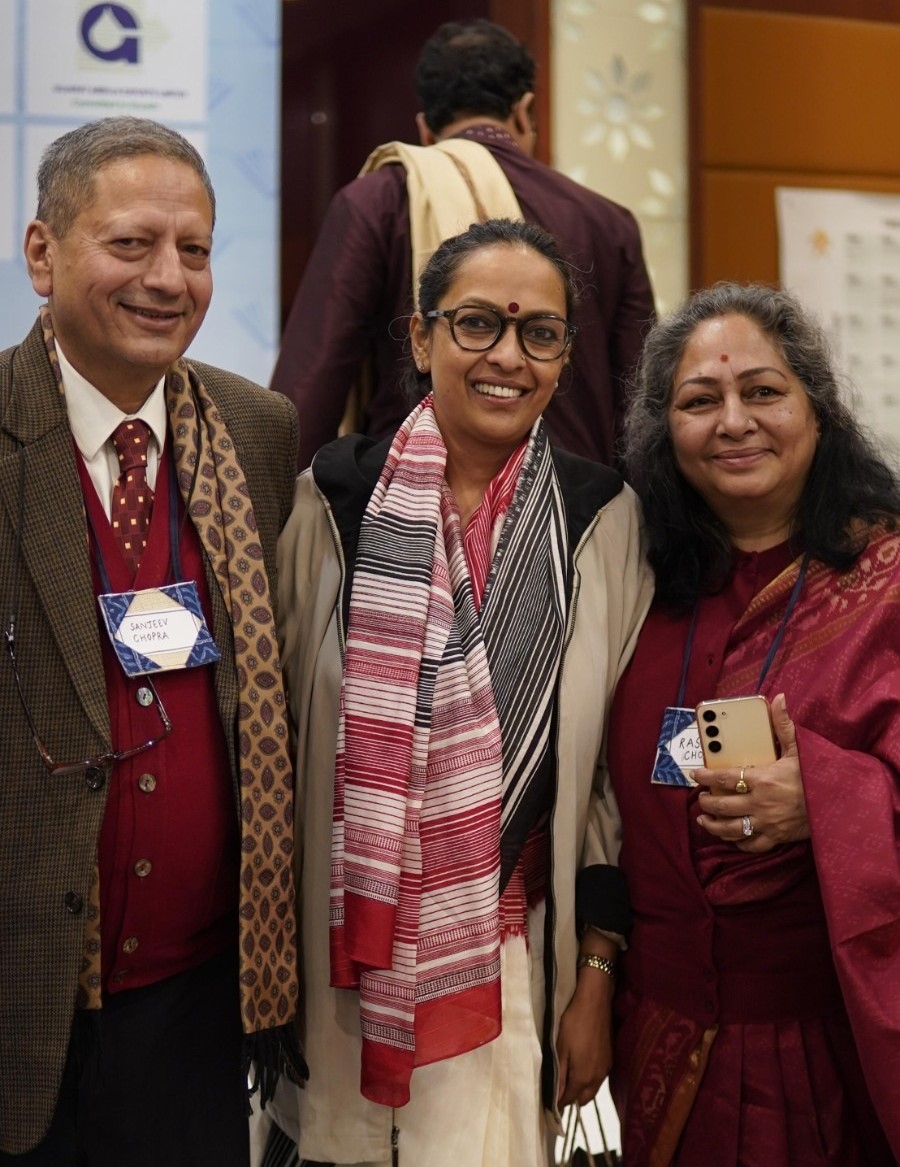
As Valley of Words (VoW) celebrates its tenth edition, Dr Tania Saili Bakshi, Programme Director of the festival, shares insights into the challenges, milestones and vision of its Festival Director, Dr Sanjeev Chopra.
Reaching the tenth edition is a significant milestone. What does this achievement mean to you?
Indeed, it is, but the journey has been so meaningful and interesting that it never felt that a milestone has been achieved. Milestones are significant when you have to arrive somewhere, but for us, VoW continues to evolve and redefine itself. The good thing is that we believe we are good at picking up the signals – from authors, sponsors, partner institutions and of course, our volunteers, and this often makes us wonder – where have the years gone by!
This achievement has made me realize that what matters most is team work, professionalism and humility. I also realize that however creative or individually bright an individual may be, on-ground delivery requires a strong back office which works quietly, and behind the scenes.
How has the festival evolved since its very first edition?
We have moved from quantity to quality – we have far fewer sessions than we had in the first two years. We have also moved away from ‘celebrity’ sessions – we do not invite a speaker because s/he is a big name: our authors are now selected on the basis of books that have been published in the last calendar year, which also means that the writing is contemporary. We have added translations from Bhashas of Bharat into Hindi and English, as well as the bi-lingual categories of writings for Young Adults and Children Literature.
Although music, sculpture, photography, philately, dance and theatre were there from the very first edition, we now have a structured – and if one could say, a competitive format for theatre and dance. For the last five years, we have been organizing the Iti Natya – a theatre competition among schools in Dehradun with support from Yi of CII, and Iti Nritya, a celebration of the classical dances in the country.
Most importantly, post Covid, we have our editions across the country – Indore, Pune, New Delhi, Sonipat, Jalandhar, Hariwdar, Bhopal, Chennai, Hyderabad, Kolkata and Auroville – with our partner institutions, besides institutions in Dehradun
What makes this tenth edition particularly special or different from the previous nine?
The theme of Dasham is what makes this festival unique – like the ones before it. For everywhere, we try to incorporate sessions based on the theme for that year. Dasham marks ten years, and we looked at the Dasham Granth of Guru Gobind Singh ji, the Das Avtar of Vishnu and the tenth constitutional amendment, among other themes. Last year was the silver jubilee year of the State: so, the focus was on Uttarakhand. And as the year before that was the eighth edition, we connected youth from the district with eight knowledge institutions of Dehradun, the host city of Valley of Words.
What has been the biggest challenge in sustaining a literary festival over the years?
Well, finance poses to be the biggest challenge. Over the last ten years, the cost of air travel and hotel rooms have shot up, and sponsorship amounts are stable. They are certainly not growing, and many more cultural endeavors are coming up. But having said this, as we have maintained transparency in our accounts, and on account of the eligibility to receive funds under CSR, and the relevant concessions under IT Act, we have been able to keep afloat.
How can literary festivals remain relevant and engaging for Gen Z?
I cannot talk about literary festivals in general, but I can share what we do at VoW. We keep the Gen Z in mind while curating the content, the structure and the panelists. Take for example, the issue of climate change. We have kept Gen Z panelists to discuss the issue. In terms of content that is relevant to Gen Z, we have a discussion on how the antiquated school system can keep pace with the challenges of the 21st century. Our two Thano(s) sessions are in fact a platform for an inter-generational dialogue. We also make a very conscious effort to reach out to school and college students to attend specific sessions which would help them in their academic discourse as well.
How do you ensure that the festival represents diverse voices and perspectives?
It happens without our having to make a conscious effort. You see, so much is being written in all the eight genres that constitute the VoW book Awards that almost every region, denomination and ideological dispensation gets reflected in the final choice, and certainly in our Shortlist, the details of which we carry in our annual magazine called VoWels. Thus, we have Huthuka Sumi from Nagaland and Rahul Pandita from J&K amongst our winners. The themes are also quite distinct. For example, Hindi Heartland by Ghazala Wahab touches the asymmetry of power between the Hindi speaking states viz a viz the rest of the country. Our friends in Good Houses is about the feeling of perpetual homelessness. Malini Awasthi’s Chandan Kiwar (Hindi) explores the social roots and stories behind classic folk compositions she has performed on stage for over four decades. Trimaya by Manisha Kulshreshtha is a tribute to matriarchy, and Dr Rohini’s Hindi translation of Samantha Harvey’s Booker-winning novel Orbital shows the fragility and beauty of Earth, humanity’s interconnectedness, and philosophical reflections on time, solitude, and environmental preservation. Nishtha Gautam’s Sita’s Veil is an English translation of the Hindi mythological novel Trin Dhari Ote (Sitayan) by poet and author Anamika. It offers a feminist retelling of Sita’s life from her own perspective as a scholarly single mother at Valmiki’s ashram. Huthuka Sumi’s Giants is a debut young adult novel which blends magic realism with Naga folktales and indigenous storytelling. And we have Samina Mishra’s Night Sky: a wonderful exploration of the stars and celestial objects in the sky. What greater diversity can you get?
What message would you like to give to everyone who has been part of this ten-year journey?
Thank You, Thank You and Thank You. I would only like to express my gratitude – first and foremost to Rashmi for ensuring that the festival rests on terra firma. I have a tendency to meander – and getting me back to a realistic time frame is even more important than the aspect of curation. The Board members of VoW bring in their own exceptional insights: Lt Gen Pannu in matters of military history and strategy, Dr Rajendra Dobhal in mountain eco systems and environment. Poet and broadcaster Lakshmi Shankar Bajpai helps us with our Hindi sessions, academic Amna Mirza curates the parliamentary debate and Kishore Menon brings in the element of design. Shalini Rao organizes the Iti Nritya and Shalini Dhanda heads our logistics – ensuring that every author and resource person reaches the festival venue well on time
Our secretariat is helmed by Programme Director Dr Tania Saili Bakshi, who combines patience with rigour and persistence and her two interns Shalini Butola and Sachin Chauhan are the lifeline of the festival. Shalini Butola also tracks my appointments, and ensures that I do not skip any meetings.
And last, but not the least, our volunteer team led by Mahika and Prateek ensures that all our events are managed to perfection.
Share some joyful and tense moments with us?
Several moments – and it would be unfair to single out any one moment- for as I said in reply to an earlier question, it is not about milestones, but about the journey. And there have been tensions as well- last-minute cancellations, flight delays, author tantrums, unexpected reduction in sponsorship amounts and rescheduling of volunteer exams. But we have always been able to overcome the challenges for the vision is clear, the mission is well defined and the team supports one another
If you could sum up these ten editions in one sentence, what would it be?
Celebrate the word in all its myriad manifestations!
See you all from 27th-29th November, 2026 at ITC Madhuban, Rajpur Road.