 By Roli S
The Festival of Holi is being celebrated this year in all its frenzy. Hoardings by the side of the roads, colourful advertisements in magazines and newspapers, iconic scenes and foot tapping beats of Bollywood movies celebrating ‘Fagun’ are playing on the television to bring back the lost charm and enthusiasm of the festival after the dry spell of the pandemic. Shops all around are doing brisk business. Parents are being seen buying water guns and colours for their children. Old and young are planning a ‘Holi’ bash and food; music and other games are being planned by the clubhouses, hotels, and housing societies. Holi has come back with a bang after the pandemic and, why not, after all it is a festival of love, springtime, hope and colour!
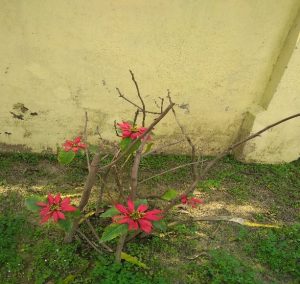
 Here I am sitting and thinking about that one ‘Palash’ tree. The tree that must have bloomed as brilliantly all through those years of the pandemic! The tree that is closely related to the festival of Holi and the tree that would be overlooked and would feel left out even amidst all this excitement surrounding Holi.
“Look yonder, on that hilltop and down the dale; it’s Holi announcing its arrival. The enthused ‘Palaash’ exploding with orange and pink blossoms seems to welcome Holi with a profusion fit to capture on canvas.”
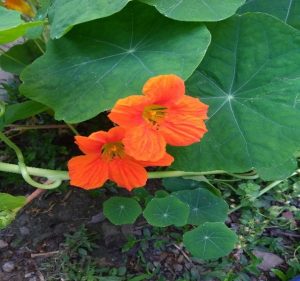
 When I was a little girl, ‘Holi’ was celebrated differently. My paternal grandma would soak ‘Tesu ke phool’, (which she would ask the house help to collect from the ‘Palash tree’, growing near our bungalow) in water, in a large metal vessel overnight and would make us bathe or play in the coloured water the next day. The fragrance of which is still fresh in my mind. I remember filling that colourful flowery, fragrant liquid in a water gun made of brass and going around squirting the orange hued water on people. I also remember sitting with my grandma in the garden and separating petals of Marigold flowers then, later, she would give me a handful of those petals along with turmeric to grind on the stone grinder called ‘sil-batta’. My little being would be delighted at this task as the messing around with yellow colour and water was so much fun. After all, ‘Holi’ is a festival of flowers and all the colours in nature!
 The history of the Holi festival is quite lengthy. Originally, during the Vedic age, people didn’t celebrate Holi the way it is today. Fun and frolic were added to the festivity later. In fact, the spirit of the original Holi festival was in the ritual of cleansing and purifying the atmosphere in order to ward off the impending danger of falling sick due to the change of season. Likewise, several Indian festivals have a strong association with trees and flowers due to various reasons but none as much as the festival of Holi. Sadly no one seems to appreciate the fact in the present times.
By the time I was a teenager, the celebration around the festival of Holi had changed. My grandma’s ‘Tesu’ and Marigold flowers’ Holi was replaced by the Holi that we played with dried coloured crystals developed in labs and commercially run factories. These chemically developed crystals when mixed with water would instantly change its colour and the colours were brighter, more lasting and made more impact! Nature had lost once more at the hands of humans! Thus, slowly but surely vanished all of grandma’s flowers and spices from the scene of Holi.
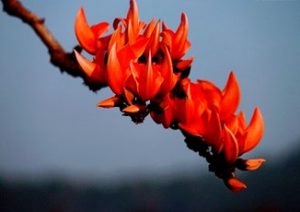 I wish to celebrate this Holi by remembering a few trees on the sidewalk and few flowers in the garden that my grandma used to cherish. Especially after the pandemic and the climate change threat knocking at Planet Earth’s door, I feel that it is time to welcome back my love for nature and all things natural! Naturally I want to celebrate the Palash tree that gives ‘tesu ke phool’ that is used to make natural Gulal. I remember climbing a Palash tree that would grow some distance away on the sidewalk from our bungalow. It had bent and crooked branches and it was very easy to climb. The festival of Holi is connected to the ‘flames’ due to the ‘Holika Dahan’ ritual but I always felt that ‘Flame of The Forest’, the name given to Palash, deserves to be more closely associated with the Festival of Holi. I always bemoan the fact that people, including me, forget the natural connection to festivals and ceremonies so easily. It’s the ‘ease and comfort’ of doing things that always takes priority.
Palash, tesu ke phool, flame of the forest, dhak, parasu is the tree that grows rapidly in the wild and across our cities staining our chrome and glass skylines an orange red. In Bengal, the flower lent its name to the village of ‘Palashi’ distinguished by the flowers that grew everywhere. As the site of the famous ‘Battle of Plassey,’ which opened up the subcontinent to the British, this was where the red colour of aggression and orange colours of life come together. I have the knowledge that acres of palash forest were cleared by the colonisers to meet their expansionist plans, but the plant thrived in its native soil, growing anew and existing over the ages. Like that one Palash Tree that grew close to my house and gave my grandma so much of happiness every Holi. I am sure she did not know about the historical importance of the tree, but she knew that ‘Tesu ke phool’ provide natural colours for the Holi festivals. My grandma also used to show me the leaf of the tree – the three leaflets bundled together according to her were Brahma, Vishnu and Shiva and hence the Palash tree is considered symbolic of the Hindu Trinity, she would tell me. Interesting!
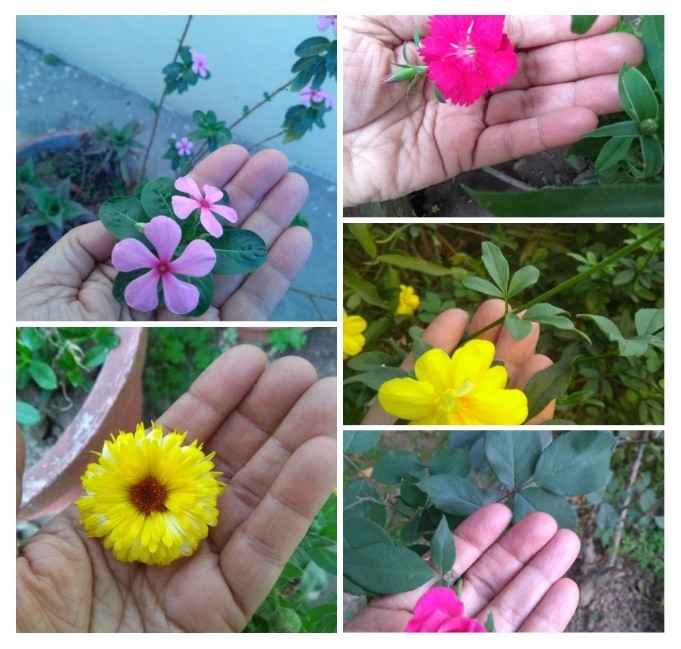
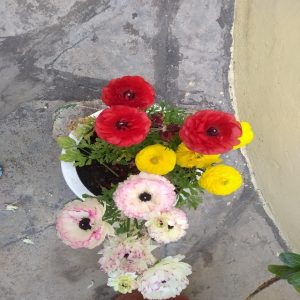
The Palash tree is the fire of spring that is turning nearly every other part of the country reddish orange at this time of the year. And it is no surprise that this seasonal bloom has a Holi connection. The tradition of playing Holi with the flowers as dry powder and liquid was firmly embedded in the celebrations in Mathura, Vrindavan, Bihar, Maharashtra and large swathes of Bengal. But my mind also keeps returning to many small gardens that are maintained in homes today. The colours and sentiments of Holi are visible there as well in each and every little flower and plant that blooms in this spring season. The energy, excitement, ambition of the red in hibiscus flower, the pride, positivity, freshness of the green in coriander and mint, the love, compassion, kindness of magenta in the beetroot, the golden of the sun in sunflower and dahlias, the brilliance, energy and peace of yellow in Marigold, chrysanthemums and turmeric, affection, faith and spiritual growth of Krishna’s favourite colour blue in Jacaranda or Neeli Gulmohar. There is hint of Holi in every garden that is in bloom.
Let the Holi and the different hues of flowers give the right message that we are not the same! We are made of different colours and we have different fragrances. We are all different! But the key to the success of the Holi festival is to look at these differences, respect these differences, learn from and about these differences, and grow in and celebrate with these differences. We are not the same. But that’s beautiful.
So, on this Holi, look up at the palash flowers above you, and look down to the roses and marigolds in your garden and revel in excitement of fiery red or compassion of yellow if you so choose, but gather them together and throw them at a friend, a lover or a foe as you so desire.
(Roli S is an Educator, Teacher Trainer, Author and School Reviewer based in Thane)