 By SANJEEV CHOPRA
The Mega Investors’ Summit scheduled for 8th and 9th December will have the Prime Minister’s presence at the inaugural session in the historic and picturesque campus of the FRI. In many ways, this marks two decades of planned industrial development in the state (then called Uttaranchal), which was able to implement the Concessional Industrial Package announced by Prime Minister Atal Bihari Vajpayee during his sojourn at Nainital. Of course, the CIP was announced not just for Uttaranchal, but also for HP, J&K and the North East, but Uttarakhand stole the march because of better institutional arrangements for the investors, as also the proactive role played by the then CM, ND Tiwari.
In fact, its a déjà vu moment – for the PM and CM Pushkar Singh Dhami are on the same page in the announcement for the investment summit. Yet, there are some subtle changes, nay improvements, over the investment paradigm of those days. The thrust was then on manufacturing – for that indeed was the flavour of the times. And in many ways, it was perhaps inevitable that the conventional wisdom of the economy’s transformation from agriculture to manufacturing to services prevailed. Therefore, the thrust was on industrial estates at Haridwar, Pant Nagar, Sitargunj, Kotdawr and SelaQui – and many more in the cooperative and private sectors. The USP of Uttarakhand was that, compared to our nearest competitor, we were able to give an organised platform to the potential investor.
The same energy and enthusiasm are now visible in CM Dhami’s investment missions – both, within the country and abroad. The important point to note is that each of the investment summits is now theme based, the selection of the participants is done with meticulous care, and the follow up action is assured. The focus on Ayush and Tourism is most welcome and, in fact, both these sectors feed into each other. The Ayush ecosystem comprises cultivation of medicinal plants, manufacturing of Ayush products – both for therapeutics and cosmetics, wellness centres and research and education. It is in this context that the Prime Minister’s policy announcement of the establishment of an All[1]India Institute of Ayurvedic Sciences becomes relevant. Universities like the Swami Rama Himalayan University are already working in this direction, but many more can come up. The Ayush Department of the state has been designated as the nodal agency for collaboration with all the related departments.
Needless to say, Tourism will always be one of key drivers of the economy of the state. A forward-looking policy which includes incentives for hot air ballooning, heli-skiing, hang gliding, helicopter and water plane services, caravans, houseboats, cruise boats besides, of course, the conventional adventure sports like rafting, rappling, canoeing will also attract the investors to provide their services.
All this is fine: the question is – is there anything else that still needs to be done? As a former Industries Secretary to this state as well as to West Bengal, and having worked for sometime in the skills sector, here are my four suggestions.
The first of these is a series of language learning and certification schools in the hill districts. Given the global demographic trends, there is going to be a major shortage of workers of all types – from nursing attendants to lab technicians to shop floor assistants, primary and secondary teachers to IT professionals not just in Korea and Japan, but also in Germany and the Nordic countries. As skill development centres in these districts already exist, these have to be made more friendly and compatible for the global market.
Second, there is need for a state human power export corporation in the PPP mode – with funds and skills coming from the private sector, but the government having a major stake in the Board of Directors to ensure that the forward and backward linkages are assured, and that contacts with our embassies is also on an even keel. This corporation should facilitate the placement of the skilled staff and also take care of travel logistics, health insurance and coverage of any unforeseen event.
The third major intervention can be support to consular offices of some important investment destinations. This will, of course, call for support from the MEA[1]but in the interim, the state can identify prominent industry leaders and advise them to take up the position of Honorary Consuls to countries with which Uttarakhand industries have technical and financial collaborations.
Fourth, we need to leverage our own NRIs and position them as Brand Ambassadors for the state. The newly created NRI Cell should connect with all those with a good net worth, those teaching in universities, especially B Schools, and those who are willing to return to their roots and invest in new and upcoming start-ups.
And last, but not the least, the state has to remember that the Investors’ Meet is not an end in itself: the real work will begin when the MoUs have to be converted into actionable projects, and that is the real test. But the presence of the PM will create the ideal stage for a take[1]off, and your columnist is confident that the officers of Uttarakhand will live up to the expectations.
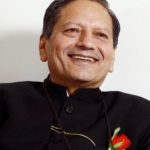
Sanjeev Chopra was from the West Bengal Cadre. He
was posted in Uttarakhand on deputation in 2002 –
the formative time of the state. As Industrial Secretary he
was responsible for Industrial Development in
Uttarakhand.
He was Additional Chief Secretary Industry,
Commerce and Enterprises in West Bengal as well.
Post retirement as Director, Lal Bahadur Shastri
National Academy of Administration, Mussoorie he is
now settled in Dehradun and Festival Director of Valley
of Words Literature Festival.
He is known for his oratorial skills, and as a writer
followed by everyone!
-Editor.