By ARUN PRATAP SINGH
DEHRADUN, 30 Nov: Very engaging discussions were held on the second day, ie Saturday, of the ongoing Crime Literature Festival of India (CLFI) being held at Hotel Hyatt Centric here. The festival has brought together a diverse lineup of authors, filmmakers, law enforcement officials, and journalists to explore the intersection of crime, justice, and literature and films.
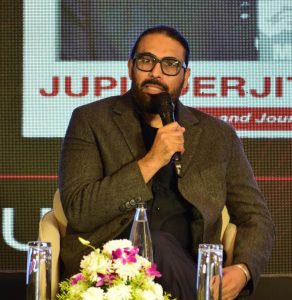
The day’s proceedings commenced with a riveting session, “Who Killed Sidhu Moosawala? The Lawrence Bishnoi Angle,” featuring Author Jupinderjit Singh in conversation with Siddhant Arora of The Book World. The speakers delved into the chilling details of the high-profile case, offering insights into organised crime in India.

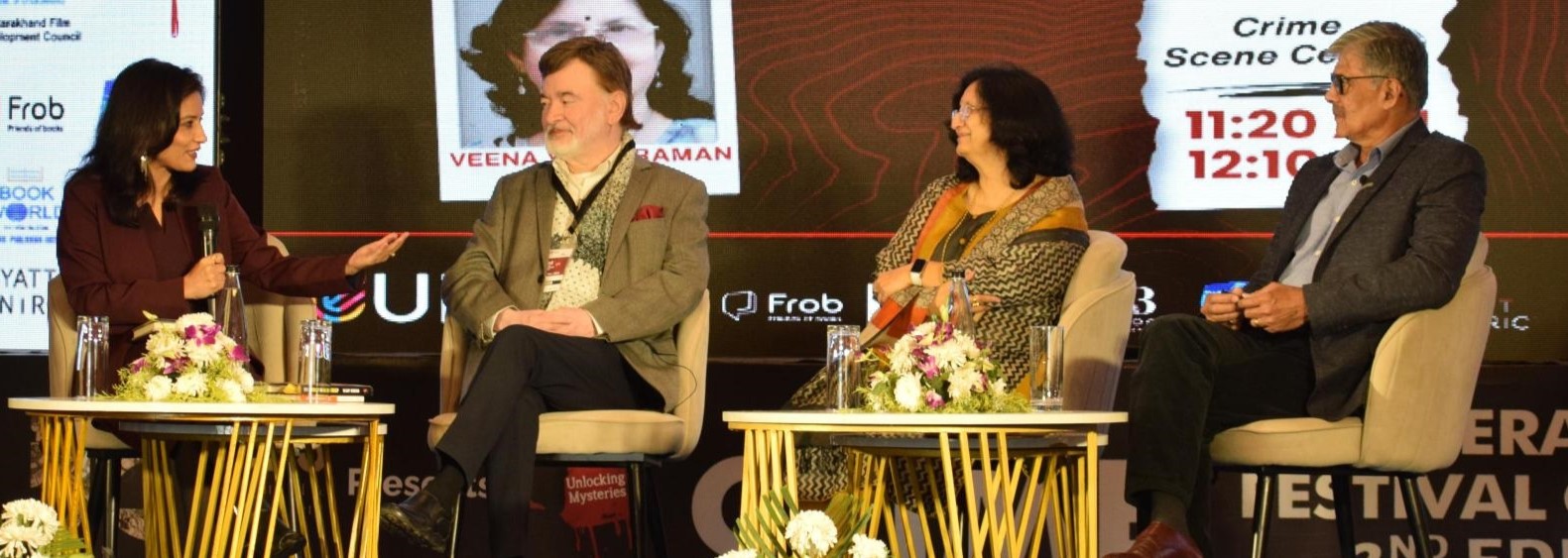
This was followed by “Remembering Vijay Raman: The Gentleman Cop Who Eliminated Paan Singh Tomar,” a tribute to the late officer’s remarkable legacy. Aloke Lal, K Vijay Kumar and Veena Vijay Raman participated in this session, which highlighted the human heart behind the police lapels.
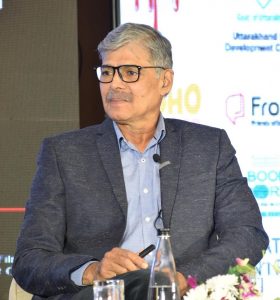
A very engaging session was held on the book, “Crime, Grime and Gumption: Case Files of an IPS Officer” authored by former DGP of Uttar Pradesh OP Singh. He was in discussion with former DGP of Himachal Pradesh, Somesh Goyal while journalist and writer Arita Ghosh moderated the session. Singh shared some challenges that he faced when posted in Lakhimpur in Terai region of Uttar Pradesh in the 1980s in dealing with Sikh terrorism. He reminiscensed that in the wake of Operation Bluestar which was carried in Punjab against Sikh terrorism, a large number of Sikh terrorists made their hideouts in the Terai region of UP. He shared that as a raw ASP, he agreed to be posted in terror-infested Lakhimpur, his seniors were surprised. It was a major challenge to curb terrorist activities of them but he adopted the policy of Open Communication and was able to groom and cultivate informers which helped him in achieving success. Even in later years while serving as Director NDRF, he established open communication with the local people and the NDRF was able to undertake successful rescue operation during floods in the Kashmir Valley and Chennai or earth quake in Nepal. Former DGP Somesh Goyal also narrated an incident while he was posted in J&K and shared how he had to take additional risk in cultivating the local people while dealing with terrorism in the Valley. This risk helped him establish his credibility among the local people which is crucial.
Both Singh and Goyal agreed that in present day scenario, technology plays an increasingly crucial role in disaster management as well as in handling special operations against Naxals or terrorists. AI is also poised to be used more and more in such operations by the forces, Singh asserted. Goyal also asserted that credibility is not achieved easily but is necessary. Every single piece of information regarding the targets needs to be verified and filtered. He said that under his command, over 250 encounters were held in Jammu & Kashmir but he did face any objection or human rights violation in any of these cases because of the due care taken in each case.

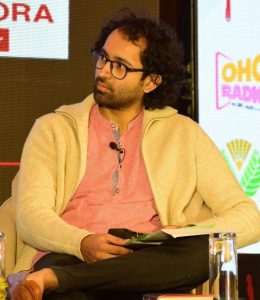
One interesting session was held on the dilemma of police officers between legal and ethical decisions one has to take in course of duty. The discussion was based on the book authored by former DGP of Uttarakhand Anil Raturi and the current ADG of UP Police Navniet Sekera, with the session being moderated by Manoj Barthwal. Sekera is the police officer, whose life has inspired the famous TV/Web series Bhaukal. Sekera shared that he was born in a village and had very small dreams like most villagers and it was in class 6 that he started his first lessons in English. It was in a function where he was honoured in his school by the then local DM and with whom he shook hands, realising that it is possible to achieve greater success in life through hard work. He also shared the incident when his father was grossly insulted by a police officer while he was student and this was a nostalgic memory for him. As destiny would have it, once in police service, he was soon posted under a senior officer, a particular police officer who had insulted his father. But due to his father’s imbibed culture, he did not harbour vendetta against the officer.
Raturi also cited a very interesting incident when as a fresh IPS officer posted in Bareilly, he was soon sent to Badayun for few days to deal with riots there. Just on that day, his wife Radha who was then an IAS Officer of MP cadre had reached Bareilly on the same day from Ujjain to spend some time with him but being a sincere and understanding person, allowed him to go to Badayun on duty. Once in Badayun, he was just with a handful of constables while the riots were on and 13 persons had already been killed in a train. Having born and grown up in Mussoorie, he had never witnessed any kind of violence in his life. However, once he saw the riots happening in front of his eyes, he did not hesitate to open fire and disperse the crowd at risk to his own life. He had realised that sometime it is necessary to pick up weapons in greater good of the society.

The afternoon sessions included “Gun, Guts, and Pen: A Conversation with the Writer of Mirzapur,” where Avinash Singh Tomar explored the creative process behind crafting gritty crime narratives. Ashok Kumar took centre stage in “Proxy Wars: Games Played by ISI and Other Players,” shedding light on the covert operations and strategies of global intelligence agencies.
Other notable sessions included a discussion on “Fangs of Death: The True Story of the Kerala Snakebite Murder’ by Aloke Lal and Maanas Lal. This session was moderated by Gargi Rawat. There was also a a workshop on screenwriting by noted actor and screenplay writer Akash Khurana and the cover reveal of the upcoming book Codename Stallion, based on true accounts of militancy.
A conversation between novelist Surender Mohan Pathak and Deputy Director of Information Nitin Upadhyaya was also held.
The day concluded with “Undercover Humour: Why Cop Characters Shine in Slapstick Comedy,” featuring Kavita Kaushik and Ashok Kumar Moderated By, Maanas Lal. The trio explored how humor humanises police officers on screen, offering a refreshing perspective on their challenges and triumphs.
Commenting on the day’s events, Festival Director Aloke Lal noted that the day’s sessions showcased the power of storytelling in illuminating complex issues, fostering both awareness and appreciation for those working tirelessly for justice.