By Our Staff Reporter
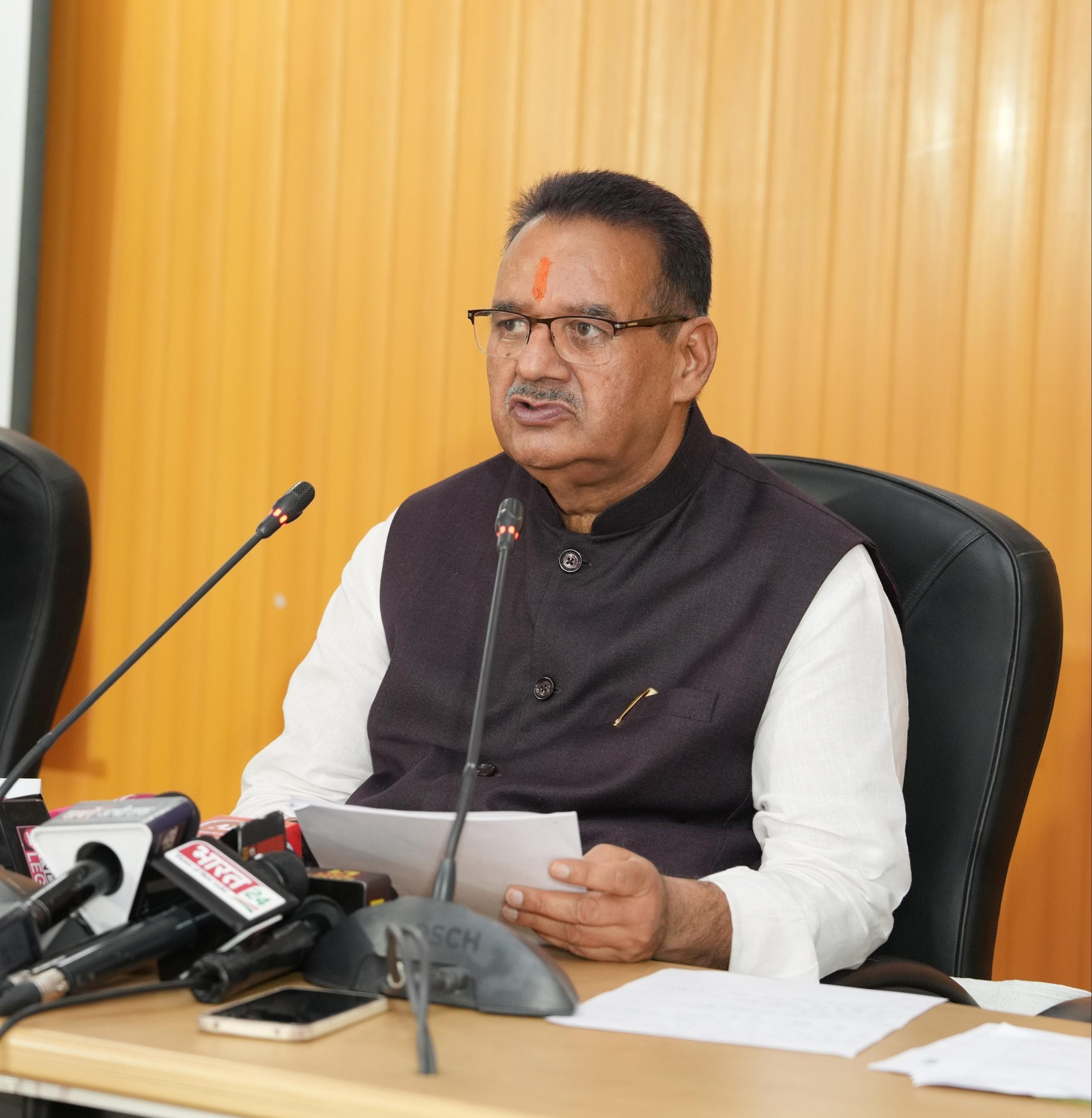
Dehradun, 18 Apr: Agriculture Minister Ganesh Joshi addressed a press conference at the Media Centre at the Secretariat here, today. He shared with the media several important initiatives taken to transform Uttarakhand’s agricultural and horticultural landscape. He stated that the state government is focussed on promoting cultivation of millets and has come up with a special millet policy. He added that the government has also prioritised the promotion of the traditional Barhanaja (Twelve cereals) millets, particularly in the hills besides also the cultivation of high-value fruits like kiwi and dragon fruit under Horticulture. He claimed that these initiatives aim to increase farmers’ incomes, promote self-employment, and curb migration from mountainous regions.
During the press conference, Joshi stressed on the state government’s commitment to reviving the traditional Barhanaja millet crops through the newly introduced Uttarakhand Millets Policy 2025–26 intended to be implemented in the 11 hill districts of the state. Under this policy, the government would promote modern and scientific cultivation methods for millets such as Mandua (Finger Millet), Kauni (Foxtail Millet), Jhangora (Barnyard Millet), Ramdana (Amaranthus), and Chena Millet (Proso Millet). This, he claimed would improve self-employment and reduce migration by increasing farmers’ earnings in the hills.
Joshi also stated that the Millet Policy would be implemented in two phases. Under the first phase, which will be applicable between 2025 and 2028, millet cultivation will be taken up on a grand scale covering 30,000 hectares across 24 Development Blocks in the state. On the other hand, under the second phase intended to be implemented between 2028 and 2031, the millet cultivation will be expanded to 40,000 hectares of land across 44 Development Blocks.
Joshi said that as part of the policy, crucial measures would be taken up like making available seeds and bio-fertilisers at subsidised rates ensuring a subsidy of 80 percent. In addition, incentives worth Rs 4,000 per hectare would be given for row sowing and worth Rs 2,000 per hectare for direct sowing. In addition, group-based support will also be provided, raising the incentives to Rs 300 per quintal from Rs 150 per quintal for millet crop adoption.
The Agriculture Minister added that one Millet processing unit would be established in each development block and two farmer groups will be recognised and felicitated per block for exemplary work. He disclosed that a Nutri Hub Project Management Unit will promote millet cultivation, with a total investment of Rs 134.89 crores. The policy will target over 3 lakh farmers and will also include establishment of a Shri Anna Food Park.
Sharing information regarding Horticulture, Joshi stated that the new Uttarakhand Kiwi Policy (2025–31) aims to develop kiwi orchards with 70 percent state subsidies for an estimated total cost of Rs 12 lakhs per acre. The policy, excluding Haridwar and Udham Singh Nagar districts, targets to cover 3,500 hectares, benefiting 17,500 farmers with a projected increase in kiwi production from 382 metric tons at present to 33,000 metric tons. The project will be run with a budget of Rs 894 crores.
The minister also shared information regarding Dragon Fruit Farming Scheme which will be implemented during the period up to the year 2028. He said that this scheme will promote modern cultivation in seven districts. The scheme proposes a flat 80 percent subsidy for orchard establishment, and it intends to cover 228 acres, benefiting 450 farmers. This initiative is supported under the Chief Minister State Agriculture Development Scheme, with a budget of Rs 15 crore, he revealed.
The minister also added that, to promote the post-harvest handling of apples, the government has launched a Post-Harvest Management Scheme (2024–32) with an outlay of Rs 129.97 crores. The scheme includes establishing of 22 Controlled Atmosphere (CA) storage units with a maximum 50 percent subsidy or Rs 4 crore for private firms and 70 percent subsidy or Rs 5.70 crores for Farmer Producer Organisations (FPOs). In addition, 180 sorting and grading units for apples, which will also be operated on subsidies ranging from 15 percent to 70 percent depending on the sector.
Joshi reminded that the Mukhyamantri Micro Food Enterprise Upgradation Scheme offers a 25 percent top-up or up to Rs 5 lakhs to food processing units in hill regions, benefiting 780 units to increase local employment opportunities. Joshi reiterated that these initiatives are designed to provide local self-employment, particularly in rural and mountainous areas. He expressed confidence that policies promoting group and cluster-based production, high-value fruit cultivation, and millet processing would address longstanding problems like unemployment and migration.