The Development of Dehradun
 By Raj Lakshmi Dube
I have been living in Dehradun permanently for the last sixteen years. Earlier, I would visit the city only now and then. I fell in love with this town and decided to settle here in 2010, after my retirement.
Whenever I entered Dehradun through Mohand, or landed at Jolly Grant Airport, my happy hormones — dopamine, serotonin, oxytocin, endorphins — seemed to multiply many times over. I battled cancer three times, yet I always returned to my favourite place to heal.
Dehradun was a quiet, comfortable town. Whether I lived near Mussoorie Diversion or at Pacific Golf Estate, I was always happy to come home. Within five minutes I could reach the Bajaj Institute for the Deaf, where I learned Indian Sign Language and worked as a volunteer for nearly ten years.
Most places were within a half-hour drive. Even the railway station, where I often went to receive friends and relatives, was easily reached. Traffic was manageable. We knew the best hours to shop and the ones to avoid, especially during the school rush. A drive to Delhi took only five to six hours.
Now, travel with me from Delhi to Dehradun.
A cab has been booked from Akshardham to Pacific Golf Estate, via Rajpur Residency near Max Hospital, my former residence. The new expressway runs from Akshardham to Mohand and promises a journey of just two and a half hours, from the Delhi border to the very gateway of Dehradun.
Please take a seat and join me.
As soon as we enter the expressway, the smooth, multi-lane road stretches ahead. Watch the motorcycles overtaking us at well over a hundred kilometres an hour. Have you packed water and some snacks? I am not sure we will find a decent rest stop. Fortunately, my sister has packed a few aloo parathas, which we can share.
Don’t be anxious. The driver has been told not to exceed eighty kilometres an hour.
Can you see the SUVs and motorcycles tearing past us?
“Subhash beta, could you please stop at a dhaba so that we may eat something and freshen up?”
“Auntie, there aren’t many exits on this route, but I’ll try,” replies Subhash.
After about an hour and a half, he spots an exit and a roadside dhaba. We pull over and step out. Walk carefully, and mind the puddles.
Oh my God! The place is swarming with flies. An old cooler is running, but seems to blow only hot air. Yet people sit and eat all the same. Let us buy a cold drink and hurry back to the cab. Even inside the vehicle, the stench from the toilets is impossible to escape.
“Subhash, let us leave as soon as we can. We can’t bear this any longer.”
Finally, we are back on the expressway. Roll the windows down for a while to clear the foul air, then switch the air conditioning on again.
Dehradun is only about half an hour away now, so hold on a little longer. There is the last toll gate. As we cross it, I notice a public toilet on the left — but we are in the extreme right lane and miss our chance to stop. No matter; we are close to the Doon border.
The expressway now cuts straight through the Rajaji Wildlife Sanctuary. My heart sinks. Hillsides once carpeted in lush green forest have been scraped bare, like a giant mud cake sliced open for a celebration. Where trees once stood, there are now naked slopes shored up with retaining walls and draped in green netting, pinned down by enormous nails.
It makes me want to cry.
I can almost feel the pain of the mountainside. How long will these engineered slopes survive the monsoon?
Before I can recover from the sight, we plunge into the new tunnel and emerge near Asharodi. Once, magnificent silver oak trees lined both sides of the road; after sunset their pale trunks caught the headlights and glowed, casting a kind of magic over the drive. Where are they now? Swallowed by the expressway.
“Yes, Madam, the expressway ends here,” says the driver, as we enter Mohabewala, one of the first settlements on the outskirts of Dehradun.
We have covered the distance from Akshardham to the Doon border in exactly two and a half hours, just as the authorities promised.
Unfortunately, the journey is far from over.
Who knows how long it will take to reach home? With every kilometre the traffic thickens and the honking swells. The area is now heavily built up, dotted with industrial units, automobile showrooms, and scattered residential colonies.
We cross the flyover that bypasses the ISBT. The small town I knew has been swallowed by a growing city.
Reaching the Clock Tower can take anywhere from forty minutes to an hour. The Aadhat Bazaar — the wholesale market for grain, rice, and other staples — still sits where it always has, opposite the railway station, despite years of announcements about relocating it.
We crawl through dense traffic and finally reach the Clock Tower. In the tourist season, vehicles pouring in towards Mussoorie from the neighbouring towns of Uttar Pradesh choke the city’s roads still further.
The expressway has made it easier than ever to reach the cool air of Dehradun, Mussoorie, and Landour. After all, when the Air Quality Index in Delhi touches 400, why wouldn’t people drive a few hours in search of cleaner air in the Doon Valley?
The next step is obvious. If one has the means, why not buy a second home here? It is only two and a half hours away — about the time it can take to drive from north Delhi to Gurugram.
Yet every city and hill station has a carrying capacity, and I believe Dehradun has already exceeded its own.
The Doon Valley lies in Seismic Zone IV, and a major earthquake is long overdue. A town that once frowned upon high-rise construction now boasts ten-storey residential towers. To make matters worse, the indiscriminate felling of trees has cleared the way for concrete.
Let us drive a little further.
Dalanwala was once an elite colony, where every bungalow stood on at least two acres. Green hedges, not boundary walls, separated one property from the next. The roads did not need to be wide, because the traffic was sparse.
Today, those large estates have been subdivided and sold. The hedges are gone, replaced by concrete walls. The narrow roads remain exactly as they were — but every household now keeps several vehicles.
How do two large SUVs, travelling in opposite directions, pass each other on such a road?
A foolish question.
They scrape, manoeuvre, and crawl past one another.
We now reach Rajpur Road, the main artery of Dehradun. The once-modest shopping stretch is lined with high-rise commercial buildings, restaurants, and malls. Many small shopkeepers have simply vanished under the weight of the big developments.
Even the city’s famous bakeries suffer for want of parking. Drive on until you find a space, then walk back to the shop. Perhaps the exercise is good for one’s health.
We pass Behl Chowk and Dilaram Chowk, and continue northwards.
On the right stands a massive apartment complex. What is not visible from here is its rear, facing Canal Road, where an entire hillside was cut away to make room for it.
Last year, work was reportedly halted on the orders of the District Magistrate. The official notice stayed up for several months. Today it has vanished — while the cranes and the machinery carry on.
Do not ask how that happened.
A little further on lies what I once thought the most peaceful corner of Dehradun — the President’s Estate.
But what is this?
Where have all the trees gone?
Beyond the boundary wall stand concrete structures and metal frames. On inquiry, I was told they were meant for horses.
Horses?
For what purpose?
What would horses be doing here?
Another foolish question. The government surely knows best.
Further ahead lies Jakhan, once a quiet locality of a few vegetable shops, a bank, a general store, and a handful of small businesses.
Those shops still exist, but they are overshadowed now by larger commercial complexes. The old bungalows have been turned into enormous showrooms, many of them for jewellery brands, and almost every rooftop carries a restaurant or café.
On weekends the traffic slows to a crawl. Vehicles inch forward at little more than twenty kilometres an hour.
Take a left turn towards the Max Hospital — but what is this? The whole stream of traffic has come to a standstill. The tailback reaches all the way to Pacific Hills, another residential-cum-shopping complex. This project, too, had once been put on hold, because it was raised on the edge of a khaala, a watercourse. But that, too, was somehow managed by the builder, and it still stands exactly where it was meant to. This was once the viewpoint for Mussoorie — no longer. The plot above the hillside has been usurped by the enormous Taj Hotel, which now blocks the view of our nearest hill station completely. At night, the lights of the Mussoorie mall used to hang like a diamond necklace strung across the sky. A breathtaking sight, it was.
Most of the traffic is climbing towards Mussoorie — it is the season for cool weather, after all. I collect a few belongings from Rajpur Residency and return to Rajpur Road. At the Kishanpur roundabout I take a left. The left turn is supposed to be free, but then, this is a free country: anyone may block your path and refuse to budge, however long you lean on the horn. After a wait, we emerge at last onto the main road. What a pity — every alternate bungalow has become an eating joint, most of them double-storeyed, which means yet more traffic and crowds.
We finally reach the Sai Temple, where we take a right turn for home.
Rispana
Along the way, more construction — at rates that now rival any metro. Coming a little downhill, we cross a bridge over the Rispana River, by now little more than a drain. Along both banks stand rows of shanties, put up by construction workers who came from other states at the bidding of building contractors, then stayed on and settled by the river. Now the government speaks of an unauthorised colony — but where were the authorities while the slum was being born? The families have multiplied many times over since; the land is free, the electricity is free, and so, of course, is the water. Whether they even have toilets, or whether the river serves that purpose too, I cannot say.
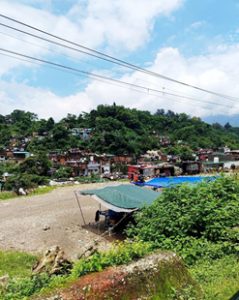
Figure 1. The Rispana — a river in name — and the settlements crowding its banks.
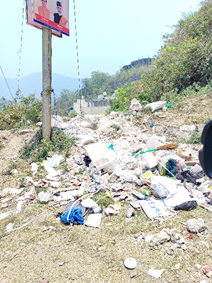
Figure 2. At short intervals, small heaps of rubbish line the roadside.
And now — what is this? A huge residential complex is going up right at the edge of the hillside. I shudder to think what even a small earthquake would do.
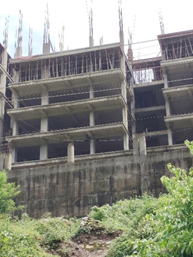
Figure 3. Multi Storied Complex at Hill Edge
Now we reach the helidrome, which once served only officials and public servants. There used to be a modest clearing where a helicopter or two could land and take off. Look at it now: a small hillock flattened, the trees felled, and a vast clearing opened up, with helicopters parked in rows like auto-rickshaws. Every few minutes one lifts off, fully loaded with the super-rich who can pay in lakhs to visit the Chardham. So what if the odd accident occurs and a few devotees lose their lives to a technical glitch or to overloading? The public has a very short memory; it forgets the moment the season ends, and remembers only when the next tragedy strikes. But then, we believe in destiny — it happened because it was an act of God.
Now we are on the final leg of our journey, along Sahastradhara Road. This one road was once lined on both sides with great trees of every variety. As the traffic grew, the road had to be widened — so who bore the brunt of this development? The trees, of course. The road is four lanes wide today, but at what cost? The drivable portion is much as it always was, for the roadside shops run on for at least a kilometre with nowhere to park, so the vehicles take over a whole lane — shared, naturally, with several families of cows. The cows live on vegetables pilfered from the shops and on roadside refuse. Who cares? They must belong to someone — perhaps the cow shelter nearby. Why can the owners not be fined, the penalty rising with each repeat offence?
We have now reached the gate of Pacific Golf Estate. “Subhash, please be careful — there are two bulls fighting at the entrance, and they may ram the car.” Somehow, Subhash steers past them and through the gate. After bumping over at least eight speed breakers, we have finally arrived. Come — let me show you the view.
A couple of years ago we could look out at a village called Kulhan, and beside it a wide stretch of flat farmland. Now it is being parceled out and sold as plots for construction. A large building that looks like a resort is rising in three tiers right at the edge of the plateau. It does not block our view, but it sits utterly out of place in the landscape.
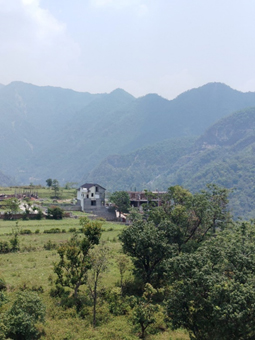
Figure 4. The view from Pacific Golf Estate — the hillsides at Kulhan being carved up, plot by plot.
Now turn right. On that mountain there was once a single farmhouse. Today, more and more of the hillside is being cut away for more houses, and it goes on still. The twinkling lights at night, multiplying every few weeks, mark their steady advance. Shamelessly, they have taken the place of lush green forest.
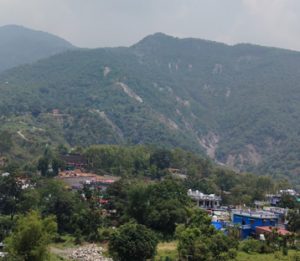
Figure 5. The view from Pacific Golf Estate — the hillsides above Kulhan being carved up, plot by plot.
How long will this encroachment continue, and what is in store for us in the years ahead? Every Doonite ought to stop and ask. Perhaps the valley is simply waiting for its long-overdue earthquake. Nature will certainly take its toll. Wake up, before it is too late.
And this, sadly, is what “development” has come to mean in Dehradun.