‘There’s a cabal of Mussoorie writers!’ boomed author William Dalrymple at the Mountain Writers’ Festival. ‘Their self-imposed objective is to perpetuate the myth that this hill station was built for recuperating soldiers! What utter nonsense?!’
‘Mussoorie,’ or so he believed, ‘came up as a part of the Great Game.’ And that morning, he was there, promoting his new book, The Golden Road.
While in school, I first met Rahmat, the old Kabuliwala as a character in Rabindranath Tagore’s immortal story. As chance would have it, again I bumped into him. His voice rumbled like distant thunder, as he sat cross-legged on the floor of the bard’s study, dreaming of his rugged mountain home, far away across the burnt-out Hindu Kush, where on a trail marched a caravan of camels, moving ever so slowly; wizened traders and tired travelers; some astride camels; some on horseback; some on foot; some with swords; some with spears or old fashioned flint-locks.
William has a point; our easy accessibility is to blame. But the time frame was patently wrong. By the time William Frazer had built Garh Dudli, ten years had passed. And Captain Young was busy writing to the East India Company for setting up a Depot for recurperating troops.
‘Probably you’re in the room where Amir Dost Mohammed lived,’ Mr O. B. Craven, our headmaster at Allen Memorial School, would say.
His kowtowing with the Russians had invited the wrath of the East India Company, which led to the First Anglo-Afghan War (1839-1842, ending on November 2nd 1840. After his surrender, he was whisked away to these hills. For those two years, the seven-mile bridle path from Rajpur bristled with Tehri troopers with orders to deal firmly with anyone with the faintest Afghan connection. Afterwards, two years later, he was restored to the throne of Kabul.
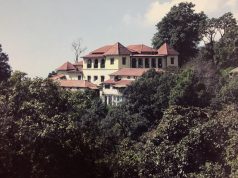
At the end of the Second Anglo-Afghan War (1878-1880) Amir Mohammad Yaqub Khan interned in Bellevue (later Radha Bhawan) at the Library end of town, where he lived for forty-three years. Naturally, he chaffed at being locked up.
According to Charles Wilson tells us: ‘Ex-Amir Yaqub Khan was invariably accompanied by a British Political Officer, who on rides around the Station could never fathom the prisoner’s habit of suddenly spurring his pony into a fast gallop, without a word of warning to his companions. These bursts of speed became more and more frequent, and the officer eventually put it down to a whim. One day, stopping to chat with a friend while the rest of the party moved on near the Library, the prisoner spurred the pony hard forward down the road to Rajpur – and hopefully, freedom. That was what the officer concluded the dash was for. He urged his pony down a shortcut as the only chance of intercepting the runaway. The Governor-General was informed of the incident by telegram, and orders were sought in the event of further similarities.
The laconic reply was: ‘Don’t hurt one hair of his head.’
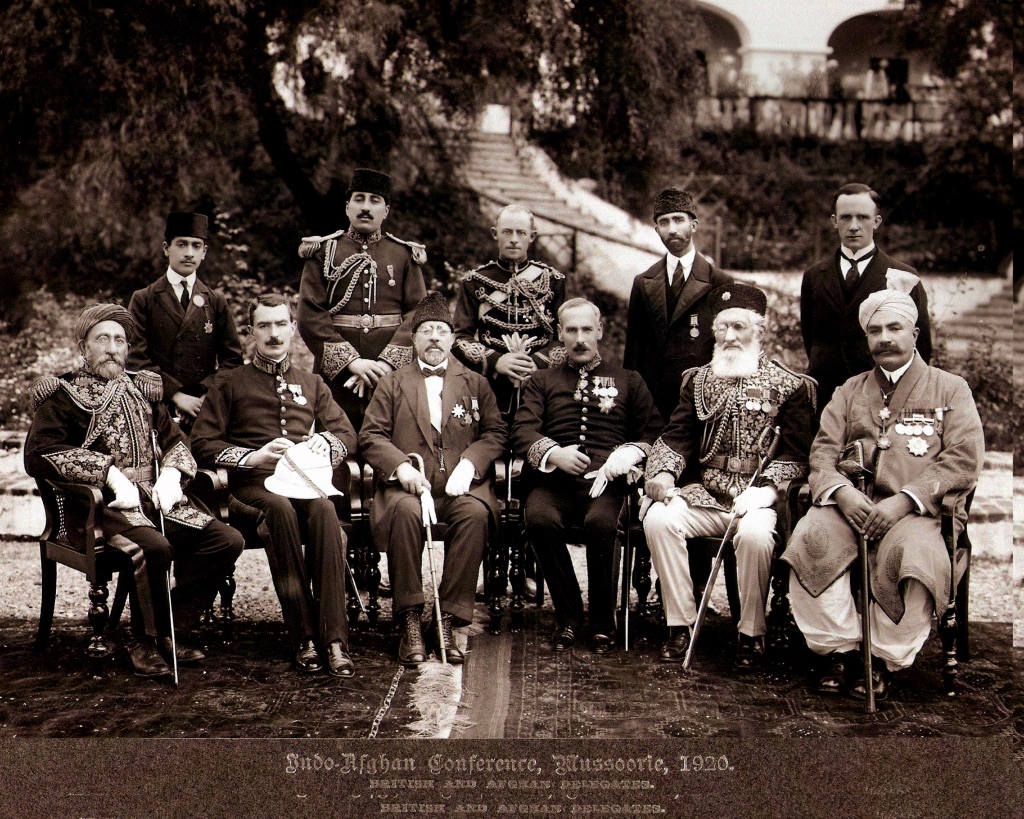
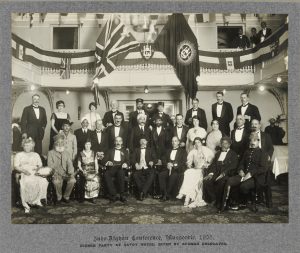
But the British fiddling in Afghan affairs dragged the station Mussoorie into the vortex of the Third Indo-Afghan War (1919). In the summer of 1920, a delegation of the illustrious men from Afghanistan arrived at the Savoy. Around the same time, Jawaharlal Nehru arrived with his mother and wife, both of whom were unwell, and they had hoped the change of climate might help. Of course, Nehru had not the faintest inkling that the Afghans were around. Nonetheless, the skittish government thought he might try to meet and influence them. Wanting to take no chances, they asked him to sign an undertaking not to contact the visitors. On his refusal, he was asked to leave the hills forthwith. Before he left for Allahabad, he gave detailed instructions for his family’s welfare. A chance meeting with Baba Ramchandra, in their struggle against powerful landowners, was to change the course of his life forever.
And as for Yaqub Ahmed, he passed away, ignominiously uninvited to the Conference. He was not destined to see the hills of his former home or Afghanistan ever again.
Ganesh Saili, born in the hills of Garhwal, belongs to those select few whose words are illustrated by their pictures. As the author of two dozen books, some translated into 20 languages, his work has found worldwide renown.