All Around the World with the Most Travelled Indian
 By Nitin Gairola
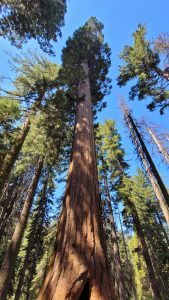
John Milton’s Paradise Lost is probably the greatest poem in English literature. It is a fictional story about man falling prey to temptation and the subsequent expulsion from the Garden of Eden. As I mentioned last week, we did have a Garden of Eden in real life too and it was covering 70% of the planet till the 1950s. Now over half of this paradise has been lost or degraded and today only around 30% of the Earth’s land surface has forest cover. But this paradise is almost lost and not lost. That difference is important to know and worth fighting for as was shown by the residents of Dehradun, Rishikesh and other towns of my Uttarakhand in the past few weeks when the order to cut 4,000 odd trees for an unnecessary 4 lane highway between ‘Saat Mod’, near Dehradun’s Jolly Grant Airport, and Rishikesh, was put ‘on hold’ (since it is anyway a low traffic route).
At a global level, I understand it’s a fact that we have to feed 8.3 billion people and make life better for them and that’s why the pressure to turn forests into farms and infrastructure projects is at its greatest today, in the entire history of humankind. So what do we do now? One of the key answers is in smarter use of our energy & of our land – in, both, the developed and the developing countries of the world.
A few obvious areas in terms of energy are the use of renewals (wind, solar, hydro) and of nuclear in place of fossil fuels. Electric vehicles are also a great idea that is already in vogue but not at a tipping point just yet given the limited associated recharging infrastructure and price points. And we need to remember that a lot of electricity is still generated by heating fossil fuels, besides being generated via mechanical & kinetic energy, by magnets, steam and by solar. So when you use EVs, assume you are using 1/4th or 1/5th of the fossil fuels that you would need for petrol or a diesel powered vehicle, but it doesn’t eliminate it completely as is the general misconception. There are also biofuels like ethanol, biodiesel, green hydrogen and e-methanol but these are yet to go mainstream. In terms of these, the developed world is far ahead in adoption due to better infrastructure (charging stations) and better economics for (say) solar equipment and even EVs. I know in India we use EVs and solar too, but I just can’t tell you how many Teslas and mega solar panels I have seen in the USA whereas there isn’t much to be seen in Indian metros and state capitals, although hopefully it will change fast. It’s a question of economics really in order to have people transition out of dirty fuels. We can’t expect people to care about the planet’s future when they are financially impacted at a personal level. The world is not that utopian and doesn’t run on wishful thinking.
Besides energy, in order to ensure our paradise is not completely lost, we need to look at better land use since that’s when we stop cutting our forests left, right and centre. Some developed countries such as the Netherlands are doing very efficient vertical farming inside limited spaces within green houses. They also have efficient use & re-use of water besides growing foods that need less soil and water. In fact our own food choices can have a massive impact too on land use. Eating less red meat ensures that less land is needed for growing grains to feed the cattle. And the cattle themselves release huge amounts of methane (a big greenhouse gas) into the atmosphere when they (er) release gas. This directly leads to global warming at a rate way faster than what carbon dioxide can do. Can you believe the impact that breaking wind can have on the future of the planet?
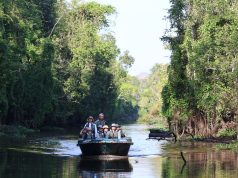
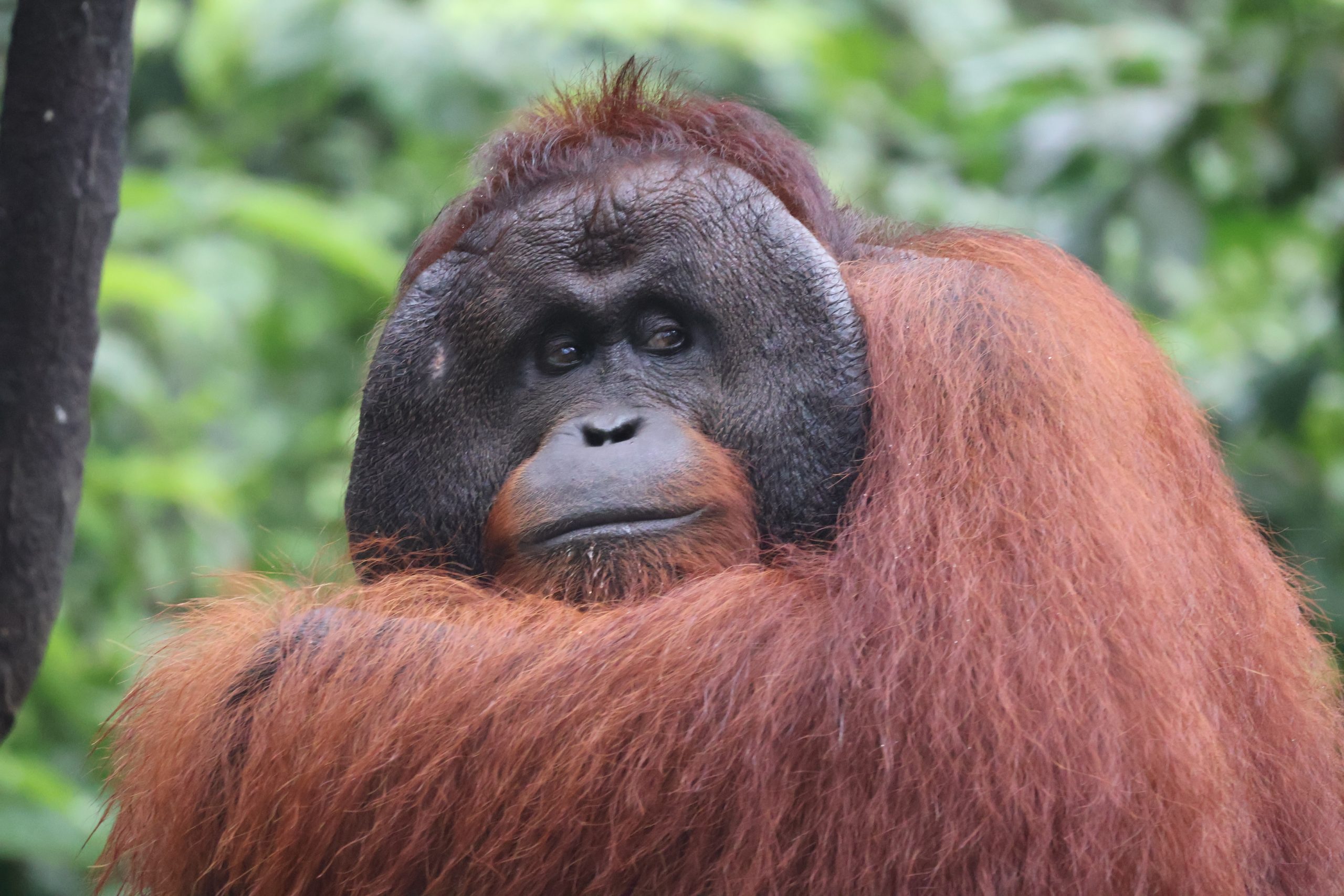
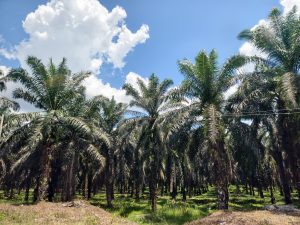
Another sustainable and sensible choice of ours as customers would be to avoid all products that use palm oil such as certain ice creams, instant noodles, chips, chocolates, soaps, shampoos, detergents, etc., (note that I said ‘certain’ and not ‘all’, so it’s a choice). The palm oil cash crop is being planted in place of pristine rain forests in Borneo (the home of the ‘orange-tanned’ Orangutan) and today this paradise in Asia is nearly done. I saw this with my own eyes just a month or so ago in Borneo.
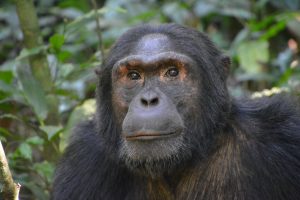
And all this has happened despite carving out ‘national parks’ and ‘reserves’. Without proper space allocation, involvement of local communities and good governance, such policies don’t give much mileage. However, the grass is actually (getting) greener on the other side of the world as some country’s governments have even gone as far as greening their deserts. This means that contrary to others who are converting forests to farms and cutting roads through them (thereby fragmenting the homes of keystone species & the smaller ones), these green revolution frontrunners are converting their barren lands into farms for growing crops, thereby reducing pressure on other places. I understand that almost all these countries are doing so out of necessity since most of their landmass is barren, but they are showcasing a possibility so far thought impossible. These climate crusaders are Saudi Arabia (entirely desert), Australia (almost entirely desert) and China (around 30% desert, but a significant landmass).
Africa at large is also represented in this climate challenge in a big way by Senegal, Ethiopia and other countries in the sub-Saharan Sahel region with their famous ‘Great Green Wall’ initiative. It was started by the African Union, headquartered in Addis Ababa, Ethiopia, in 2007 and a lot of significant progress has been made in the last 2 decades. Here, in order to avoid desertification of crop lands in the Sahel, the expansion of the mighty & merciless Sahara Desert is being halted by planting a thick wall of trees. This wall of trees is to stretch end to end from Dakar in Senegal (on the west coast of Africa) to Ethiopia & Djibouti (on the east coast). I saw this ‘Great Green Wall’ in Ethiopia last year and I intend to visit Senegal to see its other extreme point. It’s almost too staggering a project to properly comprehend by just seeing its far extreme western and easternmost points and one needs to actually see what’s in the middle, since it has some of the worst war town countries in the world. While it is very simple and elegant in thought, it is just as difficult and complex in execution. This is keeping in mind the number and kind of nations in the Sahel region, which stretches from east to west of this giant continent. Don’t be fooled into believing that Africa is just a moderately sized continent by looking at flat maps or Mercator projections as they are called, since these distort the size of northern & southern landmasses in relation to those at the equator & the tropics. Africa is mega huge and all of Europe, USA including Alaska, China and India can together comfortably fit within it and there would still be space for quite a few more. Need I say more about the scale of the ‘Great Green Wall’ project?
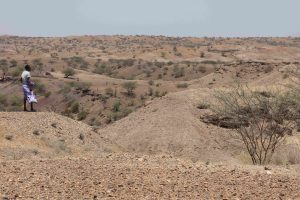
As Attenborough once said, environment is not an agenda only for environmental organisations but an agenda for the UN Security Council, too, since as alluded to, the countries across the Sahel band are some of the most unstable ones on Earth – Mauritania, Mali, Burkina Faso, Niger, Chad and Sudan. Basically, you take away food and water from citizens of a country (as desertification does) and you can be rest assured it won’t be a stable nation. You don’t need to be an Earth scientist or a climatologist to understand this.
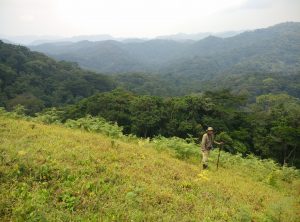
Coming back to the forests – of all the different types, it is the tropical rainforests that harbour over 50% of all animals and plants in the world despite being only 6% of the Earth’s land surface. And it is there that the hyper-diverse animals and plants are in competition for space and hence the rainforest species don’t typically spread out as widely as do the species of the temperate forests, which are further away from the tropics. The rainforest species are also more specialised (and hence dependent) on their present environment. This is way of saying that the damage to a tropical forest is far deadlier to species as is an equivalent damage to a template forest in terms of species loss, since they couldn’t spread out to de-risk extinction nor can they adapt easily to change brought about by humans. Think of this scientifically in the Dehradun context since our Shivaliks are a tropical forest ecosystem as well and harbour many species of animals & plants.
Sadly, today, it is these rainforests that are under the maximum pressure since they are, just as in our case in India, mostly in developing countries along the equator and the tropics, and these countries do need to feed their millions. I have seen Chinese construction companies make roads through primary old-growth rainforests in Congo, Uganda, Rwanda and Zambia. The same is the story in the Amazon and the Atlantic rainforests in South America, the Selva Maya in Guatemala, Belize & southern Mexico, in the rainforests of Borneo & Myanmar and in the tropical jungles & forests of India. Only Papua New Guinea, due to its remoteness and the resultant lack of development, has been spared so far. The stories of cannibals roaming their jungles may have helped deter the destroyers of nature as well.
Now, who is to say development is a bad thing, but when you hear that the equivalent of around 20 football fields of forests are being erased every minute around the world, you do worry about the planet’s future. No, let me correct that – not the planet’s future, but our future on the planet. The planet will do just fine without us but it doesn’t work the other way around.
(Nitin Gairola, often considered the ‘Most Travelled Indian’, is a ‘Natural World’ traveller from Dehradun. Inspired by Sir David Attenborough, he is near his quest to become the first person to travel to the entire natural world of every major desert, forest, grassland, tundra & ice ecosystem or biome on Earth, besides every major country. This multi-year project is called ‘Borderless Biomes’ and Nitin has also set world travel records certified by India Book of Records, has written for Lonely Planet, holds National Geographic conservation certifications, studies bio geography and is a senior corporate executive in an MNC. In his early days, he used to be a published poet as well. Join him @ www.instagram.com/ MostTravelledIndian/)