By Arun Pratap Singh
Garhwal Post Buerau
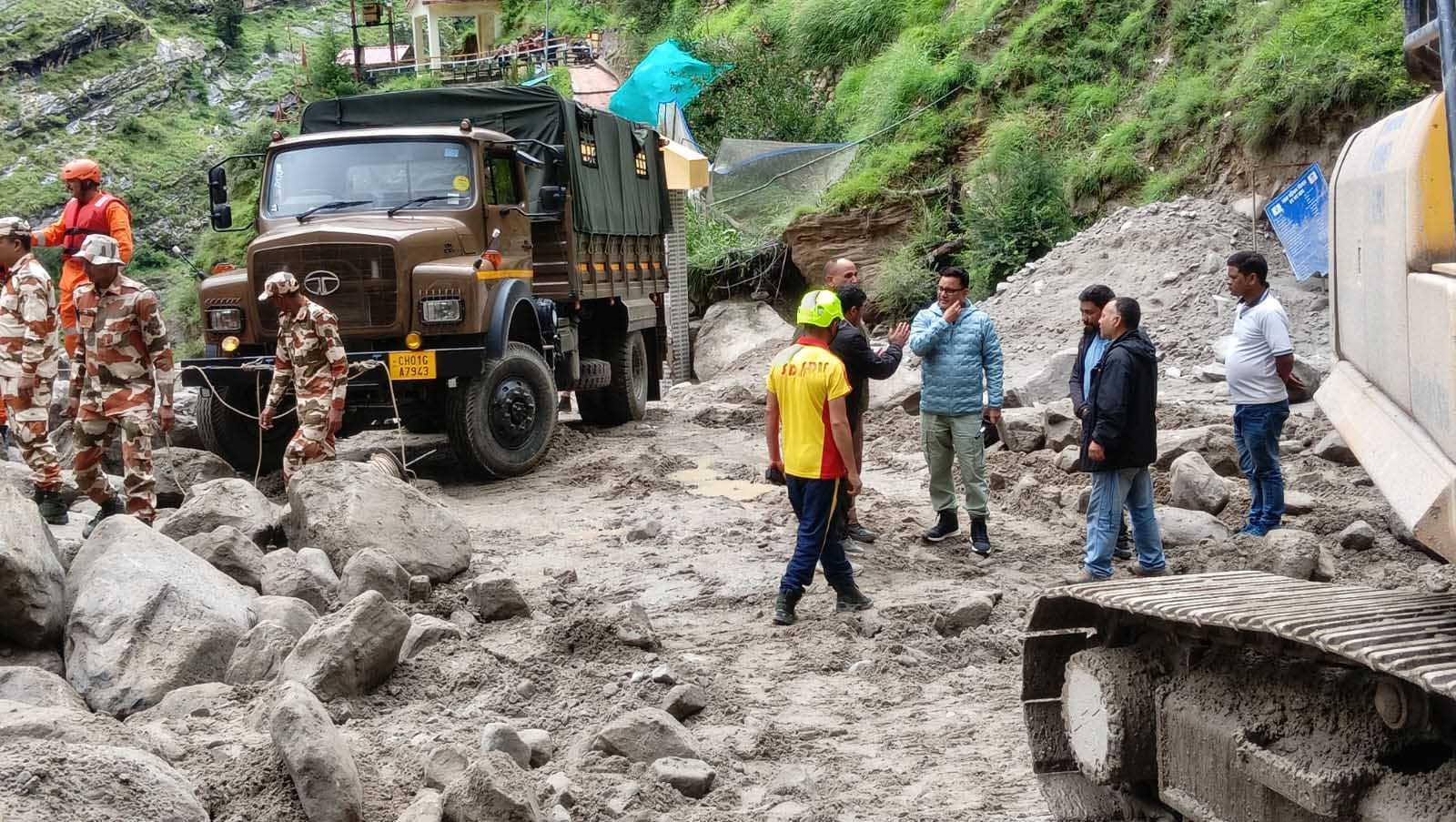
Dehradun/Chamoli, 11 Aug: The search for the missing Border Roads Organisation (BRO) Havildar Pankaj Kumar intensified today as the NDRF, SDRF, Chamoli Police, BRO personnel and the local residents continued combing the debris and adjoining areas of Tamak Nala in the Niti Valley in district Chamoli.
The search operation resumed early this morning, with special attention being given to stretches where the powerful current is believed to have carried the missing Havildar and the vehicle in which he was travelling.
Around 27 NDRF personnel are reportedly engaged in the rescue operation, with 15 of them specifically deployed to search for the missing person. The SDRF and police teams, along with the BRO personnel and the local residents are also participating in the operation. The difficult terrain, huge quantities of mud and boulders deposited by the flash flood and the possibility of a sudden rise in the water level are making the search operation challenging. The teams are moving cautiously through the debris and along the banks and downstream stretches of the nala.
As the water level in the Tamak Nala receded early this morning, the rescue teams were able to access some of the areas that had remained difficult to approach last night. Large quantities of debris have accumulated around the nala, with several vehicles and other material also reportedly buried beneath the mud and boulders. The local residents familiar with the terrain have been assisting the rescue personnel in identifying possible locations where the missing Havildar could have been carried by the current.
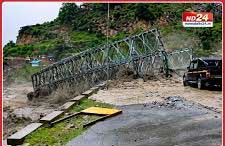
Importantly, alongside the search operation, restoration of connectivity to the Niti Valley has emerged as the administration and BRO’s other major priority. The destruction of the bailey bridge has cut off vehicular movement towards the upper Niti Valley and the forward areas along the India-China border. Connectivity to a large number of villages has been cut off as a result. The BRO is assessing the damaged stretch and preparing an alternative arrangement to restore road connectivity at the earliest. At present the restoration strategy is focused on creating a temporary road and crossing the arrangement through or around the Tamak Nala so that essential movement can resume until a more permanent nature bridge or bailey bridge can be constructed in the area in place of the bridge that was swept away last evening.
The route is strategically important as it is the principal road link connecting the upper Niti Valley with Jyotirmath and is also used for movement towards Army and Indo-Tibetan Border Police posts in the border region. The disruption has affected connectivity to Tamak, Jumma, Kaga, Garpak, Dronagiri, Jelam, Kosha, Malari, Kailashpur, Mehragaon, Farkiya, Bampa and Gamshali and other villages in the upper valley. Movement towards the forward posts in the Niti and Sumna valleys has also been affected.
The BRO has considerable experience of restoring this stretch after previous incidents. The Tamak Nala has repeatedly damaged bridges during heavy rainfall and flash floods in the past. A RCC bridge had earlier been constructed by the BRO at the location to provide a more permanent solution and was considered structurally safe, but it too was washed away. Subsequently, a temporary road was created using hume pipes for water drainage and a bailey bridge was installed to restore traffic. The latest destruction of the bailey bridge has once again disrupted connectivity to the strategically important border valley. Recent reports also confirm that the Tamak Nala has repeatedly caused bridge failures and road disruption in this area.
It may be recalled that another major disruption had occurred in the area on 31 August last year, when heavy rain caused the Tamak Nala to swell and washed away a motorable bridge on the Jyotirmath-Malari highway. The incident severed road connectivity to more than a dozen villages in the border area of the Niti Valley and disrupted movement towards the China border. Contemporary reports said the seasonal stream had swollen following heavy rain in its upstream catchment, resulting in the bridge being washed away.
The Tamak Nala has a long history of sudden flooding because its catchment extends into the high-altitude bugyal region of the Niti Valley. During intense rainfall, the water level can rise sharply as large quantities of water, mud and boulders flow down from the upper reaches. Tamak Nala eventually joins the Dhauliganga, which meets the Alaknanda near Jyotirmath. In the past two years, sudden surges in the Tamak Nala have also contributed to the formation of a temporary lake-like situation in the Dhauliganga, forcing the administration to use excavators during winter to clear accumulated debris and facilitate the release of the impounded water. The possibility of such debris-induced blockages has also been a matter of concern for experts.
The immediate focus, however, remains on locating the missing BRO Havildar and reopening the road link. With intermittent rain continuing in Chamoli and the surrounding high-altitude areas, rescue and engineering teams are being required to work with extreme caution. The administration is maintaining coordination among the rescue agencies and BRO so that the search can continue while preparations for an alternative route are taken forward simultaneously.
Last evening’s flash flood, which triggered the present rescue and restoration operation, occurred after the Tamak Nala suddenly rose following heavy rain in its upper catchment. The water level reportedly rose first at around 3 p.m. and again around 4.30 p.m., affecting fields and bringing water onto the highway, before a much stronger surge around 5 p.m. swept away the Bailey bridge. Havildar Pankaj Kumar, who was attempting to move towards safety, was swept away along with the vehicle during the sudden deluge. The incident has since left the Niti Valley’s main road link disrupted and prompted the continuing joint search and restoration operation.