Garhwal Post Bureau
Dehradun, 26 May: A two-day Capacity Building Programme (CBP) on the PM Gati Shakti National Master Plan concluded successfully at Doon University, here, today. The programme was jointly organised by the Centre of Excellence in Logistics and Supply Chain Management (CoE-LSCM), Doon University, and the Centre for Public Policy and Good Governance (CPPGG), Department of Planning, Government of Uttarakhand, for officials from various departments of the Uttarakhand Government.
The workshop aimed to enhance understanding of integrated infrastructure planning, multimodal connectivity, logistics management, and geospatial governance under the PM Gati Shakti framework. The programme brought together policymakers, technical experts, academicians, and government officials to deliberate on coordinated and technology-driven planning approaches for sustainable development in Uttarakhand. The programme commenced with the inauguration ceremony and presentation of the proceedings of the first PM Gati Shakti workshop curated by the Centre of Excellence in Logistics and Supply Chain Management (CoE-LSCM). The inaugural session highlighted the significance of the PM Gati Shakti National Master Plan in enabling integrated planning and effective implementation of infrastructure projects through interdepartmental coordination and digital governance. The first technical session was delivered by Dr Manoj Pant, Additional CEO, CPPGG, who provided a comprehensive overview of the PM Gati Shakti portal and explained its relevance to different departments of the Government of Uttarakhand. He elaborated on how the portal integrates multiple departmental data layers on a single platform to facilitate better coordination, minimise delays in project implementation, and improve transparency and efficiency in governance. He also emphasised the importance of collaborative planning for achieving sustainable and inclusive development across the state.
The second session was conducted by Dr Sudhanshu Joshi, Coordinator, CoE-LSCM, and Aishwarya Awnish, who discussed the strategic dimensions of PM Gati Shakti in logistics and supply chain management. The speakers highlighted the importance of integrated logistics planning in improving connectivity, strengthening infrastructure networks, and supporting economic growth, particularly in geographically sensitive regions such as Uttarakhand. The session further focused on the role of data-driven governance, multimodal transportation systems, and digital infrastructure in modern public administration.
Technical sessions were subsequently conducted by Navraj Chhetri and Kailas Rawat, who introduced participants to geospatial technologies, GIS-based planning tools, and the practical applications of the PM Gati Shakti National Master Plan portal. Officials were trained on identifying infrastructure gaps, planning logistics networks, and integrating departmental datasets for evidence-based decision-making and effective project planning. Hands-on laboratory sessions formed an important part of the workshop, enabling participants to gain practical exposure to the PM Gati Shakti portal and its analytical features. Officials actively participated in exercises related to spatial mapping, infrastructure assessment, and planning simulations. An interactive and engaging quiz session was also organised during the programme, witnessing enthusiastic participation from attendees. The second day of the programme began with sessions by Akshay Jaiswal, who conducted interactive discussions and hands-on workshops on scenario-based planning exercises under the PM Gati Shakti framework. The session focused on practical applications of integrated planning approaches, enabling participants to understand how different infrastructure scenarios can be analysed and planned using digital tools and geospatial data. Officials actively participated in the workshop exercises, which emphasised coordination among departments, data-driven decision-making, and efficient infrastructure planning for sustainable development.
Further, interactive discussions were held on emerging technologies such as Artificial Intelligence and Machine Learning in governance and infrastructure planning. The sessions highlighted the increasing role of advanced technologies in improving planning efficiency, predictive analysis, and policy implementation in public administration.
A specialised hands-on laboratory session was conducted by Dr Kamal Pandey from the Indian Institute of Remote Sensing (IIRS) on “Understanding Departmental GIS Database Creation: A Line Department User Perspective”. The session provided practical insights into GIS database development, management of geospatial datasets, and their applications in departmental planning and governance.
Officials from multiple departments of the Uttarakhand Government appreciated the initiative and actively engaged in discussions throughout the programme. Participants noted that the workshop significantly enhanced their technical understanding of integrated planning frameworks, digital governance systems, and the practical applications of the PM Gati Shakti portal.
Congratulating the organisers, Prof. Surekha Dangwal, Vice Chancellor, Doon University, stated, “Interdepartmental convergence is the key to sustainable logistics and infrastructure planning.” She appreciated the efforts of CoE-LSCM and CPPGG for successfully organising the second Capacity Building Programme on the PM Gati Shakti National Master Plan for government officials and emphasised the importance of continuous institutional collaboration and capacity enhancement for effective governance and integrated development planning in Uttarakhand.
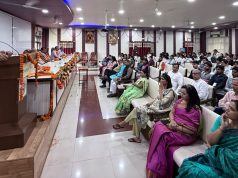
The workshop concluded with discussions on future collaboration, institutional capacity building, and the importance of continuous training programmes for effective implementation of the PM Gati Shakti framework in Uttarakhand. The valedictory session concluded with certificate distribution to participants in the presence of Dean, Students’ Welfare, Prof HC Purohit, Dr Naresh Chandra, State Nodal Officer, PMGS, and Dr Ajay Kukhsal.