Garhwal Post Bureau
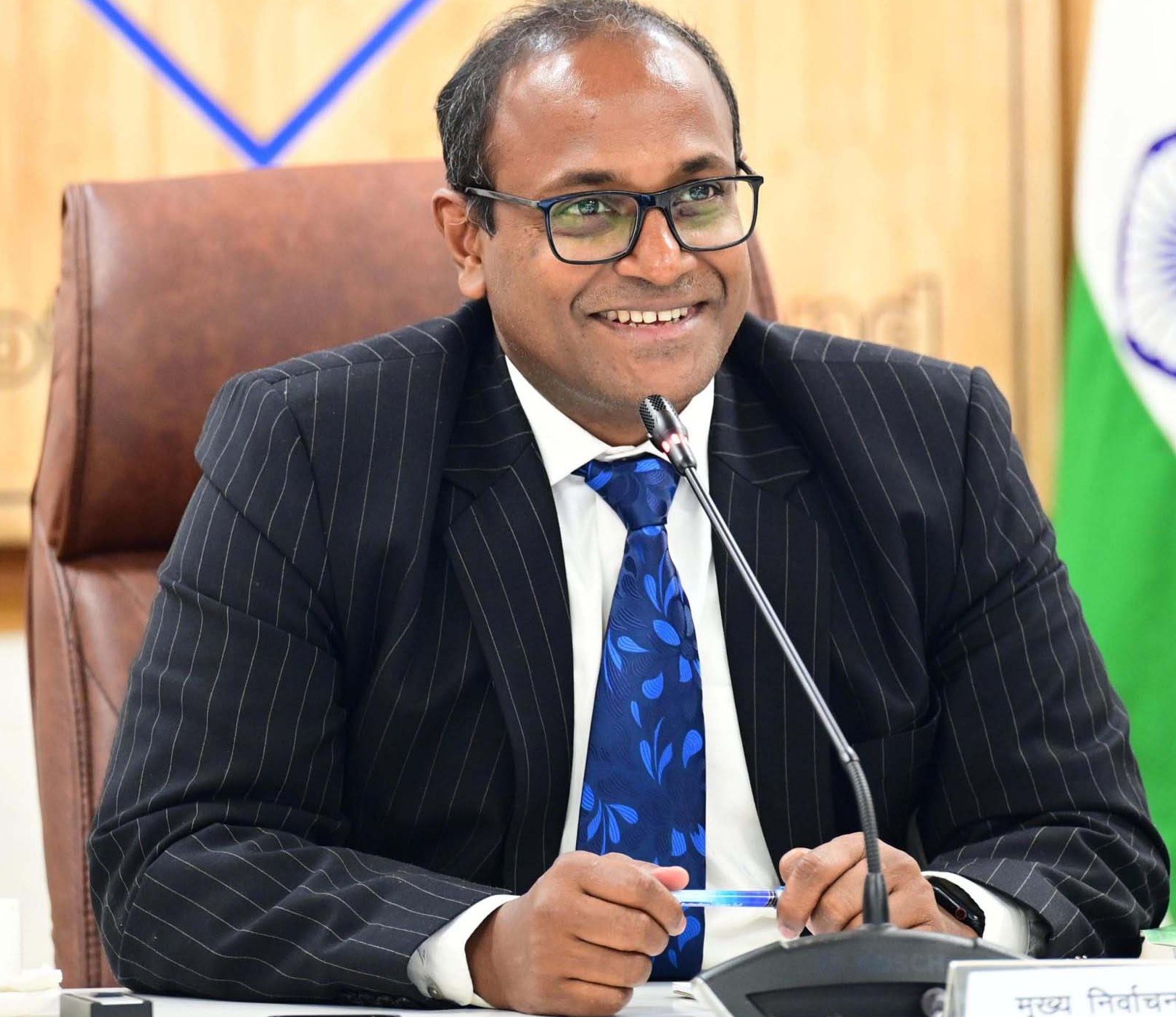
Dehradun, 18 Sep: Chief Electoral Officer (CEO) Dr BVRC Purushottam chaired a meeting with recognised political parties at the Secretariat here, today, which was attended by office bearers and representatives of various parties. The meeting focused on several important aspects of the electoral process and the forthcoming revision of rolls. The CEO also urged the political parties to appoint Booth Level Agents for each booth to enable the revision of electoral rolls in the state.
The CEO emphasised that under Section 21 of the Representation of the People Act, 1950, read with Article 324 of the Constitution and other relevant rules, the Election Commission of India is empowered to conduct the Special Summary Revision (SSR) of electoral rolls. The SSR exercise, with 1 January 2026 as the qualifying date, includes a table-top exercise that matches voters from the 2003 electoral roll with those on the 2025 roll. For the purpose of verification, voters on the 2025 roll are to be divided into four groups. Category A includes voters aged 38 years or above in 2025 whose names also appear on the 2003 roll. Category B includes voters aged 38 years or above in 2025 whose names do not appear on the 2003 roll. Category C covers voters aged 20 to 37 years in 2025, while Category D includes voters aged 18 to 19 years in 2025.
He also reminded that in respect of the documentary requirements for verification, voters in Category A are required to present only an extract of the electoral roll. Voters in Category B must produce any one of the 11 prescribed documents. Category C voters must provide one prescribed document of their own along with one belonging to their parents, while Category D voters must present one prescribed document related to themselves and one document each related to their mother and father. However, if the parents of a voter in Category C or D are registered in the 2003 electoral roll, an extract of the parents’ entry from that roll will be sufficient, eliminating the need for additional documents. In line with the directions of the High Court, Aadhaar has been included as the 12th prescribed document, but it is to be used solely for identification. Proof of age and citizenship must still be established through one of the other prescribed documents alongside Aadhaar.
The process of re-delimitation, modification, and shifting of polling stations is also underway. This applies particularly to polling stations with more than 1200 voters, to areas where voters have to walk more than two kilometres to reach a booth, and to locations where existing buildings are either damaged, dilapidated, or renamed. Recognised political parties were urged to ensure close coordination during the SSR by appointing Booth Level Agents at every polling booth. It was noted that, so far, recognised national parties have appointed only 2744 such agents across Uttarakhand.
Purushottam further informed them that the electoral rolls of 2003 for all 70 Assembly constituencies of Uttarakhand are available on the CEO’s official website https://ceo.uk.gov.in/. Regarding grievance redressal, it was clarified that under Section 24(a) of the Representation of the People Act, 1950, any person aggrieved by an order of the Electoral Registration Officer may file a first appeal before the District Magistrate within 15 days under Rule 27 of the Registration of Electors Rules, 1960. If the appellant remains unsatisfied, a second appeal may be filed before the Chief Electoral Officer within 30 days of the District Magistrate’s order under Section 24(b) of the Act and Rule 27 of the 1960 Rules.
Also present at the meeting were Additional Chief Electoral Officer Dr Vijay Kumar Jogdande, Deputy Chief Electoral Officer Kishan Singh Negi, Assistant Chief Electoral Officer Mastu Das, and representatives of political parties including Anant Akash (CPI-M), Pratima Singh and Dinesh Singh (Congress), Satyendra Singh and Satender (BSP), as well as Punit Mittal, Sanjeev Vij and Pankaj Sharma (BJP).