 By Dr Indresh Kumar Pandey
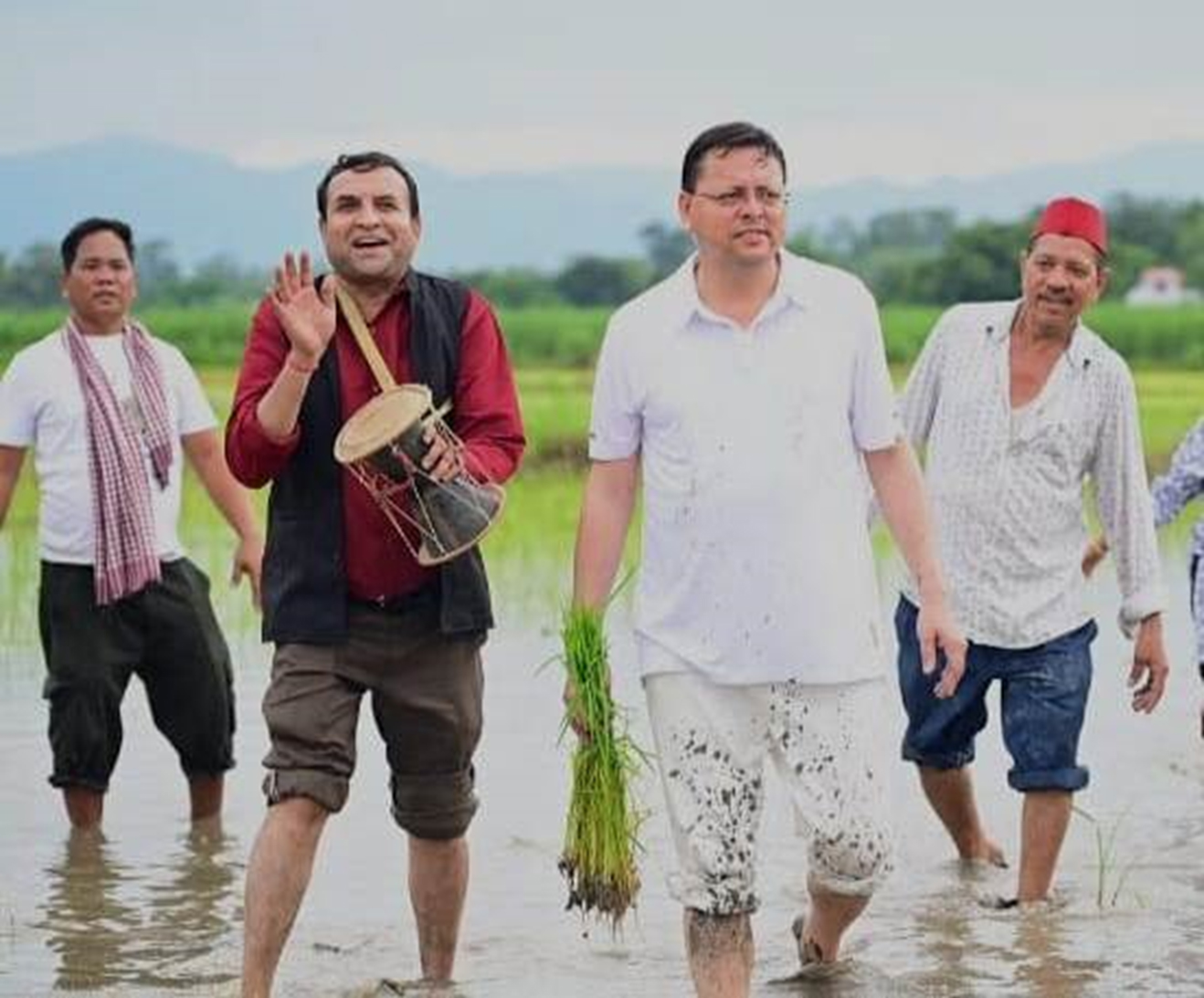
Science is part of culture and the two are deeply intertwined. Science influences and is influenced by cultural contexts. It also contributes to shaping social values and norms, contributing to cultural development. In the Kumaon region of Uttarakhand, there is a tradition of singing folk songs to the beats of the musical instrument, Hudka, in the field while transplanting paddy and weeding the Mandua (finger millet), which is called ‘Hudkiya Baul’. This ancient tradition has represented the folk heritage of the region since time immemorial. In the word Hudkiya Baul, Hudkiya refers to the person who inspires the people working in the field by singing folk songs with a Hudka in his hand. Hudkiya Baul specifically denotes ‘the tradition of singing folk songs to the beats of Hudka’. Hudkiya Baul is a type of labour song which is usually sung during the transplanting of paddy in the month of Ashadh of the Hindu calendar. In ancient times, when Mandua was an important part of the diet, Hudkiya Baul was also organised during the weeding of Mandua. The main objective of this tradition is to infuse energy among the farmers working in the fields by creating a collective rhythm and enthusiasm. Along with this, the main singer also tries to bring agility in the work by playing the Hudka.
Keeping the weather in mind, transplanting paddy is a very laborious job. During this time, the traditional songs sung to the beats of Hudka keep the farmers engaged in transplanting work refreshed and they do not feel tired. The opening song in Hudkiya Baul begins with the prayer to the Earth-God, Bhumyal, the Rain-God, Indra, and the Shadow-God, Megh. Since this event is related to agriculture, prayers are offered to all the gods and goddesses wishing for good grain production. After this, various folk tales, heroic sagas and ancient love stories are sung in the form of songs addressing the person in whose field the transplanting and weeding work is being started. In Kumaon region, the tales of bravery of historical warriors are called Bhadau and Katku. Many mythological tales based on heroism and humour are also sung.
The main traditional musical instrument in this event is the Hudka, which has an outer structure made of wood and is shaped like the Damru of Lord Shiva. The Hudka is a small instrument but the sound it produces makes the stories sung in the form of songs very impressive. Thus, due to the rhythm created by the Hudkiya, energy is saved during paddy transplantation and work becomes easier. Women actively participate in transplanting paddy. In Hudkiya Baul, mainly two singers sing to the beat of the Hudka and the men and women working in the fields repeat and hum along with them. In this way, the field turns from a workplace into a cultural festival.
When men started migrating from the mountains to the plains for business, military jobs and earning money, the responsibility of farming fell upon women. After this, along with stories of bravery, songs of separation also started being sung in Hudkiya Baul.
Hudkiya Baul also has scientific importance. Singing of heroic and love songs along with music does not let the workers get tired or bored psychologically and the energy level remains intact. The secretion of bio-chemicals called dopamine (neurotransmitter) and endorphins in the body is mainly responsible for this. This is the reason why farmers work for long hours with full dedication and enthusiasm. In addition, rhythmic music has a positive effect on the germination and early growth of plants. Some scientific studies have found that rhythmic classical music improves seed germination and absorption of nutrients and water. It is believed that the vibrations generated during music stimulate the cells of plants and noise or loud sounds have a negative effect on them. Music also has a direct effect on the metabolism of plants, stimulation of opening of the stomata and proper growth of plants.
Thus, Hudkiya Baul is a folk tradition that has cultural, social and scientific importance. In the race to modernity and industrialisation, the folk tradition of Hudkiya Baul is on the verge of extinction. Modernisation of agriculture has also contributed to leaving this tradition behind. But understanding the importance of Hudkiya Baul, it is our responsibility to preserve it as a living document of history and a carrier of culture. Also, it is a proof of the existence of scientific concepts inherent in our folk culture.
(The Author is Assistant Professor at Government PG College Karnprayag, Chamoli)