Garhwal Post Bureau
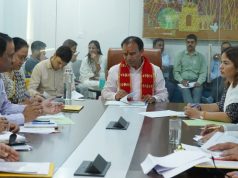
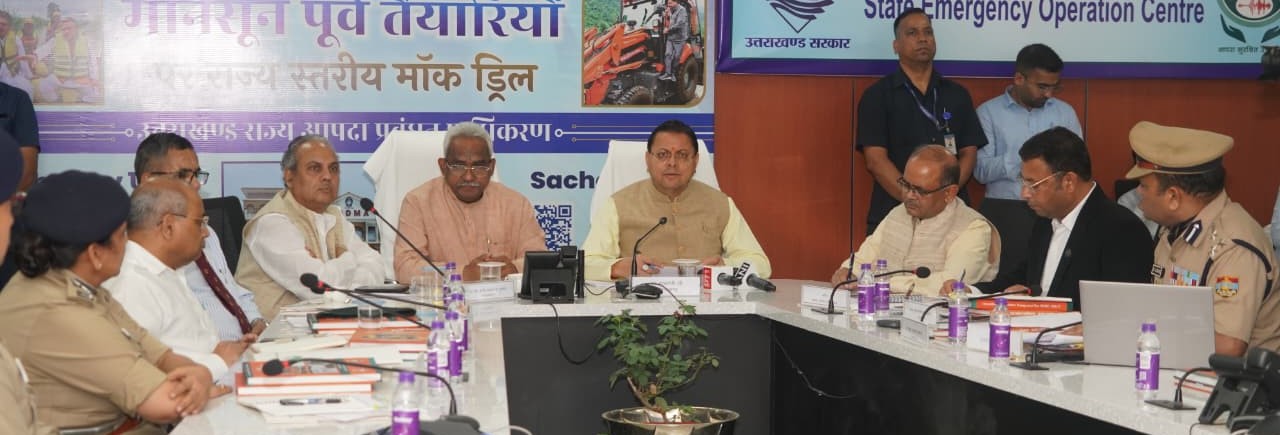
Dehradun, 2 Jul: Chief Minister Pushkar Singh Dhami today issued strict directives to the officials to strengthen disaster management and focus on risk reduction in the state. He was monitoring the mock drill held across the state today to test monsoon and disaster preparedness. He witnessed the mock drill held at IT Park here today. He emphasised that in a sensitive state like Uttarakhand, disaster management is not merely an administrative responsibility but the government’s foremost priority. Stressing on the need for advance preparation, swift decision-making, better coordination and the judicious use of modern technologies, he said these measures are essential to deal effectively with potential disasters during the monsoon.
Dhami also observed that the mock drill is not just a routine exercise but a comprehensive test of coordination among departments, communication systems, resource availability and the actual capacity of relief and rescue mechanisms. He instructed the officials to focus on risk reduction, preparedness and technology-based management rather than limiting disaster response to relief and rescue alone. He highlighted that artificial intelligence (AI) based early warning systems, digital monitoring, drone surveillance, GIS mapping, satellite monitoring and data-driven risk assessment are being integrated into disaster management to ensure timely and accurate evaluation of threats, thereby minimising loss of life and property.
The CM also stated that rapid response teams have been strengthened and early warning systems are being continuously upgraded to ensure timely alerts reach remote and vulnerable areas. He emphasised that conservation of water sources, glacier studies, afforestation, environmental protection and public awareness programmes are also being undertaken to safeguard the Himalayan ecosystem, noting that environmental conservation is the most effective means of reducing disaster risk.
Dhami reminded that various relief and rescue operations conducted in the state have set exemplary standards of scientific thinking, modern technology, quick decision-making and teamwork. He directed that experiences and shortcomings identified during the mock drill be analysed seriously and that all the districts submit detailed review reports to the Uttarakhand State Disaster Management Authority within 72 hours. He also called for extensive public awareness campaigns to inform citizens about disaster safety measures, emergency contact numbers and basic precautions.
The CM reiterated that the government’s objective is not limited to providing relief after the disasters but to minimise risks, ensure safety of life and property and establish Uttarakhand as the country’s most capable, technology-enabled and community-driven disaster management model. He further urged all the stakeholders to work collectively with preparedness, modern technology, effective coordination and public participation to make Uttarakhand the leading state in disaster management.
On this occasion, Dhami also released the Uttarakhand State Disaster Management Plan along with the District Disaster Management Plans of all the 13 districts of Uttarakhand. He said the SDMP defines the roles, responsibilities and coordination mechanisms of all departments for risk reduction, preparedness, early warning, relief, rescue, rehabilitation and reconstruction at the state level, while the DDMP provides detailed action plans tailored to local conditions, potential disasters, available resources and rapid response requirements at the district level. Prepared in accordance with the provisions of the Disaster Management Act, 2005, these plans will serve as vital guiding documents for ensuring better coordination, use of modern technology, effective early warning systems, community-based disaster management and swift, well-organised disaster response at both state and district levels.
The CM also inspected the exhibition of modern relief and rescue equipment displayed by SDRF, NDRF and the Fire Department. He was briefed on the operation, utility and role of these devices during emergencies. The exhibition featured advanced equipment including deep diving sets, night vision cameras, thermal imaging cameras, hydraulic cutters, underwater communication systems, underwater drones and sonar systems. Special attention was drawn to the cutting-edge devices showcased by NDRF for handling CBRNE (chemical, biological, radiological, nuclear and explosive) disasters. Among those present on the occasion were Disaster Management and Rehabilitation Minister Madan Kaushik, Vice Chairman of the Disaster Management Advisory Committee Vinay Ruhela, Lt Col (Retd) Raghuvir Singh Bhandari, Secretary, Disaster Management, Vinod Suman, Garhwal Commissioner Anand Swaroop, IG, Fire Services, Vimmi Sachdeva, Additional Secretary Prakash Chandra, Additional Chief Executive Officer and DIG Rajkumar Negi, Joint Chief Executive Officer Dinesh Kumar Punetha along with senior officials from various departments.