By Arun Pratap Singh
Garhwal Post Bureau
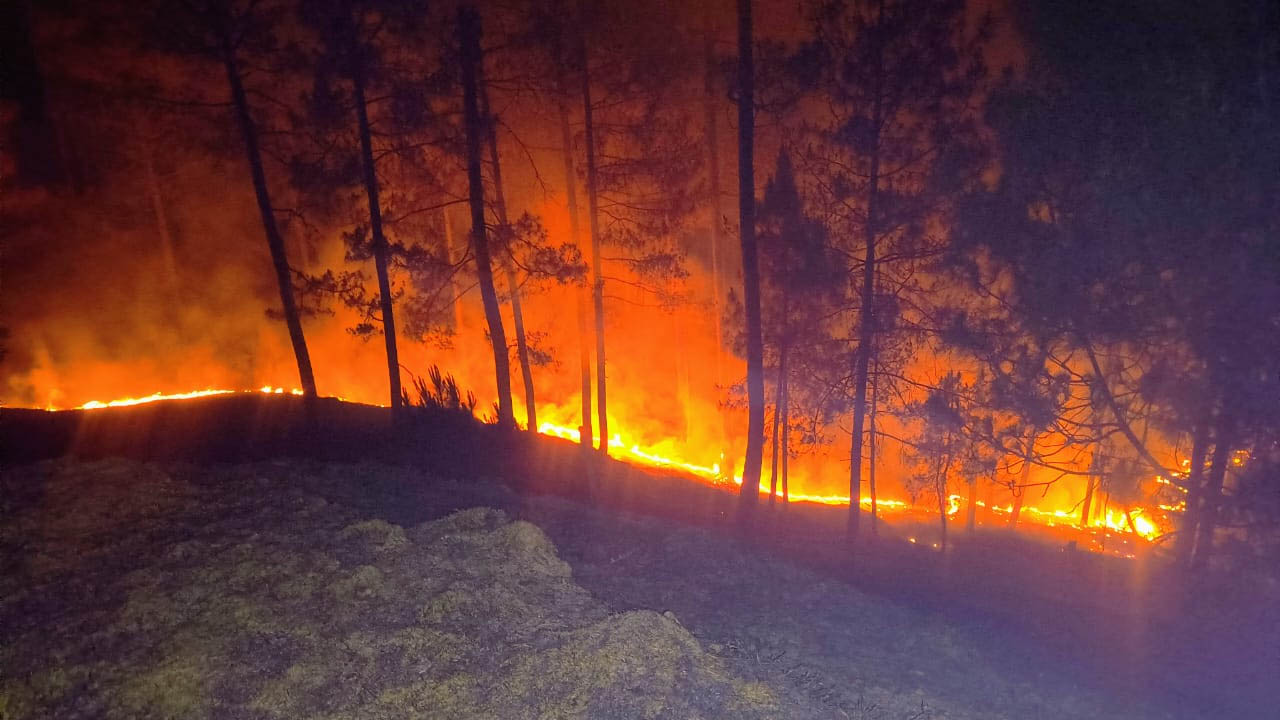
Dehradun, 27 Jul: A detailed species-wise assessment done recently by the Uttarakhand Forest Department has brought into sharp focus the changing pattern of forest fires in the state. The study has identified the Chir (pine) forests as the most vulnerable to wildfires while warning that mixed forests are also emerging as major fire hotspots. The study, conducted for the first time in such detail, is expected to help the department formulate more targeted fire prevention and management strategies based on the type of forest rather than adopting a uniform approach.
According to the department’s analysis of the forest fire season this year which extended from 15 February to 15 June, a total of 580 forest fire incidents affected over 500.81 hectares of forest land across Uttarakhand. The findings indicate that Chir pine forests suffered the maximum damage, accounting for 262.23 hectares, or 52.36 percent of the total area affected by forest fires. Of the total incidents recorded during the period, 323 occurred in Chir pine forests, representing nearly 56 percent of all fire incidents.
The study basically presents a highly concerning picture of the increasing vulnerability of Uttarakhand’s forests to fire. While Chir pine remains the most affected forest type, the report makes it clear that the threat is no longer confined to pine-dominated landscapes. Mixed forests, sal forests and other forest categories have also witnessed significant fire damage this year as well as during recent years, indicating that forest fires have become a wider ecological challenge requiring region-specific and species-specific management.
One of the principal reasons behind the high incidence of fires in Chir pine forests is the accumulation of dry pine needles, locally known as Pirul, on the forest floor. During the hot and dry pre-monsoon months, these highly combustible needles act as ready fuel, allowing fires to spread rapidly, particularly under windy conditions. The department’s analysis shows that the presence of this dry biomass continues to be one of the biggest challenges in controlling forest fires in pine ecosystems.
According to the findings of the study, mixed forests have emerged as the second most affected category during the 2026 fire season. A total of 168 fire incidents were recorded in these forests, damaging 152.71 hectares, which accounts for 30.49 percent of the total affected forest area. Together, Chir pine and mixed forests contributed nearly 83 percent of the total forest area damaged by fires, which indicate towards an urgent need for focused fire management in these ecosystems.
The significance of mixed forests lies in their ecological diversity, as they contain multiple tree species, shrubs and undergrowth. During prolonged dry spells, the accumulation of dry leaves and vegetation, coupled with rising temperatures, makes these forests equally susceptible to rapid fire spread. Broad leaved mixed forests are generally considered much safer according to the experts from the perspective of vulnerability to forest fire. However, there are other factors which also contribute significantly towards increasing forest fires. One is the neglect of fire lines and lack of water bodies in between. The forest experts believe that strengthening fire lines, surveillance systems and rapid response mechanisms in mixed forests is just as important as protecting pine forests.
The study also reveals that sal forests are not immune to the fire season. Thirty-one fire incidents affected 45.60 hectares of sal forests, accounting for 9.11 percent of the total affected area. Although the number of incidents was considerably lower than in pine and mixed forests, the extent of the area damaged indicates that sal forests also require greater protection. Sal forests are broadleaved monoculture forests.
The data further reinforces the fact that forest fires in Uttarakhand are no longer confined to the state’s mountainous pine belts. Different forest types across varying landscapes are increasingly facing fire risks depending on local climatic conditions, vegetation characteristics and human activity. This makes species-specific and location-specific fire management planning essential for future conservation efforts.
Broad-leaved oak forests, considered among the most ecologically valuable ecosystems of the Himalayan region, recorded comparatively fewer fire incidents. Only nine forest fires were reported in oak forests during the season, affecting 5.37 hectares, or 1.07 percent of the total affected area. Broad leaved trees which can retain higher moisture are generally recommended. However, forest officials point out that despite the relatively small area damaged, every fire incident in oak forests is significant because these forests play a crucial role in groundwater recharge, soil conservation, biodiversity protection and maintaining local ecological balance. Greater community participation and continuous monitoring will therefore remain critical for safeguarding these forests.
The department’s data also show that barren and vacant forest units experienced 32 fire incidents, affecting 24.65 hectares, or 4.92 percent of the total area damaged. Other forest categories, including teak, fruit-bearing species and miscellaneous forest types, recorded 17 incidents, affecting 9.80 hectares, which represents 2.05 percent of the total affected area.
Over all, the findings demonstrate that forest fires are impacting a broad range of forest ecosystems across Uttarakhand rather than remaining confined to any single species or region. This underlines the necessity for a comprehensive, multi-layered fire management strategy that combines scientific planning, improved surveillance, quicker response systems and greater involvement of local communities.
Although the figures of 580 incidents and 500.81 hectares affected do not represent the entire history of forest fires in the state, the species-wise analysis offers valuable insight into emerging trends. The dominance of Chir pine and mixed forests in the overall damage pattern provides clear guidance on where preventive efforts need to be concentrated in future.
Forest experts also caution against attributing every forest fire solely to Chir pine. While pirul (Pine needles) undoubtedly accelerates the spread of flames, several other factors contribute to the outbreak and intensity of forest fires. Human activities, accumulation of dry biomass, prolonged absence of rainfall, rising temperatures, strong winds and increasing human pressure around forest areas all play a significant role in triggering and spreading fires.
Recent scientific studies have further highlighted the influence of climate change on the state’s growing fire risk. A recent analysis reported that every one-degree Celsius rise in temperature could be associated with around 112 additional forest fire incidents, illustrating the close relationship between rising temperatures and wildfire occurrence. Satellite-based assessments have also shown that fire activity intensified sharply during May 2026, when active fire detections more than doubled compared to April, making the late pre-monsoon period the most critical phase of the fire season. Independent satellite monitoring identified Pauri Garhwal, Chamoli and Tehri Garhwal among the districts recording the highest concentration of fire detections during the season. Clearly, the climate change is emerging as a huge challenge for Uttarakhand’s forests and in years to come, it may become the major reason behind the forest fires.
The official data available from the Uttarakhand Forest Department indicate that by the close of the fire season this year, nearly 600 forest fire incidents had been recorded across the state, affecting more than 548 hectares of forest area, broadly reflecting the trends highlighted in the department’s species-wise assessment.
Chief Conservator of Forests (Forest Fires) Sushant Patnaik shared with the media that the biggest challenge for the department continues to be the Chir pine forests, where the highest number of fire incidents is being reported. He noted that this is the first time the department has prepared such a detailed species-wise report, that has helped the officials to identify which categories of forests are most affected and helping shape more effective forest fire management strategies in the coming years.