 By Rajshekhar Pant
Whatever political motives may have lain behind the controversy deliberately stirred around a few lines of the Ramcharitmanas, and whatever implications may be hidden beneath the incessant television debates on the subject, commenting on them seems futile. The level of our politics has declined to such an extent that speaking, writing, or arguing about it now feels like an exercise steeped in irritation and despair.
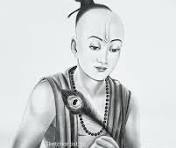
Tulsi Baba wrote the Ramcharitmanas some four and a half centuries ago. Undoubtedly, the work itself was epoch-making. Yet I do not believe that Tulsidas, as an individual, was a revolutionary in the modern sense of the term. A preoccupation with the spiritual and the otherworldly was perhaps the cornerstone of his life. Feudal values were then at their zenith. Social evils such as the caste hierarchy were deeply entrenched. Society was gripped by an inertia that seemed impossible to break.
Perhaps that is why much of what was written and spoken during that period—known to students of literature as the Bhakti Era—reflects the sense of resignation and helplessness that must have permeated the lives of ordinary people. Consider Manthara’s words: Ko nrip hoy, hamen ka hani; cheri chhodi ab houb ki rani?”
“What does it matter who becomes king? Am I, a maidservant, going to become a queen?”
These lines are, in fact, an echo of that very despair. In today’s world—when women fly fighter aircraft and lead nations—can such lines really be understood if severed from the social context in which they were written? The roots of that pessimism and despondency lay in specific historical and social circumstances. But pursuing that discussion here would take us away from the point at hand.
Tulsi Baba was a devotee of Lord Rama, not a social reformer with revolutionary ambitions. It is only natural, then, that a mind wholly surrendered at the feet of its deity would remain largely indifferent to the social realities of its time. His life’s purpose was the grace and companionship of his beloved Lord, not the reform of society. The social landscape of the age may well have found its way into his writing as a reflection or metaphor, but to expect a detached mystic like him to consciously endorse or oppose every prevailing social norm is perhaps asking too much.
There is another aspect that deserves attention. Are the values and beliefs that govern human societies absolute, eternal, and unchanging? Did concepts such as individual liberty, universal human rights, women’s empowerment, free trade, or equality exist four or five centuries ago in the forms we understand them today? Certainly not.
As humanity has travelled through the long corridors of time, we have left much behind and embraced much anew. This evolution has been guided by a growing awareness and sensitivity that continually helps us distinguish between what is right and what is wrong, what deserves acceptance and what ought to be discarded. The horrors of the Second World War taught us that a human being is simply a human being—not superior or inferior, not black or white, not male or female. Every turning point in history has compelled us to learn something new and abandon something old. Perhaps this is the perpetual process through which civilisations become more humane and more refined.
Examine the history of any religion or society anywhere in the world. Was the status of women then what it is today? Did religious texts grant women the same position that men enjoyed? Is it not true that almost every feudal society was stratified by birth, caste, occupation, or social rank?
Societies change with time. Old beliefs crumble, and new ideas find space to flourish. Most of what is written in the Manusmriti has little relevance in the modern age. It was acceptable to societies trapped in the web of older beliefs and assumptions. Today, if it is remembered at all, it is largely as a historical document—one whose authority has faded and whose practical utility has vanished. Clearly, it ought to be so.
The problem arises when we deliberately attempt to view narratives and events that occurred centuries ago through the lenses of contemporary standards and contexts. Applying modern legal, constitutional, or moral frameworks to mythological and pre-modern narratives may sometimes produce interesting debates, but more often than not it generates far more heat than light.
To explain the social assumptions reflected in a historical text is not the same as defending those assumptions. Nor does acknowledging the context in which a work was written require us to suspend our own moral judgment. Understanding and endorsement are not the same thing.
Indeed, it is entirely understandable that some readers today may feel uncomfortable with certain passages in older texts. The question, however, is not whether such discomfort exists, but how a historical work ought to be read and evaluated. Should it be judged solely by contemporary standards, or should it first be understood within the world that produced it?
Literature produced in any era inevitably reflects the beliefs and assumptions of its time. That does not necessarily mean that it endorses or condemns them. If the Ramcharitmanas must be rejected because of lines such as “Dhol, ganwar…”, then Shakespeare’s Hamlet should also be removed from university curricula because the Danish prince, speaking through his anguish about his mother, declares:
“Frailty, thy name is woman.”
And then John Milton’s Paradise Lost should surely become unacceptable for reflections on women that modern readers may find equally objectionable – (“O God, creator wise, why hast Thou created this fair defect of nature?”)
A civilisation matures not by erasing its past, but by learning to read it with honesty. The measure of a society’s maturity lies neither in blindly glorifying everything that it inherits nor in rejecting its entire legacy outright. Rather, it lies in its ability to recognise both the achievements and the limitations of its past—to preserve what remains valuable and leave behind what has outlived its time.
One does not expect particularly sound or thoughtful arguments from many contemporary politicians or the self-appointed gladiators who appear nightly on television screens. Yet matters become truly absurd when equally absurd counterarguments are advanced through strained reinterpretations of words such as shudra or taadna. Why this need for sophistry? Why have we become so hesitant to state our positions with honesty and intellectual neutrality?
Elections will come and go. Some will win; others will lose. But in the pursuit of constructing vote banks and dividing people into competing camps, why are we pushing society back toward the Middle Ages?
The Ramcharitmanas is one of the timeless treasures of Indian literature. Read it. Study it. Debate it. Disagree with it if you must. But do not wrench it out of its historical context and reduce it to a weapon in cheap political controversies.
(The author is an amateur filmmaker, a photographer, and a writer, who has written over a thousand write-ups, reports, etc., published in the leading newspapers and magazines of the country. He can be reached at pant.rajshekhar@gmail.com)