By Alok Joshi
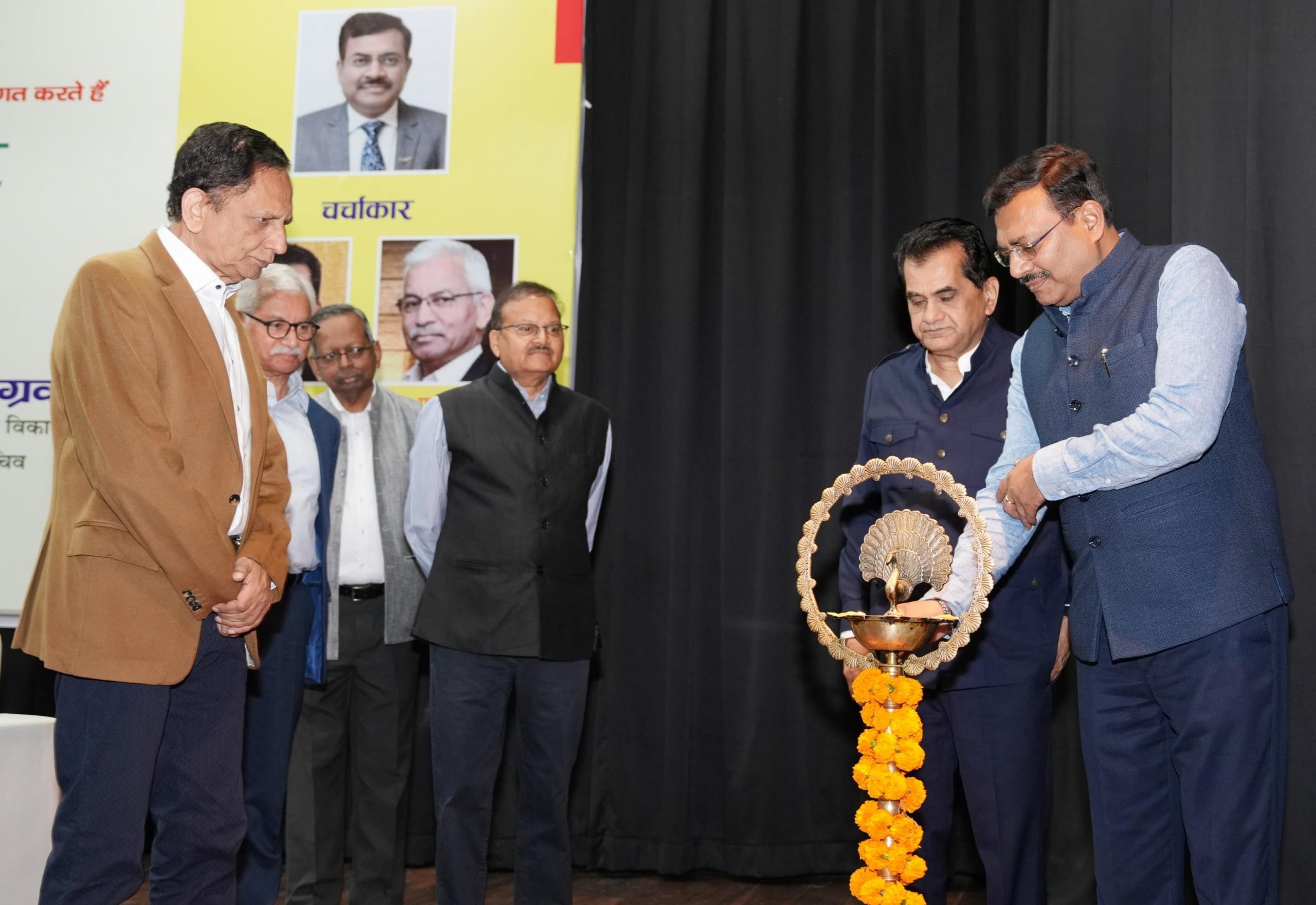
Dehradun, 29 Mar: In a rare convergence of India’s most influential policy architects, a high-powered discussion titled “Bharat-Vishwaguru ki Rah par” was held in the state capital on Saturday evening, chaired by the Chief Secretary, Anand Bardhan. Moderated by Shishir Priyadarshi, former Director WTO and President, Chintan Research Foundation, the panel featured Amitabh Kant (G20 Sherpa and former CEO, NITI Aayog), Rajiv Kher (former Commerce Secretary, GOI) and Shankar Agarwal (former Secretary, Urban Development, GOI).
The event was organised by Doon Library and Research Centre, Chintan Research Centre and IIPA, Dehradun Chapter. Ravishankar welcomed and introduced the expert panel. Priyadarshi set the ball rolling by placing on record the great transformation done by each of the panellists in their respective roles.
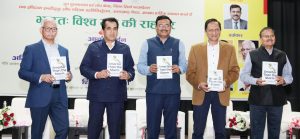
The dialogue transcended mere academic debate, offering a forensic look at India’s historical milestones and the structural shifts required to cement its role as a global leader. The Chief Secretary gave his broader perspective and outlined the role of state governments in India’s march towards becoming the “Vishwaguru”. He began by saying that the concept of Vishwaguru is “not just a political slogan or contemporary aspiration. It is deeply rooted in our cultural and spiritual ethos”. If India has to become Vishwaguru, not as a dominant power but as a guide, friend and philosopher, “we need to strengthen our foundation pillars – knowledge and education, where institutions of higher learning have to become centres of excellence”.
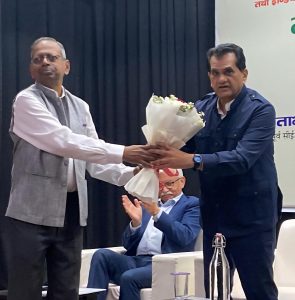
A Legacy of Transformation
Continuing the discussion, Amitabh Kant emphasised that India’s journey to becoming “Viksit Bharat” is underpinned by its digital and physical infrastructure revolution. He noted that the transition from a “laggard” to a “leader” in digital public infrastructure has provided a global template for financial inclusion. He gave data based evidence of India’s unique transformational journey from the “fragile five to the top five” through its determined political will and technology leap-frogging. However, he maintained that, for the vision to be sustainable, India must continue to disrupt traditional models of growth and overcome challenges. He said, “I’m a great believer in an India in which young Indians will play a great role.”
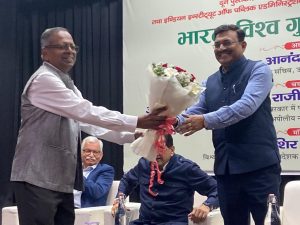
Trade as a Strategic Lever
Bringing a global lens to the table, Rajiv Kher delved into the intricacies of India’s evolving trade policies. Kher underscored that navigating the complexities of international commerce requires a proactive, rather than reactive, policy framework—one that aligns domestic manufacturing with global standards. He mentioned that, for a developing economy “multilateral trade architecture” is the best option for growth. India has been a “reluctant liberaliser” and avoided “regionalisation of trade” for various reasons.
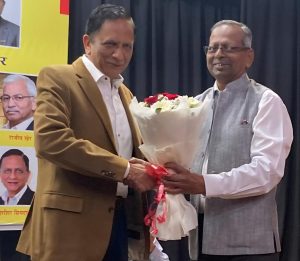
The Last Mile: Cities and Villages
The conversation took a poignant turn toward inclusivity with Shankar Agarwal’s intervention. Drawing from his expertise in urban development, Agarwal argued that the true measure of a “Global Teacher” lies in its ability to uplift the “poorest of the poor”. He emphasised that the Vishwaguru ambition would remain incomplete without a balanced development model that bridges the widening gap between burgeoning urban centres and the rural heartland. The quality of education needs attention, not just opening of schools in villages. He concluded by asserting that we need to “focus on basics” and then everything will fall in its place.
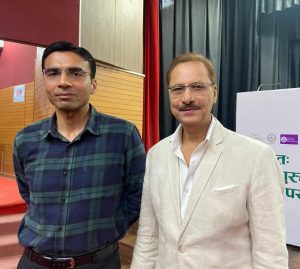
Conclusion: A Collaborative Roadmap
In his closing synthesis, Priyadarshi noted that becoming Vishwaguru is a path, which is not a smooth one. We will have to carve out our own path. Secondly the nation is supreme but it is the individuals who make up the nation. Such policy conversations with enlightened audiences should continue.
The consensus among the veterans was clear: India’s ascent is no longer a matter of “if” but “how”. The roadmap involves a delicate balance of aggressive economic trade, technological leapfrogging, and an unwavering commitment to grassroots equity.
As the evening concluded, the takeaway for Dehradun’s administrative and intellectual circles was profound: the journey to becoming a Vishwaguru is not a destination, but a continuous pursuit of excellence in governance, trade, and human welfare.
(Alok Joshi is a Dehradun-based Management Professional, Corporate Trainer, Interview Coach, Image Consultant, Motivational Speaker, Author of three bestselling books and a freelance writer. With a multi-cultural background, he has worked in top management positions in global companies across many countries including India, Sudan, West Asia and China.)