 By Arjun Ram Meghwal
India’s cultural legacy is resourcefully rich in values, wisdom, and timeless teachings. Its diverse and cosmopolitan dimensions leave no stone unturned in celebrating collective consciousness, most vividly expressed through its many festivals. These festivals are not merely ritualistic observances—they are vibrant reflections of our connection with nature’s rhythms, backed by scientific insights and spiritual vision. Guru Purnima also marks such a special occasion that gives us moment to pause, reflect, internalise what has transpired. It encourages us to ask what has changed. What have we carried forward, and what have we left behind. How far we have travelled in individual capacity and collective capacity. Amid all this backward & forward thoughtfulness, who played the most profound role in the journey? Who held our fingers during the shaky, muddy, slippery and turbulent path of life? It is during such moments that the role of the Guru or guiding force—be it a person, principle, or inner compass—emerges as the most profound presence in our journey. What are the time-tested fundamentals, that are nurturing us to become a balanced traveller? Amidst all the varied dimensions of our existence, it is often the invisible or visible, tangible or intangible forces—be it a mentor’s hand, a divine thought, a mother’s care, a teacher’s word, or a friend’s faith—that become our guiding light. Guru Purnima, therefore, is a sacred opportunity to honour every element, seen or unseen, that continues to guide us, mould us, and walk with us on the path of growth.
Guru Purnima marks a timeless tradition of acknowledging the role of the Guru in shaping individual lives and societal values. This full moon day of the Ashadha month holds deep spiritual, historical, and seasonal significance, as it marks the day Lord Shiva (Adiguru) imparted the knowledge of Yoga to the Saptarishis, the seven sages. It also commemorates the birth anniversary of Maharishi Ved Vyasa. Additionally, it marks the beginning of Chaturmas, a four-month holy period during the monsoon when sadhus and monks stay in one place and teach their disciples. The energies of this Ashadha full moon are believed to support inner transformation. It is a festival to express gratitude to those igniting the light of goodness among us. The Guru does handholding, ready to take the challenge head-on and enable us.
The word “Guru” in Sanskrit is a combination of ‘Gu’ (darkness) and ‘Ru’ (removal of darkness), meaning the one who dispels darkness. In ancient Vedic traditions, the Guru-shishya Parampara (teacher-disciple lineage) was the foundation of learning. The thoughtfulness was supplemented and ethical dilemma were addressed by the morals. It is the continuous process of loading values through actions, that leads to character building. The significance and greatness of the Guru cannot be captured with mere words. A Guru is not just a teacher; their presence is a living force, a feeling, a constant source of strength, direction, and inspiration. Just as Purnima symbolises completeness, purity, and illumination, so does the Guru reflect the same greatness — he is complete in wisdom, pure in intent, and a source of inner light.
The famous Sant Kabir beautifully compares the guru (teacher) to a kumhar (potter) and the disciple (shishya) to an unbaked clay pot.
“Guru kumhār shiṣh kumbh hai, gaṛhi gaṛhi kādhe khoṭ,
Antar hāth sahār de, bāhar māre choṭ.”
“Just like a potter uses one hand inside the pot to support it gently, and the other hand outside to beat and shape it; similarly, a true guru disciplines, corrects, and refines the disciple from outside—through strictness, challenges, and feedback. At the same time, the guru supports and strengthens the disciple internally, with love, compassion, and understanding.”
The Guru is a reservoir of hidden and untapped treasure—their blessings are silent yet deeply transformative, imparting knowledge and wisdom grounded in the values of goodness and truth. The bond between Vishwamitra and Lord Rama in the Ramayana, Guru Ravidas and Meera Bai, Ramanand and Kabir, Guru Nanak Dev Ji and the successive Sikh Gurus during the Bhakti movement—all exemplify the enduring legacy of spiritual and intellectual exchange in Indian civilisation. These sacred relationships offered a moral framework to society and nurtured its inner evolution. In the modern era, Samarth Guru Ramdas and Chhatrapati Shivaji Maharaj, Swami Virjanand Saraswati and Swami Dayanand Saraswati, Swami Ramakrishna Paramhansa transformed Swami Vivekananda into a spiritual giant who later carried Indian philosophy to the West. Similarly, the divine lineage of Mahavatar Babaji, Lahiri Mahasaya, Sri Yukteswar, and Paramhansa Yogananda continues to guide and inspire seekers worldwide. Their teachings have strengthened the bond of brotherhood and awakened divinity overseas. Across the globe, it is a common tradition to express devotion, surrender, or a personal bond with the divine. In Western prayer style, the phrase “Oh My Master” holds special significance as a symbol of deep spiritual connection.
Biologically, the human body evolved after birth from the conjugal companionship of the parents. The Mother, as a first guru, introduces child to this new world and guides the first steps of life. Looked from another perspective, The Five Gyanendriyas (ज्ञानेन्द्रियाँ) – Ears, Skin, Eyes, Tongue, Nose – receive sensory input from the outer world, while the Five Karmendriyas (कर्मेन्द्रियाँ)- Hands, Feet, Speech, Anus, Genitals- perform physical action and Four Inner Instruments – Man, Buddhi, Ahamkara, Chitta – govern thought, decision-making, identity, and memory. In essence, the Gyanendriyas receive sensory input, Man processes it, Buddhi makes decisions, Ahamkara personalises the experience, Karmendriyas carry out the action, and Chitta records it as memory. The Guru imparts knowledge to the seeker, while the Sadguru nurtures wisdom. Their guidance instils virtues amid the invisible complexities of the inner self.
The ripened fruit in the form of flourishing individual resembles the strong roots, watered by the wisdom of Guru, support of family, value of society at large. The actions taken by individuals are mere manifestations of this insider phenomenon. The special occasion of Purnima is yet another moment to introspect all these dimensions. It is far more than a celestial event—it’s a spiritual mirror, a cultural celebration, a scientific phenomenon, and a deeply symbolic moment for renewal, reflection, and gratitude. Its significance spans religions, disciplines, and centuries—reminding us of nature’s rhythm and the cycles within us. The full moon represents wholeness and enlightenment—a time when the inner self can be most clearly perceived, much like the moon fully reflecting the sun’s light. Yogis and saints often consider Purnima an ideal time for deep meditation, chanting, fasting, and connecting with divine energy.
Guru Purnima is a celebration of learning, wisdom, and gratitude. In an era often overwhelmed by information, confusion, comparison, competition the guiding presence of a true teacher—whether spiritual master or coach, educator, parent, or even a digital mentor—becomes even more crucial and goes beyond religion and rituals. The unpredictable realm of the 21st Century, where geopolitical tensions are on a rising scale, the menace of terrorism, extremism, drug-trafficking, cyber warfare, mental health issues are haunting the youth, yet the essence of Guru Purnima remains deeply relevant for the entire world. The absence of ethical dilemma, inability to distinguish the wrong and right actions are emerging challenges and it has shattered the social fabric. The mere shadow of the Guru has enough potential to hold one back from the path of wrongdoing.
As we move further into the era of digital age, the timeless message of Guru Purnima encourages us to seek knowledge, rediscover the inner guidance, honour our mentors, and become sources of light for others. This shall be only mean to build a value-driven humanity.
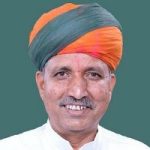
(The author is Union Minister of State for Law and Justice (I/C) and Minister of State for Parliamentary Affairs, Government of India)