By ARUN PRATAP SINGH
Garhwal Post Bureau
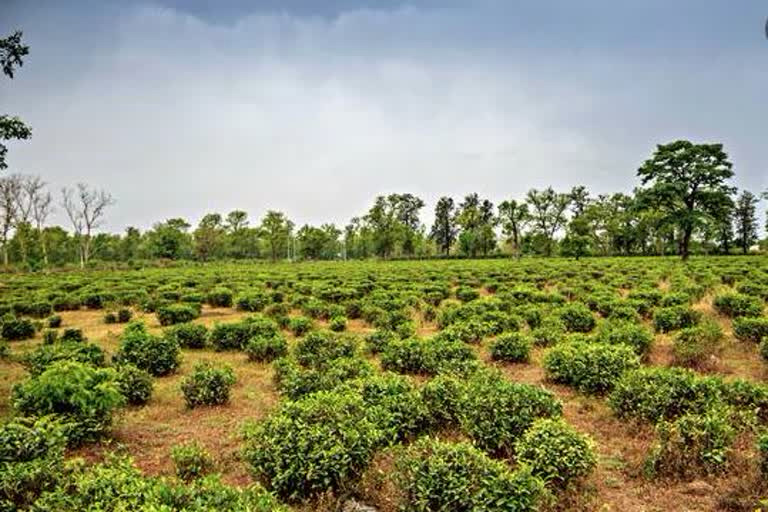
Dehradun, 9 Jul: The Uttarakhand High Court has directed the state government to submit a detailed affidavit within 14 days regarding the alleged unauthorised conversion of land use in Dehradun’s historic tea estates and gardens. The court is presently hearing a public interest litigation (PIL) claiming that land originally designated exclusively for tea cultivation is now being used for seasonal crops such as sugarcane, cucumber, and watermelon without proper permission. The Division Bench of Chief Justice G Narendar and Justice Alok Kumar Mehra has scheduled the next hearing two weeks later to review the government’s response and other submissions.
It may be recalled that the High Court is presently hearing a public interest litigation that challenges the state government’s reported alteration of land use in Dehradun’s historic tea estates and gardens. The court directed both the government and the petitioner to file detailed affidavits addressing the matter.
The court has instructed that clarity be provided on whether the required permissions were obtained from the Tea Board and the central government for the change in land use, and whether all provisions of the Tea Act of 1953 have been duly complied with. A comprehensive response is to be submitted within 14 days. Petitioner Devanand, a resident of Vikasnagar in Dehradun, has contended that certain portions of the area have long been designated as restricted zones exclusively for tea cultivation. He has argued before the court that no agricultural activity other than tea is permitted in these regions, yet the land is now being used for seasonal farming of other crops, thus endangering the existence of the tea gardens. In his plea, he has urged the state government to develop and preserve the region as a heritage tea estate, maintaining its traditional and historical significance.
It may be recalled that on 30 June this year, the High Court had extended its stay on all land transactions in Dehradun’s tea estates, following allegations of unauthorised land sales, including those involving estates established during the British era. The Bench has expressed grave concern over the encroachment of land mafia and the apparent lack of regulatory oversight. It is also worth reminding here that since the middle of 2023, district authorities have suspended registration of suspicious land deals in regions such as Vikasnagar, Ladpur, and Raipur. Notices have been served to alleged encroachers, particularly for plots registered after 10 October 1975, which may be in violation of previous judicial directives.
The environmentalists and Doon residents point out that over 80 per cent of Doon Valley’s colonial-era tea estates have vanished under the pressure of real-estate development, despite existing protections under laws like the Land Ceiling Act. This has led to mounting demands for the conservation of the remaining estates as heritage zones. The proposed Smart City project, covering more than 1,200 acres in areas including Harbanswala, Arcadia Grant, and Kanwali, has faced resistance from local tea workers and environmental groups, who argue that the loss of green cover and traditional estates would be detrimental to both the environment and the cultural identity of the region. Activists have called for the preservation and development of the remaining gardens, along with the implementation of welfare schemes for workers. The locals also claim that certain senior bureaucrats have been eyeing this prime property and agree to land use conversion for long.
In response to growing public concern and court directives, the district administration has directed sub-registrars and the MDDA to halt all land transactions in areas under suspicion and to initiate investigations into unauthorised encroachments. The government has also begun a campaign to promote organic tea cultivation in former plantation zones, including Vikasnagar, as part of broader rural agricultural reform initiatives.
With the tea estate land now under judicial scrutiny, the court has emphasised that no further sales or conversions must be allowed until all legal procedures and approvals are clearly established. The state’s affidavit, due in two weeks, will need to outline the legal grounds for any change in land use, confirm whether the land retains its designation as a tea estate, and clarify the involvement of the Tea Board or central authorities. The court’s anticipated decision is being expected by many as likely to set an important precedent for land-use regulation in Uttarakhand and reinforcing the protection of historic tea plantations.