Culinary Chronicles
 By Yasmin Rahul Bajaj
Some faded memories yet the choice till date remains intact and probably I passed it on to the Cub in the genes.
In the growing up years I was allergic to eggs. Hence the breakfast choices were restricted. My mother narrates that as a tot I chose the South Indian flavours for the first meal of the day – idli, dosa or uttapam.
Ram, a cook from down south at our home on Camel’s Back Road in Mussoorie during those years, prepared the best of those delicacies. I do not reminisce about him at all but vaguely remember his food for it became my preferred cuisine later and, his little daughter, whom I often bit hard not in anger, perhaps in affection as I would do then to anyone whom I liked. A weird habit indeed!
Precisely twenty-four years ago, I felt the requirement to prepare flawless idlis – light, porous, tender, soft and bouncy.
Cub was merely six or seven months old then when she was invited for her maiden party as a guest in the neighbourhood. It was a usual trend in the army that the mother accompanied a toddler or the lap baby for akin occasions.
Out of the scrumptious spread over the dining table, the food that I found appropriate for my little one were the steamed rice and lentil cakes with a subtle tomato and lentil chutney. With one nibble she demanded more. Quite indicative of her taking a liking for those.
No doubt it had to be outstanding in a Tamilian household. The right proportions, tricks and tips were learnt from the lady. Cub literally got addicted to the savours and would demand them intelligently in her baby language with small words that she would pick up. Yet turned away from the instant ones done with semolina.
There are many theories related to the origin of idli. Some believe that the Arab traders who came to South India introduced the concept of flat rice balls that could be paired with coconut based curries to avoid non-halal foods.
While others say that the old Sanskrit and Kannada texts of the tenth and twelfth centuries have a mention of “Iddarika”.
Rest follow “Kedli”, originated in Indonesia and the ancient kings who voyaged to India brought the recipe of fermented rice cakes along.
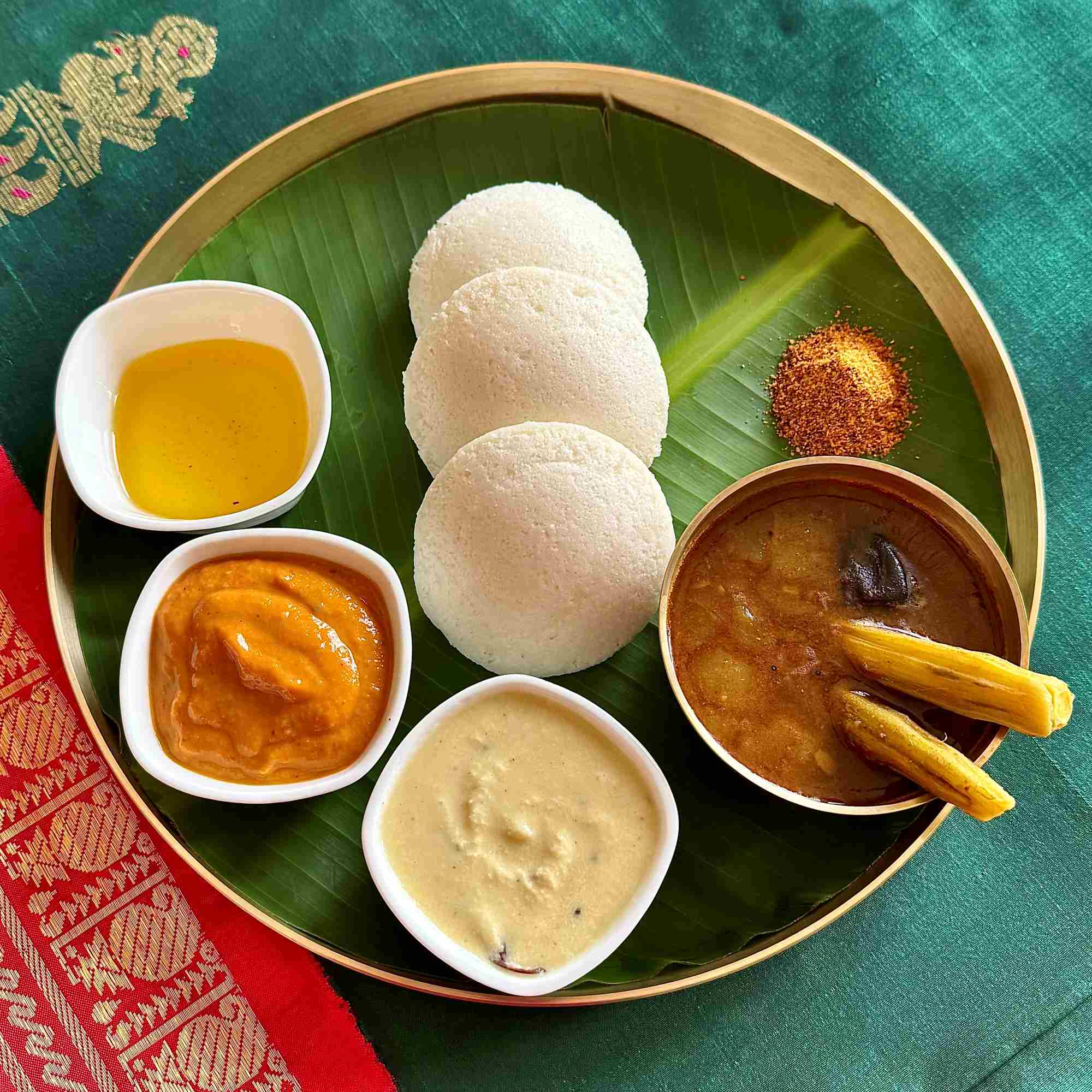
Today, Idli is prepared in most households accompanied with sambhar, a variety of chutneys, podi and ghee.
Ingredients:
- Idli rice – 3 cups (can be substituted with any regular rice if need be)
- White lentils – 1 cup
(ratio of 3:1 of Rice:White lentils)
- Boiled / steamed rice – ½ cup
- Salt – as per requirement
- Fenugreek seeds – 10 seeds
- Oil – for greasing
Method:
- Wash the rice and white lentils under running water until the water turns clear to make pure white idlis.
- Soak the washed rice and lentils in 6 cups of water along with the boiled / steamed rice and fenugreek seeds for 10 to 12 hours.
- Grind the soaked grains in the same water in which they have been soaked but gradually add in that water to make a smooth batter that is neither too thick or too liquid.
(For better texture use a wet stone grinding machine for making the batter.)
- Pour the batter in a container (preferably stainless steel or glass), cover with a lid.
- Let it ferment for 6 to 10 hours, depending upon the temperature around. In a cold climate wrap a warm cloth around the container and ferment for 12 to 14 hours in a warm room. The batter should become light and foamy with a wee sour smell.
- Prepare the idli mould by greasing each tray with oil.
- Bring water to boil in the idli steamer, meanwhile add salt to the batter and mix well.
(Add salt only to the required quantity of batter that is to be steamed at one time. Rest can be refrigerated if need be.)
- Pour batter into each mould.
- Steam for 12 to 14 minutes.
- Cool slightly and unmold with the help of a knife or spoon.
- Serve hot with a choice of accompaniments.
(Yasmin Rahul Bakshi is a food historian and an accomplished consultant Chef. A widely travelled Army wife from the Mussoorie hills with exposure to international cuisines & preserving recipes with the medium of food photography and digital content creation in the form of stories.)