Garhwal Post Bureau
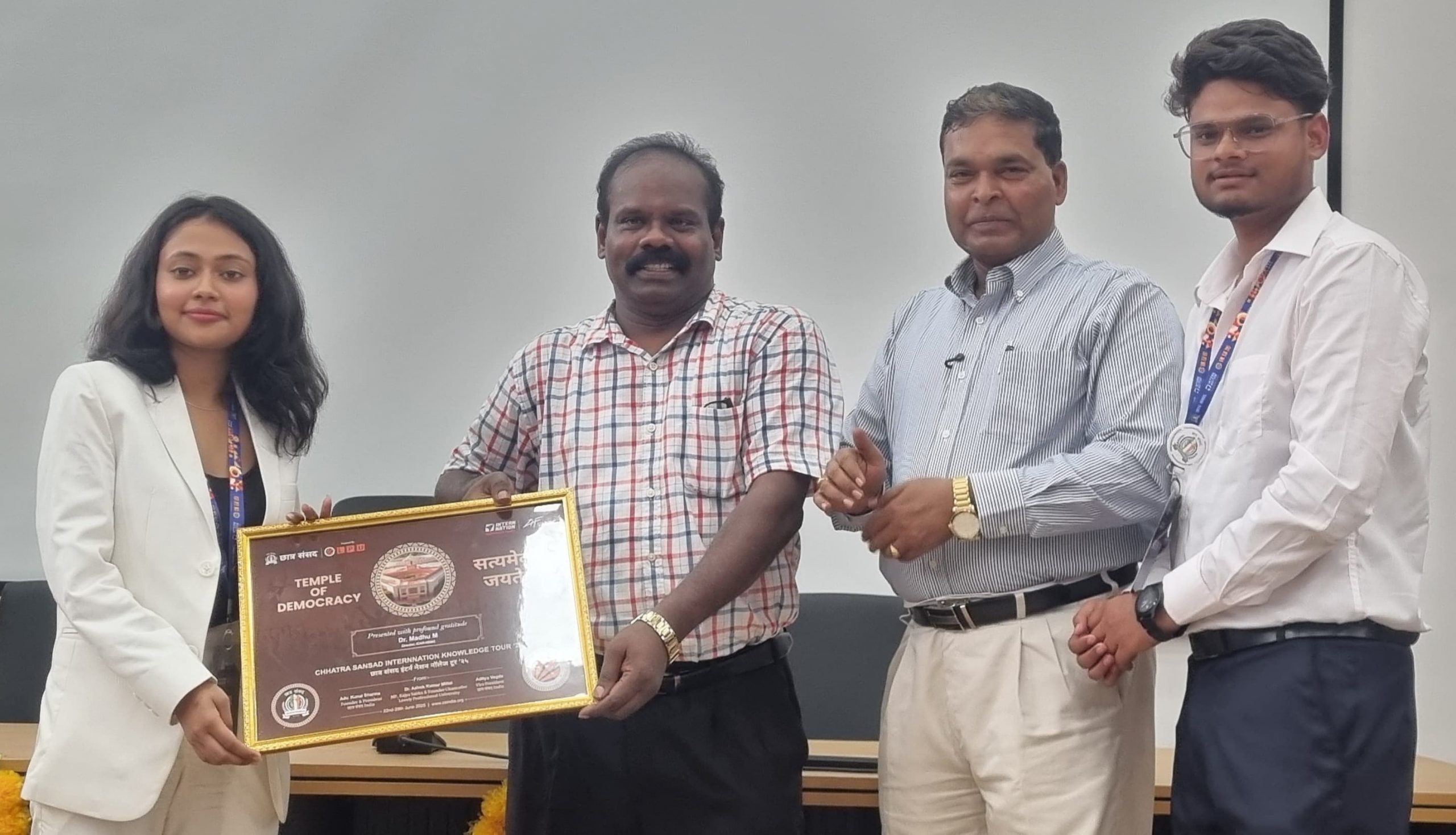
Dehradun, 27 Jun: The ICAR–Indian Institute of Soil and Water Conservation (ICAR-IISWC), Dehradun, hosted a contingent of around 50 students and scholars from diverse academic backgrounds – agriculture, law, computer engineering, electronics, and social sciences, today, as part of an exposure visit under the banner of the National Governance Tour. The participants represented several prestigious institutions across India, including IIT Chennai, SRM Institute of Science and Technology (Kattankulathur, Chennai), and Lovely Professional University (Jalandhar, Punjab).
Dr M Madhu, Director, ICAR-IISWC, addressed the students and explained the processes involved in soil erosion, as well as the five key principles for mitigating it. He emphasised how reducing the kinetic energy of raindrops by dispersing them into smaller droplets helps in minimising soil detachment. He elaborated on the Detachment–Transport–Deposition (DTD) process of soil erosion and highlighted the importance of monitoring and managing these processes through effective soil conservation measures.
Dr M Muruganandam, Principal Scientist and Head of the PME & KM Unit, who coordinated the visit, explained how site-specific Soil and Water Conservation (SWC) technologies are developed at IISWC. He discussed the importance of understanding parameters such as soil quality, rainfall characteristics, land slope, vegetation cover, and cropping practices in designing sustainable interventions. He also addressed the impacts of climate change on agriculture, riverine biodiversity, and overall farm and riverine productivity, underlining the need for climate-resilient agricultural strategies.
During the visit, the students and scholars were educated on the importance of Natural Resource Management (NRM) and sustainable agricultural practices. The students were also introduced to ICAR, its network of research institutions, and the pivotal role of IISWC and its regional centers in advancing NRM and sustainable farming in India. The interactive session saw students raising pertinent questions on soil-water conservation, soil health, advanced agricultural technologies, and future career opportunities in this field.
This visit was organised under the banner of the Students’ Parliament by the Zero Hour Foundation, Gujarat. The group is currently on a study tour in Dehradun to gain insights into the functioning of political, administrative, scientific, and public institutions.