Culinary Chronicles
 By Yasmin Rahul Bakshi
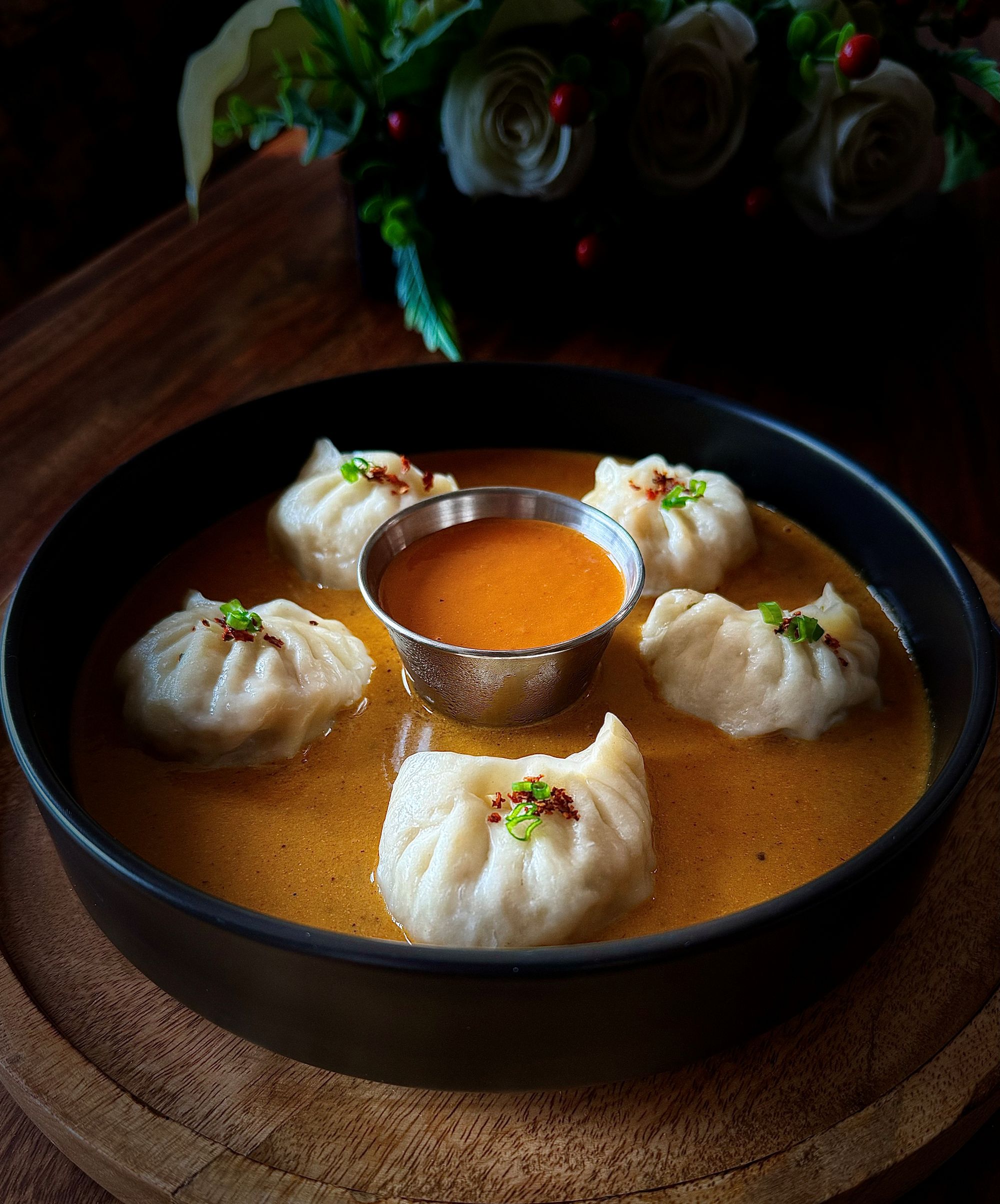
It’s all about Momo – Pleated little white dumplings steamed, sauteed or fried are dominating the Indian streets.
Momo would not be as fashionable in their lands of origin as they are in India these days. Their lineage goes to Tibet but their counterpart foods exist in Nepal, Bhutan, Ladakh and their cousins in Japan are called ghoza, buuz in Mongolia, baozi in China, mantu in Afghanistan, mandu in Korea and manti in Turkey.
Might be sighted at many nooks and corners in the present day, but the only place that served good momo till the early nineties was at Amitash, The Rice Bowl on the Mall Road by Yangchen Lhatsang, or the local Tibetan vendors sold them outside Wynberg-Allen School only during the sessions of inter school Olympics.
The word “momo” originated from the Tibetan word “mog-mog” via the Mandarin language meaning dumpling. There has been a tussle between Nepal and Tibet over the inception of momo.
There are two contradicting folklores that take us to the bygone era. One narrates that the Nepalese Newari dealers in the past visited Tibet often for trade from where they adopted the art of momo making.
While the other mentions that a Newari princess from Nepal who was married to a Tibetan king in the fifteenth century introduced these in Tibet as “mome” which in Newari language means cooking by steaming.
Around the early nineties of the past century, I learnt to cook momo from one of my mentors in school in Mussoorie – Ms Sujatha Agarwal. She hailed from the land of Gorkhas – Karseong. Time passed by and I lost touch with her though the fond memories always remained fresh.
Decades later I was speaking to a friend of Tiger who too belonged to the same region as that of hers, plus with a common family title. Randomly I inquired about her and received a positive response. She happened to be his first cousin. Indeed, it’s a small world! Excitement and happiness gushed reminiscing over the good old times – her infectious smile and an optimistic approach of covering up for all her pupils’ follies.
I care less about the gastronomy of mog-mog and their genesis till their variations continue to appeal. Authentically, they were brimmed with yak meat due to scarcity of vegetables on the plateau but later other variations of cheese, vegetables, lamb, buff, poultry et cetera were approved beneath the wheat skins. With the modernising times, all purpose flour casings graduated to that of wholemeal flour, ragi, potato or rice starch and the like.
Generally, momo are served with a spicy tomato and chili-based chutney, and a bowl of soup or a gravy called the “jhol”. To the horror of these uncomplicated yet soul gratifying dumplings, some have fused them with spicy Indian marinations and then baked in clay ovens or coated with savoury crumbs before deep frying and presented with a heavy blob of greasy mayonnaise or a drizzle of dairy cream. An absolute murder!
Jhol along with momo makes a hearty meal. It is a piquant broth with layers of flavours bursting out of peanuts, sesame seeds and tomatoes that not only comforts during the cold months but all through the year.
Ingredients:
- Tomatoes – 3 medium sized
- Garlic cloves – 8 to 10
- Ginger – 1 inch
- Onion – 1 medium sized
- Coriander leaves – ¼ tsp chopped
- Cumin seeds – ½ tsp
- Kashmiri red chili powder – ½ tsp
- Turmeric powder – ¼ tsp
- Roasted peanuts – ⅓ cup (without skin)
- Roasted sesame seeds – 2 Tbsp
- Salt – according to taste
- Lemon juice – ½ tsp
- Mustard oil – 1 Tbsp (can use any other cooking oil also)
- Sichuan pepper (timur) – ¼ tsp (optional)
- Black pepper powder – ¼ tsp
Method:
- Chop the tomatoes and onions in small dices and keep separately.
- Chop the ginger and garlic. Keep aside.
- Powder and keep the roasted peanuts and sesame seeds separately.
- Heat oil in a pan. Add the cumin seeds and let them splutter.
- Add the ginger and garlic. Sauté for a minute.
- Add the onions and cook until they turn pink.
- Now add the turmeric, red chili powder and salt. Mix well.
- Add the tomatoes and black pepper powder and cook on low flame for 5 minutes until the tomatoes get mushy and soft.
- Cool the sauce.
- Transfer it into a blending jar with the powdered peanuts and sesame seeds, coriander leaves and 1 cup water.
- Make a fine paste.
- Transfer the blender sauce back to the cooking pan and add 2 cups of water. Cook on high flame for 5 minutes.
- Switch off the flame and add in the lemon juice and Sichuan pepper.
- Serve hot with momo.
(Yasmin Rahul Bakshi is a food historian and an accomplished consultant Chef. A widely travelled Army wife from the Mussoorie hills with exposure to international cuisines & preserving recipes with the medium of food photography and digital content creation in the form of stories.)