By Arun Pratap Singh
Garhwal Post Bureau
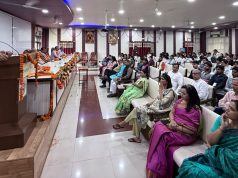
DEHRADUN, 4 Apr: In a significant escalation of tension between the district administration and the legal fraternity in Dehradun, the practicing lawyers in Dehradun have announced a complete boycott of all revenue court-related work demanding the transfer of District Magistrate Savin Bansal. The decision was taken unanimously at a general body meeting of the Dehradun Bar Association held at the Vidhi Bhawan here on Saturday. This has brought all key administrative and quasi-judicial processes to a standstill and created lot of inconvenience to the people in general.
Following the resolution, all the revenue-related functions, including property registrations, proceedings in the Additional District Magistrate (ADM) courts and activities in the sub-registrar offices, have been suspended. The move is expected to significantly impact routine governance and public service delivery, particularly in matters relating to land transactions, mutation, and certification processes, which are largely dependent on the functioning of revenue courts in Uttarakhand.
It may be recalled that the protest has been triggered by strong opposition to the reported recommendation for cancellation of the practice licence of senior advocate Prem Chand Sharma. Addressing the gathering at the Bar Association meetong, Sharma became visibly emotional while presenting his case, alleging that he was being deliberately targeted for leading the struggle committee, which has been fighting for the construction of lawyers’ chambers in the court compound. He contended that his proactive role in raising the issue before the government and mobilising the legal community had led to what he termed as a “repressive and vindictive” response from the administration.
Echoing similar sentiments, Bar Association president Anil Kukreti also strongly condemned the action in strong terms and he stated that the issue has escalated beyond an individual and that it amounts to an affront to the entire legal fraternity in the district. He observed that recommending cancellation of the licence of such a senior member reflects administrative high-handedness. Kukreti further asserted that the Bar would not tolerate such actions under any circumstances.
Speakers at the meeting described the development as an attack on the dignity and independence of the legal profession and legal fraternity. They stressed that the matter has united the Bar across affiliations. The Association clarified that the agitation is not limited to supporting one particular lawyer it represents a broader resistance against what they perceived as arbitrary administrative conduct.
The general body, attended by a large number of advocates, passed a unanimous resolution to boycott all revenue courts until the transfer of the District Magistrate is effected. As part of the protest, advocates abstained from work today, which resulted in a complete halt not only in court proceedings but also in ancillary legal services. Activities such as drafting, typing of documents etc and operations of stamp vendors were also suspended, further compounding the disruption.
Legal observers remind that such stand-offs between the Bar and the administration, though not unprecedented, tend to have immediate and far-reaching consequences for the general public. In states like Uttarakhand, where revenue courts handle a substantial volume of civil and land-related disputes, even a short-term boycott can lead to a backlog of cases and delays in essential services. Similar instances in the past, reported across various districts in North India, have often required intervention at higher administrative or judicial levels to restore normalcy. With both sides appearing firm in their positions, the impasse is likely to prolong unless conciliatory efforts are initiated. Meanwhile, the burden of the disruption is expected to fall largely on ordinary citizens, whose routine legal and administrative matters now remain in limbo.