 By Praveen Chandhok
In an age where screens dominate our attention and algorithms predict our every move, one cannot help but resonate with the sentiment expressed in ‘Mr Robot’: “We’re all living in each other’s paranoia.” This powerful statement encapsulates a reality that is increasingly defined by the delicate interplay between trust and fear, where our interactions are governed by an undercurrent of suspicion and unease, and where paranoia has woven itself into the very fabric of our collective consciousness. The quote caught my attention as I was recently binge-watching ‘Mr Robot’ on Amazon Prime.
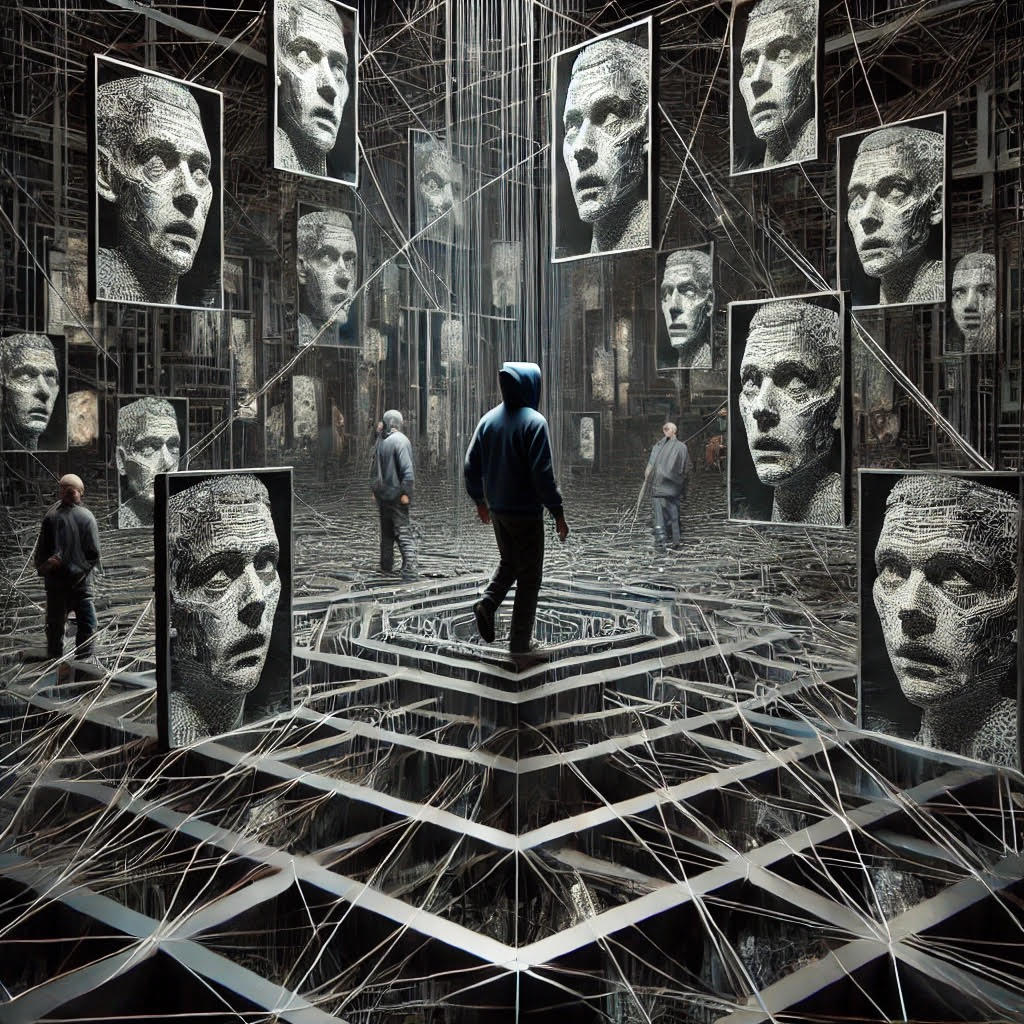
Picture, if you will, a vast, intricate web – a web spun not by a spider, but by the collective minds of humanity. Each strand represents a connection between individuals, communities, or institutions. Ideally, this web should be a support system, strong and resilient, a testament to our interdependence. But instead, it is a fragile network, frayed at the edges and burdened by the weight of mutual distrust. We have, in essence, become the architects of our own entrapment, ensnaring ourselves in a labyrinth of paranoia that mirrors the complexities of our digital age.
Elliot, the protagonist of ‘Mr Robot’, is a modern-day Minotaur, navigating this very labyrinth. His world, much like ours, is one where every action is shadowed by doubt, every decision tinged with fear. As a cyber-security engineer by day and a vigilante hacker by night, Elliot embodies the duality of our times: the need to protect and the urge to expose, the desire to connect and the fear of betrayal. His journey through the dark underbelly of corporate corruption and personal turmoil reflects our own struggles in a world where the lines between reality and paranoia are increasingly blurred.
The metaphor of a maze is particularly apt when considering how we navigate relationships today. Trust, once the cornerstone of human connection, has become a rare commodity, replaced by a pervasive sense of unease. Like travellers in an unfamiliar forest, we tread carefully, our every step calculated, our every word measured. We trust to distrust, agree to disagree, and encourage to discourage, constantly on guard against unseen threats. This caution, while born of self-preservation, also isolates us, cutting us off from the very connections we seek to protect.
Consider the act of a handshake—a simple, time-honoured gesture of trust and goodwill. In today’s world, even this innocent act is fraught with uncertainty. Is the hand extended in friendship or hidden motives? Is the smile genuine, or does it mask an ulterior agenda? Our paranoia taints even the most basic interactions, casting a shadow over what should be a moment of human connection. We have, in many ways, become prisoners of our own mistrust, locked in a cycle of suspicion that feeds on itself.
But where does this paranoia stem from? The answer lies in our interconnectedness. In a world where information is both a currency and a weapon, we are constantly bombarded with narratives that reinforce our fears. News cycles churn out stories of betrayal and deceit, social media amplifies our anxieties, and the very technology that promises to bring us closer together also drives us further apart. We are, in essence, living in a house of mirrors, where every reflection is distorted by our own insecurities.
Yet, within this bleak landscape, there is also a glimmer of hope. Just as a labyrinth, no matter how complex, has an exit, so too does our current state of paranoia offer a way out. The key lies in recognising the power of our collective mindset. If we can build a web of distrust, we can also unravel it. By choosing to trust, by daring to be vulnerable, we can begin to mend the frayed connections that bind us. It is not an easy path, but it is a necessary one, for only by confronting our fears can we hope to transcend them.
In conclusion, the quote, “We’re all living in each other’s paranoia”, serves as a stark reminder of the times we live in, but it also challenges us to reimagine the world we want to create. Like Elliot, we must navigate the labyrinth with courage and resilience, recognising that while paranoia may be a part of our reality, it does not have to define it. By choosing trust over fear, we can begin to rebuild the web of connections that makes us truly human, transforming our collective paranoia into a shared journey towards understanding and empathy.
(The author is former President 2019-2021, 2013-2015, SJA Alumni Association, Dehradun)