By Sunil Sonker
Mussoorie, 30 Jul: A special screening of the film ‘Main Wapas Aaunga was held today at Ritz Cinema, here.
Many refugee families who settled in Mussoorie after the 1947 India-Pakistan Partition attended the event. As the film progressed, the tragedy of the Partition, the anguish of separated families, and the pain of displacement came alive on screen. Many elderly viewers in the hall were moved to tears as decades-old wounds were reopened. The film’s story and screenplay were written and directed by the niece of Pramod Sahni, a senior citizen of Mussoorie. The movie portrays the displacement of millions, the violence, and the agony of separation from loved ones during the Partition with great sensitivity.
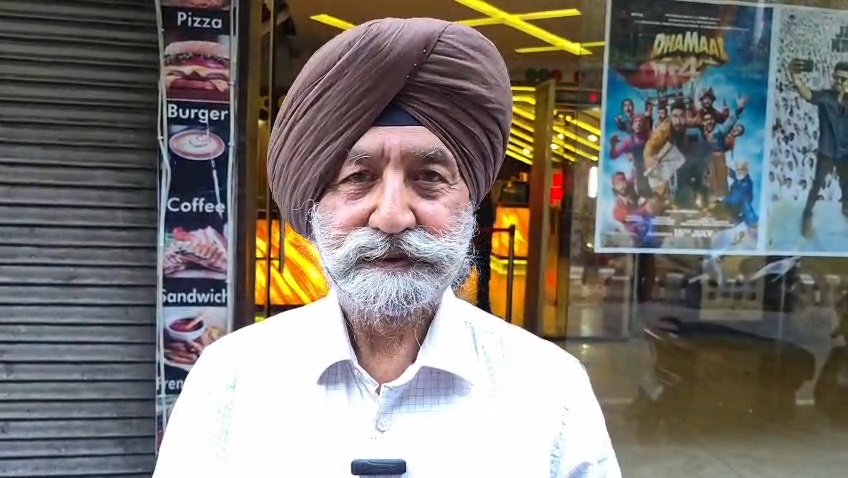
Indrajit Singh, an eyewitness to the Partition, became emotional after watching the film. He recounted how his family had moved from Pakistan to settle in Mussoorie during the Partition. He mentioned that he had once attempted to visit his old home in Pakistan, but the memories of the massacre and inhumane violence he had witnessed—inflicted upon his family and others—shattered him emotionally; consequently, he could never bring himself to do so. “Watching the film today brought everything back to life before my eyes,” he said. “Seeing the atrocities committed against women and innocent children made me feel the pain of my ancestors all over again. It felt as though history was standing right in front of me.”
Meanwhile, Pramod Sahni shared that after the Partition, his father had once visited Pakistan to see his old home and printing press. He found his house occupied by others, and his printing press—’Punjab Printing Press’—was still operating under the same name. He recounted that when the local people learned he had come from India to visit his ancestral home, they treated him with respect and welcomed him warmly. Pramod Sahni mentioned that he had moved to Mussoorie after the Partition in 1946; an employee named Chiragdin had accompanied him to India, where he adopted a new identity—changing his name to Charan Das—and started a fresh life. He noted that the film powerfully portrays the anguish of the Partition. His granddaughter also contributed to the film’s production, a fact that fills him with pride.
During the special screening, the eyes of nearly all the refugee families present were filled with tears; some were reminded of the homes they had left behind, while others thought of estranged relatives. Several scenes in the film revived memories from decades past. Many elderly people in the hall were visibly moved as they shared their experiences with one another.
Attendees remarked that Main Wapas Aaunga’ is not merely a film but a story reflecting the pain, struggle, and displacement of the millions of families who paid the price for the Partition throughout their lives. They believed that producing such films is essential to acquaint the new generation with this tragedy, ensuring that this painful chapter of history is not forgotten.
Sandeep Sahani, Manmohan Karnwal, Shailendra Karnwal, and Inderjit Singh Kohli were among those present at the event.