Garhwal Post Bureau
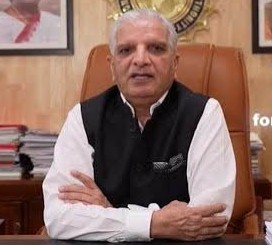
Dehradun, 12 Sep: The Head and Member of the National Disaster Management Authority (NDMA), Rajendra Singh, today visited the Uttarakhand State Disaster Management Authority (USDMA) to review the extensive damage caused by the recent monsoon. During the meeting, he assessed the relief and rescue operations being carried out in the affected areas and offered several key suggestions to make disaster management more effective in the future while ensuring safe and sustainable development in the state.
Singh asserted that the NDMA is fully prepared to assist Uttarakhand at every level in its endeavour to become a disaster-safe state, guided by the principle of “Build Back Better”. He emphasised that disaster management should not be seen merely as a means of handling crises but also as an opportunity to ensure sustainable and eco-sensitive development during post-disaster reconstruction.
During the review meeting, detailed discussions were held regarding the recent visit of the Inter-Ministerial Central Team (IMCT) and the forthcoming Post-Disaster Needs Assessment (PDNA). Singh pointed out that systematic assessment is crucial after every disaster to scientifically evaluate the actual extent of damage, the number of people affected, the state of infrastructure, and the impact on livelihoods. He said that such assessments are vital for planning reconstruction, mobilising financial aid, and reducing future risks. He further stated that a PDNA team would soon be visiting Uttarakhand, and on the basis of the actual assessment, the Centre would provide additional financial assistance to the state.
Singh urged Secretary, Disaster Management, Vinod Kumar Suman to ensure systematic documentation of the challenges faced and lessons learnt during relief and rescue operations. He said that the insights gained from disaster management must be incorporated into future policymaking, training modules, resource planning, and technical improvements. Such documentation, he noted, would not only enhance administrative efficiency but also serve as a useful model for other states.
Suman shared with Singh that this year’s disaster has had a widespread impact on livelihoods across the state. He expressed the expectation of comprehensive support from the NDMA to restore people’s means of income and to facilitate reconstruction and mitigation works.
Lauding the ongoing relief and rescue operations, Singh observed that the timely provision of relief funds to the affected people within 24 to 72 hours of the calamity demonstrated the administration’s promptness and sensitivity. He emphasised that the administration must always stand by disaster victims who lose everything in such tragedies. Understanding their mental state, financial distress, and the instability of their lives, and responding to them with compassion, he said, is the human side of disaster management.
Taking note of the ongoing work in Joshimath, Singh highlighted that the Himalayan states face continuous threats from landslides, glacier lake outbursts, and extreme rainfall. He stressed the importance of mapping and risk assessment of towns and the habitations situated along rivers to identify vulnerable areas and undertake timely protective measures.
Calling for a comprehensive action plan to prevent migration caused by disasters, Singh noted that this issue is not merely about livelihoods but also holds strategic importance. He said that retaining the local population is essential for safeguarding border areas, supporting the tourism-driven economy, and sustaining the overall socio-economic fabric of Uttarakhand.
The NDMA head also underlined the importance of coordination with scientific and research institutions located in the state, observing that Uttarakhand possesses several such institutes whose expertise, technical resources, and data can significantly strengthen disaster preparedness. Stressing that tourism remains the backbone of the state’s economy, Singh said that ensuring safe tourism and making the Char Dham Yatra free from disaster risk must be accorded top priority.
Additional Secretary and Additional Chief Executive Officer (Administration) Anand Swaroop, Additional Chief Executive Officer (Implementation) DIG Rajkumar Negi, JCEO Mohammad Obaidullah Ansari, and USDMA experts were also present during the meeting.