
Govt announces Science, Technology & Innovation Policy 2026 for U’khand
Garhwal Post Bureau
Dehradun, 10 Jun: The Uttarakhand government has formally released the Science, Technology & Innovation Policy 2026, giving a new foundation to science-based development, innovation and the vision of an Atmanirbhar Uttarakhand. Following the announcement made by Chief Minister Pushkar Singh Dhami, the Department of Information Technology, Good Governance and Science and Technology has issued the notification of the new policy with the Governor’s approval. The policy aims to position the state as a leading corridor of science, technology and information technology while ensuring that innovation and research are harnessed to address local challenges and drive inclusive growth.
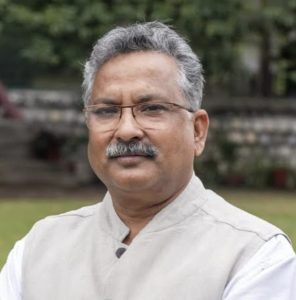
Commenting on the new policy, Chief Minister Pushkar Singh Dhami today described it as a crucial document to advance Uttarakhand towards a knowledge, research and innovation-driven economy. He stated that the objective is not merely to expand science and technology but to connect it with governance, disaster management, education, agriculture, health and employment generation. The CM added that the policy would provide a common platform for youth, researchers, start-ups, scientists and grassroots innovators, and that it would combine traditional wisdom with modern technology to accelerate the creation of a self-reliant and developed Uttarakhand.
It may be pointed out here that the policy emphasises on strengthening research, innovation and scientific temper to provide solutions tailored to the state’s unique needs, including disaster vulnerability, climate change impacts on the fragile Himalayan ecosystem and socio-economic disparities. Significantly it also seeks to balance economic growth, social inclusion and environmental sustainability. For effective implementation, a state advisory body is expected to be constituted to oversee execution, monitoring and evaluation, while decentralised institutional frameworks will be developed to encourage research and innovation activities across sectors. A state-level coordination committee would also be formed to ensure STI units are established in government departments, public enterprises, private companies and start-ups, thereby mainstreaming science and technology into governance and industry.
The policy provides for seamless access to scientific information, research findings and resources for all stakeholders. Data generated from publicly funded research will be digitally archived and made available through secure platforms, with integration into the Government of India’s “One Nation, One Subscription” initiative. To realise the vision of Atmanirbhar Uttarakhand, the policy promotes indigenous technology development and localisation strategies aligned with state priorities. It also envisages strengthening science education and innovation in academic institutions through infrastructure development, capacity-building programmes and advanced teaching-learning centres in line with the National Education Policy. Initiatives such as science cities, science centres, planetariums, Atal Tinkering Labs, AI laboratories, astronomical societies and centres of excellence will be taken up to enhance science communication and public engagement.
Emerging technologies including artificial intelligence, blockchain, robotics, drones, augmented, virtual and mixed reality will be given special focus, alongside space technology, biotechnology, nanotechnology, digital and immersive technologies, food-water-energy security and disaster management applications. Traditional knowledge systems will be integrated into modern research and innovation, creating a sustainable ecosystem that connects grassroots innovators, scientists and technical experts through workshops, joint projects, fellowships and scholarships. A dedicated participation portal will be established for the scientific community, while a Science, Technology and Innovation Observatory will serve as a central repository of information on schemes, programmes, grants and incentives. Modern online learning platforms will be developed, and innovators will be supported in patenting, copyright and intellectual property rights processes.
Uttarakhand State Council for Science and Technology (UCOST) has been designated as the nodal agency to lead the implementation of the new policy. Director General, UCOST, Prof Dr Durgesh Pant observed that the state faces multiple challenges including natural disasters, climate change and increasing ecological pressures, and the new policy will strengthen coordination among institutions, academia, industry and innovators to find solutions. He emphasised that the policy ensures inclusive participation by women, rural and remote communities, marginal groups and persons with disabilities in the science and innovation ecosystem.