Govt claims U’khand is poised to become pharma hub
Garhwal Post Bureau
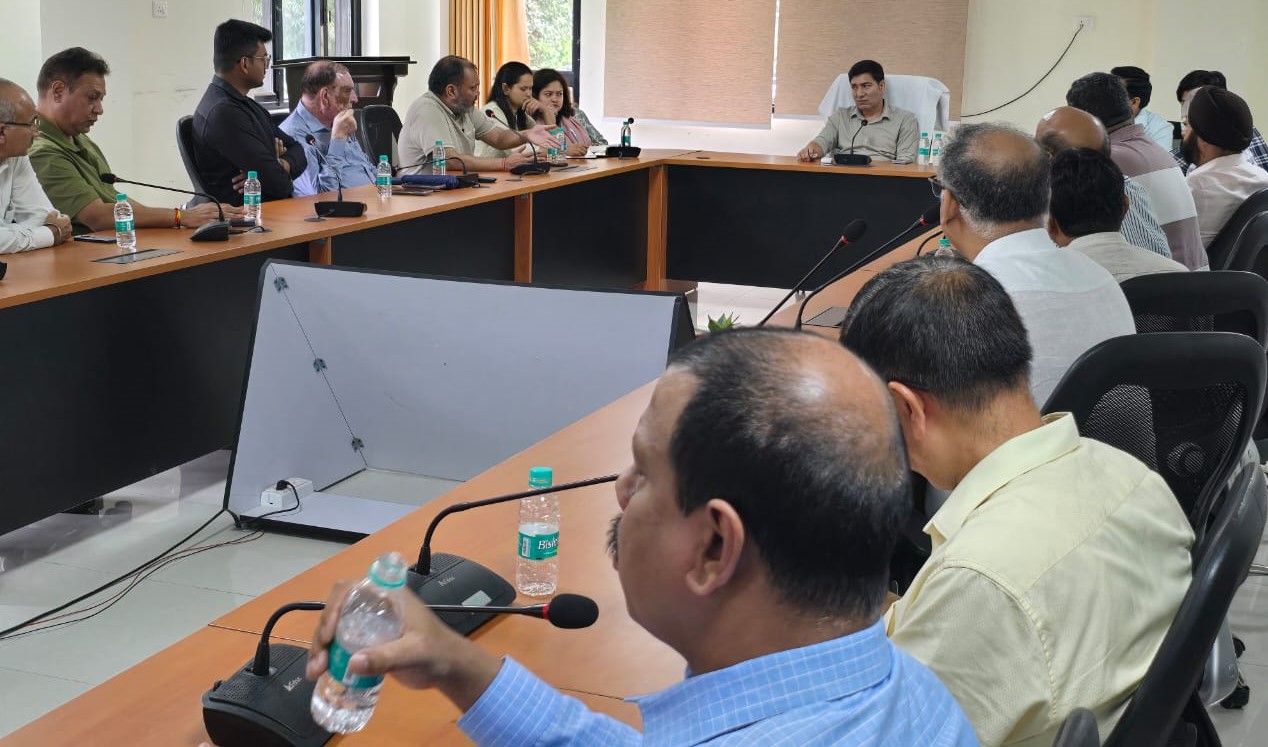
Dehradun, 30 Jun: In a concerted effort to project Uttarakhand as a leading pharmaceutical hub in the country, a high-level review meeting was held at the Food Safety and Drug Administration headquarters in Dehradun under the directives of Chief Minister Pushkar Dhami and Health Minister Dhan Singh Rawat. The meeting aimed to address growing concerns over sub-standard medicines and reinforce quality mechanisms.
Chaired by Additional Commissioner and State Drug Controller Tajbar Singh Jaggi, the session was attended by over 30 representatives from various pharmaceutical manufacturing units, along with officials from the Drug Manufacturing Association and departmental authorities.
The meeting focused on analysing recent cases involving sub-standard drugs, with a renewed emphasis on safeguarding the state’s pharmaceutical reputation. Participants raised serious objections to the Central Drugs Standard Control Organisation issuing drug alerts prior to concluding investigations. An example cited involved Buprenorphine Injection by Cooper Pharma, which had initially been declared sub-standard and spurious. Later findings confirmed that the drug had not been manufactured in Uttarakhand but in an unauthorised facility in Bihar, prompting pharmaceutical firms to assert that such premature alerts tarnish Uttarakhand’s industrial image and discourage prospective investment.
Health Secretary and Commissioner R Rajesh Kumar reiterated the government’s vision of transforming Uttarakhand into a global centre for quality medicine production. He added that aside from incentivising expansion of existing units, the government is promoting investor-friendly policies and instituting robust quality control systems. Kumar shared that, out of the approximately 285 active pharmaceutical units in the state, 242 are WHO-certified. These units contribute nearly 20 per cent of India’s total medicine production and are active in both domestic and international markets.
Kumar also highlighted the recent inauguration of a high-tech drug testing laboratory in Dehradun, developed with state and central collaboration. The laboratory, equipped to test medicines, medical devices and cosmetic samples, is expected to receive NABL accreditation shortly, boosting its global credibility. He affirmed that pharmaceutical companies in Uttarakhand supply products to over 15 Indian states and more than 20 countries globally, functioning in line with WHO-GMP, ISO, and other international standards. He concluded by stating that the government’s objective is not merely industrial expansion but also to uphold global standards in medicine manufacturing.
The company representatives argued that, according to the Drugs Act, it is essential to authenticate a sample under Section 18(A) before branding it sub-standard, and manufacturers should rightfully be allowed to challenge test reports under Section 25(3). In addition, they also claimed that delays in furnishing these reports and samples make the provision ineffective.
During the deliberations, Drug Controller Jaggi categorically stated that while the government is committed to supporting the industry, there would be no compromise on the quality of medicines. He stressed that Uttarakhand’s pharmaceutical units enjoy a positive reputation across the nation, and it is everyone’s duty to uphold this standing. He directed companies to strictly follow Good Manufacturing Practices, maintain meticulous documentation at each production stage, and bolster internal quality control procedures.
The industry representatives conveyed appreciation for the Dhami government’s transparency and pro-industry approach, stating that the current policies have created a fertile investment environment. They expressed optimism that if the momentum continues, Uttarakhand could soon emerge as India’s largest pharmaceutical cluster.
Reinforcing the zero-tolerance policy, it was resolved that stringent legal action, including FIRs, would be initiated against individuals or firms found guilty of manufacturing sub-standard drugs. Investigations into such cases are already underway.