Around the World with the Most Travelled Indian
 By NITIN GAIROLA
Scientists use a term called ‘tipping points’. We also call it the ‘point of no return’ or if you want to be a little poetic, then it’s the Rubicon for you. From this point, the fate of any particular person, thing or action is decided and you can’t go back, even should you wish to. Scarily enough, these very scientists have defined certain planetary boundaries and quantified them in order to show where we are presently in terms of being within some of those boundaries, in flirting with a few and in blatantly crossing the red line with the rest.
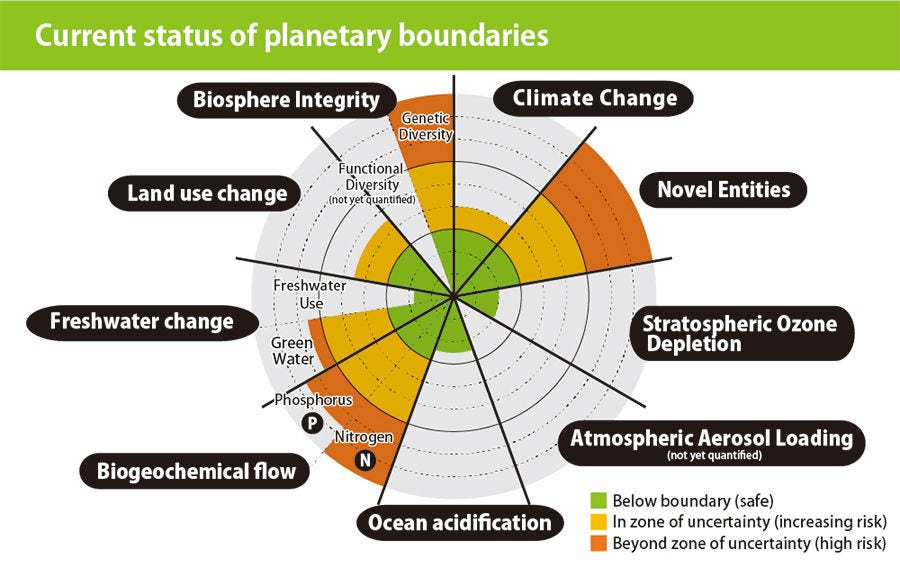
As it turns out there are 9 such planetary boundaries that were defined around 16 years back but only now have they been made popular by none other than Sir David Attenborough, who was ably supported by Johan Rockstrom of Sweden in the ground breaking ‘Breaking Boundaries’ documentary that was aired on Netflx. Very eloquently and very ominously it was pointed out that we have stepped outside the ‘green zone’ in 6 out of the 9 boundaries and in 3 out of these 6, we have gone well beyond flirting with the yellow zone and into the dangerous red zone.

A Life on our Planet – on Netflix
When this framework was established in 2009, we had crossed the green zone in only 3 boundaries. In 2015 we added one more and as mentioned above, today the number stands at 6. This makes you realize that Earth scientists and world leaders look at Earth from two very different lenses. Maybe for the leaders it is ‘their world’ and they are at the centre of it, and for scientists it’s actually ‘a planet’ – just a dot in the cosmos and completely alone in terms of a home that can sustain life.

If Elon Musk truly believes Mars is Plan-B for humanity, then he is utterly mistaken. It might be the greatest human adventure to reach Mars, no doubt, but there is no plan-B to our planet. We are not even close to such a complex atmosphere which has oxygen, or 3 trillion trees on land and oceanic phytoplankton that release this oxygen or immeasurable gallons of water in the oceans which act as carbon sinks, or for that matter the incredible biodiversity of life that we can’t replicate on Mars. It took evolution 4 billion years to reach here, and it just can’t be altered by a single man in 4 decades. Sorry Elon, you are great but are either misguided or a genius in misguiding the multitudes. I guess this is what happens when you have a human centric view of the world rather than a larger one.
That’s why they say we have moved from the Holocene epoch to the Anthropocene, the age of man. Say goodbye to stable climate, stable temperatures and predictable seasons of the last 10,000 odd years of the Holocene and welcome the age of climate uncertainty where the carbon concentration (parts per million or ppm) in the atmosphere have gone from 300 ppm in 1950s to almost 430 ppm in 2025 (or 0.03% to 0.043%). Surely world leaders are smart enough to understand the direct positive correlation in carbon concentration and global mean temperatures and that a 50% increase in carbon concentration is venturing into the unknown in terms of the climatic response.
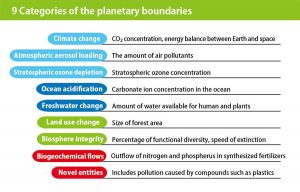
These 9 boundaries are of biosphere integrity (i.e. habitat & biodiversity loss), of land system change (i.e. replacing forests with farms), of fresh water change (blue & green water), biochemical flows (phosphorous & nitrogen), ocean acidification, atmospheric aerosol loading (not yet fully quantified), stratospheric ozone depletion, novel entities and climate change.
Being a traveller of the natural world, my area of understanding is of course ‘biosphere integrity’ related to world habitats, biomes and biodiversity. Imagine we lose most of our biomes of forests, grasslands and others along with the life in it. What will we then do with the atmosphere and climate, should we happen to keep them intact? That’s why for me the biomes and the biodiversity are the areas of interest and study. And as per these prominent scientists from 20 odd countries, apparently the limit for biosphere integrity is less than 10 species extinctions per million ‘species-years’ (another way to saying is that if there are 1 million species in the world, at most 10 can go extinct every year).

And if you were to hazard a guess, what would you say we are at today? How about > 100 per million species-years? Also, besides such actual extinctions rates, do you know that 1 million of the 8 million species of plants and animals are threatened with extinction presently? That is quite a lot for me to digest, given the perspective on what it means to be an entire species and not just an individual member within a species. Imagine, an entire species of one plant or animal being wiped out? And then just add another million to that and you reach the number of entire species which are threatened. We truly are going through the 6th mass extinction event on Earth today. Quite a time to be alive, both in terms of the adversity and the opportunity to contribute, in a small way, towards bringing positive change.
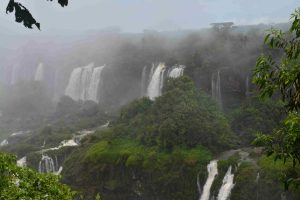
While my favourite area of biodiversity is in the deep red, thankfully there are 3 other boundaries which are well within the green zone. None of them are my areas of understanding but at the surface level I know how crucial they are. These 3 boundaries are ocean acidification, atmospheric aerosol loading (although not fully quantified) and stratospheric ozone depletion. The bad news is that besides biosphere integrity, other areas of living ‘very’ dangerously in red are in biochemical flows (of nitrogen & phosphorus in fertilizers) and novel entities (plastic pollution). The final 3 – land-system, freshwater change & climate change are somewhere flirting with the yellow zone.
When I first heard about this framework, what I really liked the most was that it was well defined and measurable, since without that it either becomes an emotional plea or wishful thinking. That doesn’t cut ice with those in power, does it? Maybe even this won’t, but at least here the numbers can do the talking and even those with gentler voices may be hard to ignore by those who like to turn lies into truths by repeating them loudly. That’s the difference between science and politics. A scientific mind always looks for truth via experimentation and observation and doesn’t mind accepting that he or she is incorrect, if so proved. Whereas those in power around the world believe they are always right and can go to any lengths to prove it so. This is the wrong in our society that we can right through the power of science and knowledge.
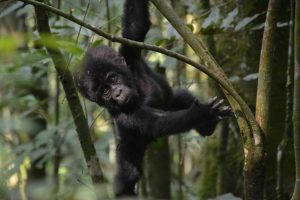
The red line has been crossed when it comes to us being responsible guardians of our planet. As the late great primatologist and conservationist, Jane Goodall once said – “You cannot go through a single day without having an impact on the world around you. What you do makes a difference, and you have to decide what kind of difference you want to make”. She recently passed away but I hope her message is here to stay, for the ‘good of all’.
(Nitin Gairola is from Dehradun and has travelled the natural world more than almost any Indian ever. He is on the verge of becoming the first to travel to every Desert, Forest, Grassland, Tundra & Ice biomes on Earth. Nitin has set world travel records certified by India Book of Records, has written for Lonely Planet and holds National Geographic conservation certifications. He is also a senior corporate executive in an MNC and in his early days, used to be a published poet as well. Reach him at: www.facebook.com/ MostTravelledIndian/)