By Arun Pratap Singh
Garhwal Post Bureau
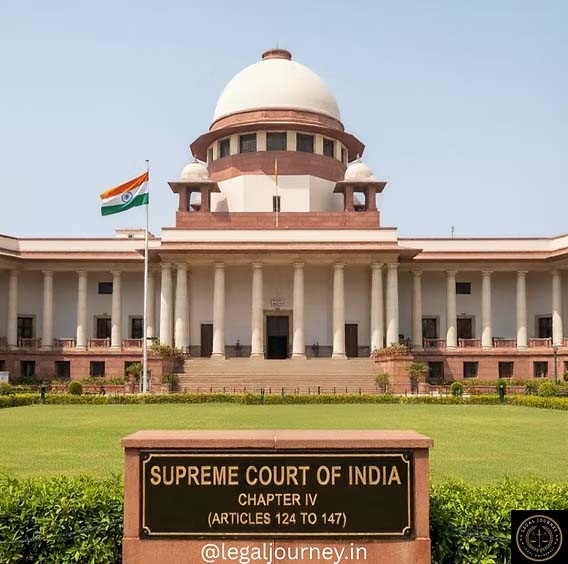
New Delhi/Dehradun, 21 Sep: The Supreme Court today asked Uttarakhand and Uttar Pradesh to make an effort to resolve through mutual discussions their long-pending dispute over assets and shareholding linked to the Tehri Hydro Development Corporation (THDC). The Court also observed that an inter-State dispute can perhaps be settled without requiring the court to adjudicate every aspect of the matter. The court has also explored whether the dispute can be referred for mediation. The matter will next come up for hearing on 28 September now.
It may be recalled that the dispute has remained unresolved and pending since 2012 and it is related to the division of the erstwhile State of UP and the subsequent re-allocation of assets and equity interests connected with the Tehri hydro project. Uttarakhand has questioned why assets and a substantial shareholding connected with a project located in Uttarakhand should have gone to UP following the reorganisation of the State. The state has also maintained that it has a legitimate claim over the relevant THDC interests and has sought relief from the Supreme Court. The case is pending in the court since 2012.
During the latest hearing held today, Uttarakhand reminded the SC that it has been pursuing the matter for nearly 14 years and that the proceedings have been delayed on account of repeated requests from the other side for time to place evidence and obtain instructions.
Senior advocate Amit Anand Tiwari, appearing for Uttarakhand, reportedly pointed out that the SC had also imposed costs of Rs 30 lakhs in 2019 because of delays in the proceedings, yet another four weeks are being sought for obtaining instructions. He also submitted that the suit instituted in 2012 had returned to the court’s active listing after a gap of nearly three years.
Uttarakhand Government also referred to the opinion of the then Attorney General, which it said had recognised the claim concerning the disputed THDC interests as a ‘justifiable claim’. Uttarakhand’s position, however, is that the question ultimately requires a judicial determination because the dispute concerns the interpretation and application of provisions of the UP Reorganisation Act, 2000.
The apex court, instead of immediately proceeding towards adjudication, today sought to explore whether the two States could themselves arrive at a settlement. Additional Solicitor General KM Nataraj told the court that he had spoken to the Advocate General of Uttarakhand and indicated that the possibility of resolving the matter through discussions between the two governments can be examined. The court then asked the parties to consider whether the matter can be referred to mediation and fixed 28 September for the next hearing.
It may be reminded here that the dispute is more specifically centred on THDC’s equity holding rather than merely on physical properties of the Tehri project. In its earlier proceedings, the SC had framed an issue on whether, under Section 47(3) of the Uttar Pradesh Reorganisation Act, 2000, the shares held by the undivided State of UP in THDC should have been transferred or allotted to Uttarakhand. The court also framed an issue on whether, if Uttarakhand succeeds in its claim to 25 per cent equity in THDC, it would be entitled to the monetary benefits accrued on those shares from 9 November 2000 onwards, the date on which Uttarakhand came into existence.
The SC had earlier framed seven issues in the original suit, including whether the suit was barred by limitation, whether THDC is a necessary and proper party, whether Sections 42(4) and 79 of the Reorganisation Act applied, and what financial consequences would follow if Uttarakhand’s claim to the 25 per cent equity were accepted. The issues were formally framed in September 2022, with the matter thereafter repeatedly awaiting further proceedings.
It may be recalled that the Tehri project was initially under the UP’s irrigation department, while THDC was incorporated in July 1988 with the participation of the Government of India and the then UP government. After the creation of Uttarakhand on 9 November 2000 under the Uttar Pradesh Reorganisation Act, questions naturally arose over the division of the erstwhile state’s interests in THDC.