By Arun Pratap Singh
Garhwal Post Bureau
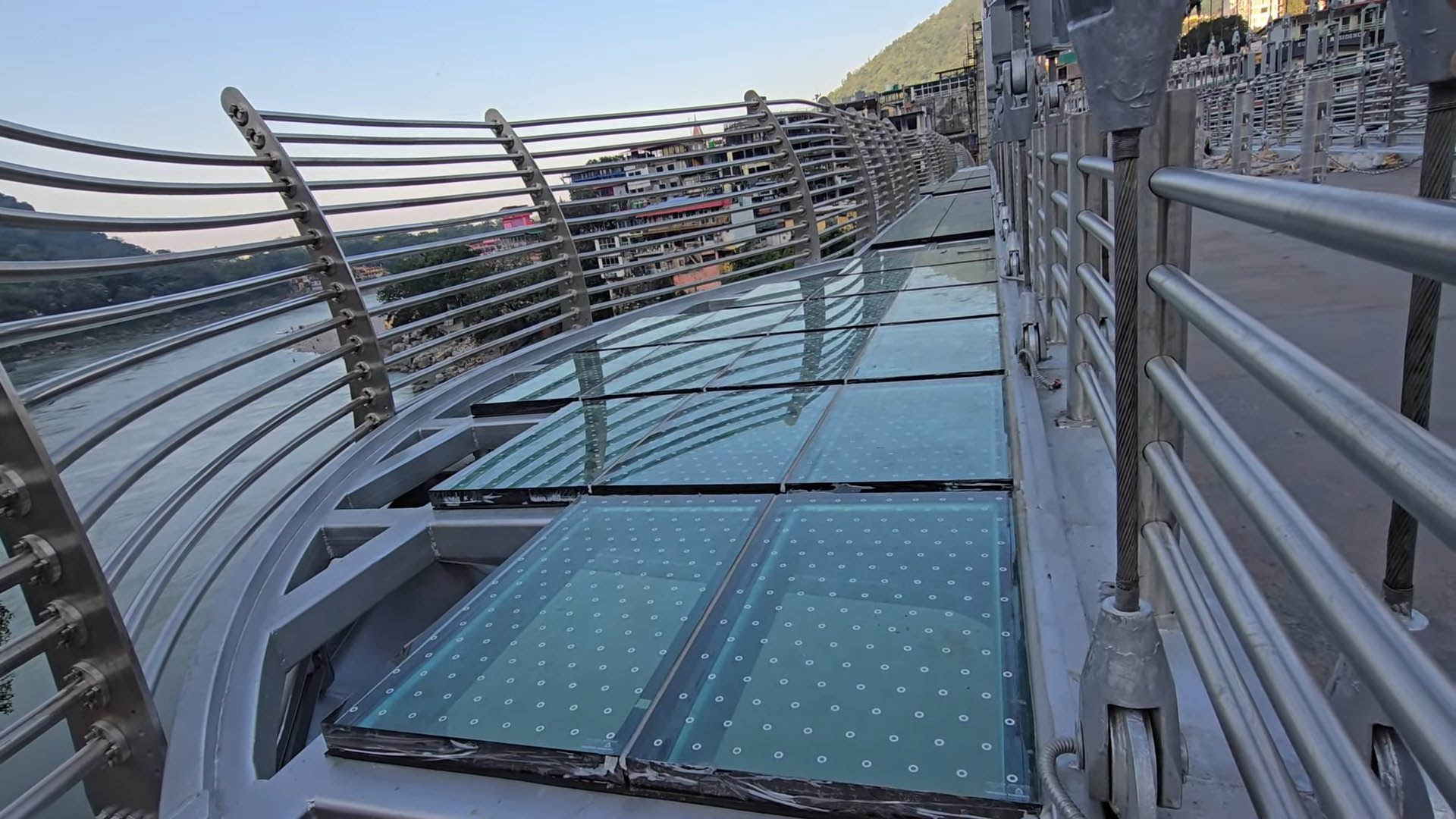
Dehradun, 24 Jul: Uttarakhand Government is preparing a Standard Operating Procedure (SOP) for the operation of Bajrang Setu, the newly constructed suspension bridge near Lakshman Jhula in Rishikesh, under which visitors may have to pay an entry fee to walk on its glass pedestrian sections. However, it has also been proposed that the glass walkway would remain completely closed during the annual Kanwar Yatra in view of the heavy influx of pilgrims and safety considerations.
Officials confirmed that the SOP is being finalised to regulate the use of the bridge and ensure the safety of devotees and tourists. While the main portion of the bridge will remain open for normal pedestrian movement, separate rules will govern access to the glass walkways constructed on either side of the bridge. Visitors wishing to experience walking over the transparent glass pathway suspended above the Ganga may be required to purchase a ticket.
Built at a cost of around Rs 69.20 crores, the 132.30-metre-long Bajrang Setu has been conceived as a modern replacement for the old Lakshman Jhula, which was closed for pedestrian movement after being declared unsafe. Construction of the bridge commenced in 2022, although the project has taken much longer than initially anticipated to complete.
Designed using modern engineering techniques, the bridge is approximately 8.60 metres wide and features glass footpaths on both sides, while the central section has been earmarked for regular pedestrian movement. The glass walkways have been constructed using five layers of toughened glass, each around 12 mm thick, giving a total thickness of nearly 60 mm to ensure strength and safety.
It may however be reminded here that the glass sections have suffered damage on multiple occasions during construction and testing, prompting the authorities to formulate a detailed SOP for their operation, maintenance and security. In January this year, a section of the glass was damaged after a worker accidentally dropped a hammer during construction. The damaged portion was subsequently repaired. Again, in April, the upper layer of glass at one end of the bridge developed cracks, although the remaining four layers remained intact, ensuring there was no structural risk. Reports of another instance of damage to the glass surface also surfaced in May 2026.
Following these incidents, the Public Works Department (PWD) has decided to strengthen the surveillance and the maintenance arrangements for the bridge. CCTV cameras and improved lighting are also being installed on the bridge, while protective measures, including raising the height of the side barriers, have also been undertaken to enhance safety.
The proposed SOP will determine the maximum number of people allowed on the glass walkway at any given time, prescribe monitoring and surveillance mechanisms and lay down procedures for regular maintenance and inspection. The revenue generated through the proposed ticketing system is expected to help meet the operational and maintenance costs of the specialised glass structure while also regulating visitor numbers.
Speaking to the media persons in an informal chat, PWD Dr Pankaj Kumar Pandey reminted that several countries across the world have similar glass attractions where entry is regulated through a ticketing system. Such arrangements not only help control the number of visitors but also ensure better operation and maintenance of these specialised facilities.
The authorities have also decided that the glass walkways will remain completely closed during the Kanwar Yatra. With lakhs of Kanwariyas expected to pass through Rishikesh during the pilgrimage, restricting access to the glass sections is aimed at preventing overcrowding and ensuring public safety. Pilgrims will, however, continue to use the normal pedestrian section of the bridge during the yatra.
It may be recalled that the construction of Bajrang Setu had become necessary after the nearly 90-year-old Lakshman Jhula was declared structurally unsafe and closed to pedestrians, creating considerable inconvenience for residents and pilgrims alike. The new bridge has been designed not only to restore connectivity across the Ganga but also to emerge as a major tourist attraction, offering panoramic views of the river and the surrounding hills.
With the SOP nearing finalisation, the government intends to ensure that the bridge functions under clearly defined operational guidelines. While the main carriageway will remain freely accessible for pedestrians, the glass walkways will be subject to separate regulations, including ticketed entry, visitor limits and periodic safety inspections. The authorities believe these measures will help preserve the bridge’s unique attraction while ensuring the highest standards of safety and maintenance.