By ARUN PRATAP SINGH
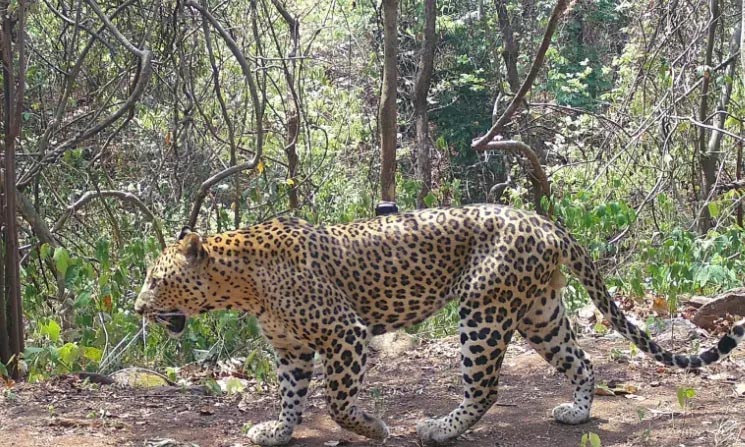
DEHRADUN, 5 Apr: In Uttarakhand, leopards have emerged as a far greater threat to humans than any other wild animal. With a sharp rise in leopard attacks across the state, the Forest Department is preparing to conduct a scientific census of leopards for the first time, alongside the All India Tiger Estimation, in order to obtain an accurate population, count of the leopards.
Despite the tiger being regarded as India’s most formidable predator, in Uttarakhand, it is the leopard that instils more fear. From the hills to the plains, leopards are increasingly entering human settlements, even venturing into homes, and showing diminishing fear of humans and even attacking human beings.
Leopard attacks are not only fatal but also lead to a significant number of injuries. Since Uttarakhand’s formation in 2000, 534 people have lost their lives to leopard attacks, while 2,052 have been injured. In 2025 alone, one person has already died and 18 have been injured in just three months. In 2024, 14 people were killed and 127 injured, while 2023 saw 18 deaths and 100 injuries. The toll was even higher in 2020 and 2021, with 30 and 23 deaths respectively.
Forest officials attribute this increasing conflict to changing human behaviours and changing land use patterns. As villages are being abandoned and forest areas encroach upon human settlements, leopards are drawn closer in search of food and shelter. Carelessly discarded food and accessible livestock make human areas attractive hunting grounds.
Chief Wildlife Warden and PCCF Wildlife RK Mishra states that there has been a behavioural shift in leopards, they no longer fear humans. The Forest department is now conducting awareness drives and taking preventive measures, but a long-term approach is needed.
To address this growing concern, the Uttarakhand Forest Department is implementing the Living with the Leopard programme, aiming to educate residents about leopard behaviour and safety precautions.
Currently, the state is estimated to have 2,800 to 3,000 leopards. While rough estimates have been made in the past, this marks the first time leopards will be counted using scientific methods alongside tigers in the national census, considered one of the most accurate wildlife enumeration efforts.
Rakesh Nautiyal, a veterinarian at Rajaji Tiger Reserve, explained, “Leopards can survive by preying on small animals like rabbits and rats, which makes them highly adaptable. This is contributing to their population growth.”
With leopards leading all other wildlife species in attacks on humans, experts agree: the state’s most dangerous predator today is not the tiger—but the leopard.