Around the World with the Most Travelled Indian
 By Nitin Gairola
I often wonder how can so many people live and die without really understanding what all is around them in their only home planet. I also know many people who are trying to enlighten themselves and their outlook to life and their perspectives, in general, are so different from those who choose to remain ignorant to the wonders of wildlife. Many may feel that they should only know about the living world if it’s a subject they chose for their higher studies and for their careers – like commerce, business management, law, civil service, history, engineering, medicine, etc. So, basically, as per these few or these many, just as a doctor may be ignorant about law or commerce you can have the same said for a lawyer who may not know the ‘m’ of medicine. And frankly that’s a good thing since I will certainly not want to take any health advice from a lawyer.
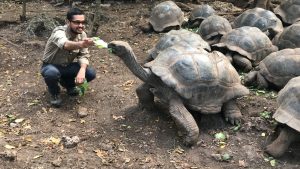
But, with that in mind, can we say that the living world should also only be known to those who picked up biology, zoology, ecology and the like for their higher studies? Should a business man, lawyer, bureaucrat, historian, civil engineer or a doctor not know anything about the natural world? Does that even make sense? Doesn’t it sound absurd that someone would live the full 80 – 90 years on Earth and not understand the scale and diversity of life here, of which he or she is a part, just a tiny part? Our starting point is that we are this one ‘species’ (sapiens), in a larger ‘genus’ (homo), within a ‘family’ (hominidae or great ape), which sits further within an ‘order’ (primates) and a ‘class’ (mammals), under a ‘sub-phylum & phylum’ (vertebrate & chordata) and all this within the ‘kingdom’ of animals. The final and highest level of taxonomy classification above a ‘kingdom’ is the ‘domain’ and all complex celled life like ours falls under the ‘eukarya’ domain.
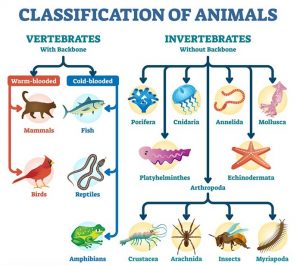
I just gave a full taxonomy order of Homo Sapiens or human beings and just like that, all the other life on Earth has a scientific classification too. We are talking about 1.3 to 1.5 million discovered species (not individuals) of animals alone and it is estimated that the total, including the undiscovered, may be as high as over 10 million or so. Of course, the majority of the discovered animals are insects (around 1 to 1.2 million) and other invertebrates. The world of vertebrates i.e. animals with a backbone & an internal skeleton (made of bone or cartilage) has around 70,000 species identified. This includes all species of mammals, birds, reptiles, amphibians and fish.
In the taxonomic classification, besides the ‘kingdom’ of animals, the world also has the kingdom of plants (including trees which are actually plants too) and it has 400,000 known species. Then there is the separate kingdom of fungi (they are not plants) at around 150,000 known species and I won’t even get into the numbers of the other 3 least studied & least understood kingdoms of mostly single celled living things. These are the kingdoms of Protista (like algae, amoebas…), Eubacteria (true bacteria) and Archaebacteria (ancient bacteria).
And in this grand scheme of things, we Homo Sapiens are just 1 species amongst these millions. Within this 1 species of a very intelligent (but not always wise) great ape, there are 8.3 billion or 8,300 million individuals, i.e., each one of us around the world. So how is that, given our interconnectedness in the web of life, that at times we consider the natural or living world as a niche subject? The living world is us and it is this story of life that has taken us on an extraordinary evolutionary path from single-celled entities 4,000 million years ago to become the species we are today. The web of life or the tree of life is called exactly that because of the common origins of all species, the subsequent branching out and the continued dependence on each other and the biosphere at large. Look a bit closer and you will realise that every animal’s anatomy, physiology and, of course, biology is essentially the same (even if it’s not that obvious initially). Maybe that is why our ancestors prayed to nature, given how inter-connected it all is and indeed it is something we all have forgotten in modern times, with all the conveniences and distractions.
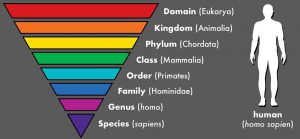
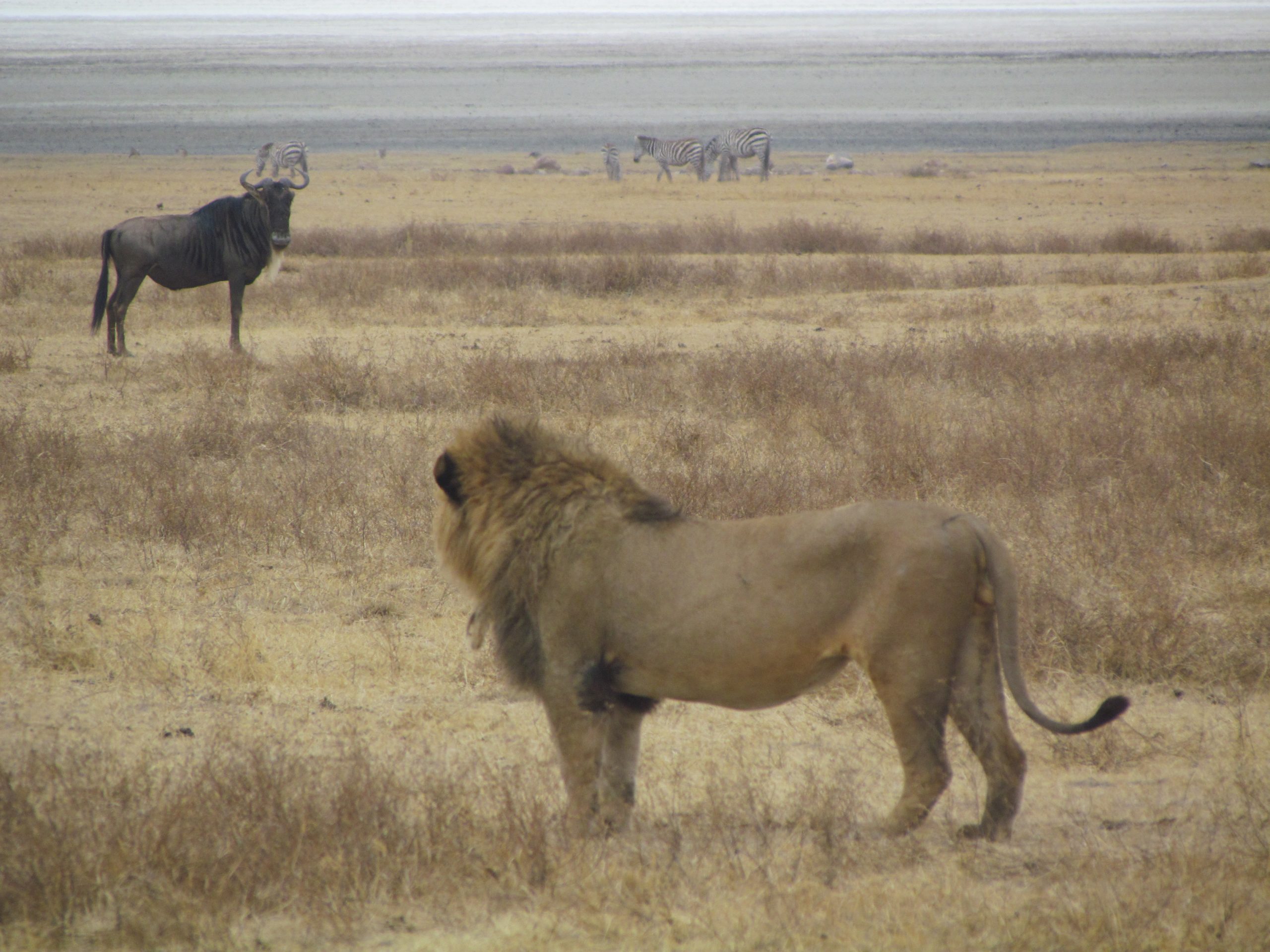
With that big picture view, I really wanted to write about what I, and millions around the globe, love – The World of Animals. Understanding the living, breathing and most importantly ‘visibly large’ & ‘moving’ animals is a lot easier to comprehend and appreciate. And as I always say, if as a wildlife tourist you love the big & medium sized animals, then their habitats will be protected by the governments. And if their habitats are protected, then other smaller species (equally or more critical to the local ecology) thrive as well and so does the health of the larger ecosystem. So, I never feel guilty of not knowing the names of every amphibian, insect or plant or fungi. But I really know my other charismatic cousins – Mammals, Reptiles and the Birds (although I need to improve my knowledge of birds).
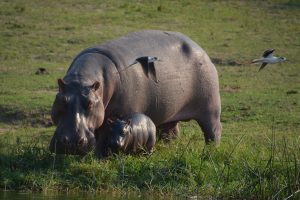
The animal kingdom is fundamentally divided into vertebrate and invertebrates (those without a backbone & internal skeleton, but can have an external skeleton). The vertebrates are divided into the ‘class’ of mammals, birds, reptiles, amphibians and fish whereas the invertebrates include the giant world of insects and other creepy crawlies. And while I have already mentioned that the world has around 1.2 million species of insects, it also has around 6,000 mammal species, 11,000 bird species, 11,000 reptile species, 9,000 species of amphibians and 33,000 fish species (and there could be many, many more in the deep). This adds up to around 70,000 known vertebrate species on the planet. For me that’s 70,000 reasons to rejoice and 70,000 things to learn more about.
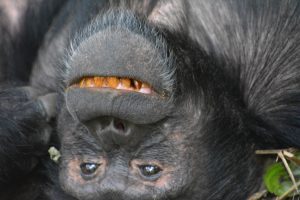
Just pick up ‘The Photo Ark’ by National Geographic photographer, Joel Sartore who is on a quest to document no less than 25,000 animal species on Earth, whether in captivity or in the wild. The purpose is to leave the world with a record of biodiversity before some of it goes extinct. This project started two decades ago in 2006 and today Joel has taken images of 18,000 species. He is unstoppable.
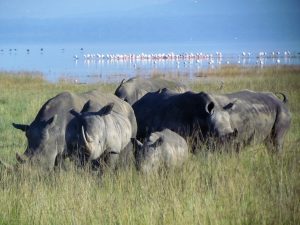
This is the scale of life on Earth and the kingdom of animals is far bigger, brighter and better than any kingdom created by man in its brief history on the planet. That why I have always said that I love the natural sciences and geography way more than history, since when you get into this alternate world, you really change into someone gentler, kinder and more aware in general. There is no space left for egos in the natural world and I am so glad I chose this path in my world travels. It has been a privilege to witness and to document these incredible creatures all around the world and I wouldn’t trade this for all the other privileges in this human world, which can be so easily sold to our egos.
Nitin Gairola, is from Uttarakhand and has travelled to every major desert & forest ecosystem on Earth besides other natural world biomes on our planet and around 150 countries as well. These extensive world travels have lent him the unofficial title of the ‘Most Travelled Indian’ and this multi-decade exploration project to witness the natural world is called ‘Borderless Planet’. Nitin is a published writer & poet too. Join him @ www.instagram.com/MostTravelledIndian/