 By Anil Raturi
The Himalayas have been an abode for the moorings of Indian civilisation. It is the place where ancient India ideated. Mythology says Ved Vyas composed Mahabharata near Badrinath and that the Pandavas ascended to heaven from Tapovan in Garhwal. It is also believed that Agastya Muni and Adi Shankara sojourned in these mountains and the latter took “samadhi” in Kedarnath. Some believe that the renowned Sanskrit poet, Kalidas, was born in Kaviltha in Rudraprayag.
The opening verse of his epic, Kumarasambhavam, says:
“अस्त्युत्तरस्यां दिशि देवतात्मा हिमालयो नाम नगाधिराज:।पूर्वापरौ तोयनिधी वगाह्य स्थितः पृथिव्या इव मानदण्ड:”
(“There is in the northern direction a divine mountain named Himalaya, the king of mountains. Embodied as the measuring rod of the earth, it stands spanning the eastern and western oceans.”)

The Ganga, which provides the foundation to Indian culture, originates in the Himalayas. But for the Himalayan barrier, the monsoon clouds would have passed over making North India a desert!
The people of Uttarakhand have inhabited these pristine mountains since time immemorial. Through their idyllic existence they have evolved a rich culture. Life in such a blessed locale has made the inhabitants both physically and mentally robust. Their talent has taken them to all walks of life – military, civil services, corporate, politics, literature, academics, arts, cinema, advertising, media, etc., within India and around the world.
They have a throbbing global diaspora that carries India in their hearts.
Though Uttarakhand has a variety of flora and fauna, three flowers have come to acquire a special cultural significance for its people.
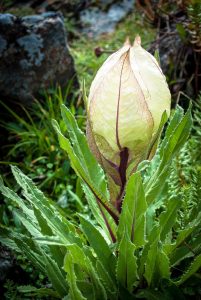
The first is the “Brahm Kamal” (Saussurea obvallata).These flowers bloom in mid-monsoon (July–August) amongst the rocks and grasses of the hillside at an altitude of 3700–4600 metres above sea level. The “Brahma Kamal” has a profound spiritual connection to Goddess Parvati, primarily seen as a divine gift during her intense penance in the Himalayas. It is widely considered a sacred flower that supports meditation and purity, often offered to Parvati and Lord Shiva in Himalayan temples.
In another legend, Parvati requested Brahma to create a sacred flower, which was used to restore life to Ganesha by sprinkling water on him, linking Parvati’s desire to the flower’s creation. It is considered the favourite flower of Goddess Nanda Devi, who is widely revered as an incarnation of Parvati in the Himalayan region. In the Puranas, Brahma was born from such a white lotus.
“Brahm Kamal” is Uttarakhand’s State Flower.
The hill state’s traditional cap is called “Brahm Kamal Topi” as a brooch of this white flower adorns it.

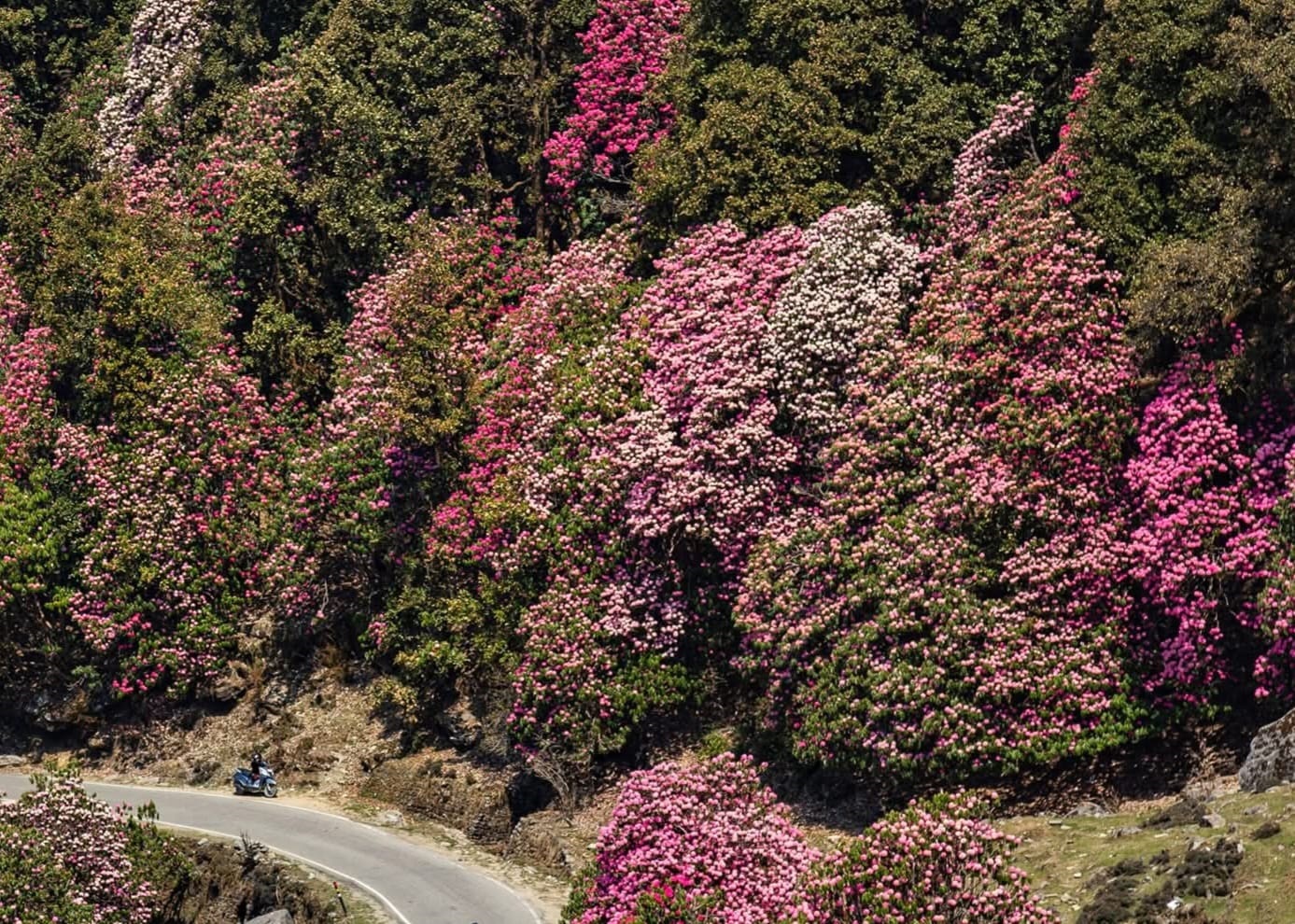
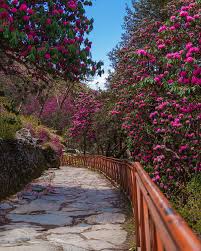
The second flower that has seeped into the local culture is the crimson “Buransh” (Rhododendron arboreum), which blooms on Rhododendron trees in the month of March. In some areas it also occurs in white, pink and purple colours. Travelling during March and April in the mountains, especially around Chopta in Rudraprayag district, one can behold entire slopes of Rhododendron trees laden with “Buransh” flowers blooming in awesome colours!
The “Buransh” flower is deeply embedded in local culture, playing a significant role in festivals like Holi and weddings, where it is used in garlands and decorations to bless guests. The flower is also utilised in making a healthful, antioxidant-rich juice that is popular during local festivities and summer months. “Buransh” flowers feature in literature and are also incorporated into local arts and crafts, where they are used to make colourful necklaces and jewellery, symbolising the spiritual and physical prosperity of the community.
The third flower that is part of the Garhwali and Kumaoni folklore is the yellow “Pyoli”.
It is a vibrant yellow flower, often identified with the scientific name (Reinwardtia indica -Yellow Flax).
It is the cultural harbinger of spring in the mountains.

The icy long Himalayan winters challenge the life force of the flora and fauna alike. The cold dries up vegetation in the high altitudes. Animals and humans brace the snows and often struggle to survive. Then, in late February, the vibrant yellow “Pyoli” flower emerges out of the cold wilderness in the mountains. With its coming, the climate becomes warmer and life in the hills once again becomes comfortable!
In the local legend, “Pyoli” was a beautiful mountain girl who was married to a Prince of the plains. Missing her beloved mountains, she tragically died weeping, longing to return to them.
These flowers are also linked to the “Phool Dei” festival of the hills.
Recently, the corporate leader, Anand Mahindra, had this to say on his social media post on “X” regarding this beautiful festival.
“I must confess that until recently I had never heard of Phool Dei, a spring festival that was celebrated yesterday in the villages of Uttarakhand.
Children gather fresh flowers from the hills and go from house to house placing them on doorsteps, offering a blessing for the household: “Phool Dei, Chhamma Dei,
Deni Dwar, Bhar Bhakar…” roughly wishing the home prosperity.
In return they receive sweets.
It reminded me a little of Halloween in the US, where children go door to door saying “trick or treat”. But what a lovely contrast. Here the children arrive not threatening a prank, or asking first, but giving first. Flowers.”
“In an age when we speak so much about environmental consciousness, this graceful celebration of spring and nature deserves to be far more widely known. Just as Holi travelled across India and the world, perhaps Phool Dei should too. For me, the children of Uttarakhand are my Monday Motivation.”
(Anil Raturi is a retired IPS officer and former DGP, Uttarakhand.)