 By: Ganesh Saili
In the 1960s, near the Clock Tower stood the Topshop, known for its handmade wooden tops. A gifted artist, the late Hukum Chand could be found behind the counter working on a lathe without belts, only string and ropes that he effortlessly slipped from one groove to another in the manner of a maestro conducting an orchestra. He was the last survivor of times with large pots and pans, stoves and larger hearts. If you showed a passing interest in his tops, he would teach you the ‘how-to’ of wrapping your string around its grooves before flicking the top and sending it curling through the air, spinning in a tizzy.
‘Sharpen the tip a bit more?’ I pleaded.
‘But don’t wreck my floor! Try the road outside?’
Our faith healers and antique dealers were characters out of Arnold Bennett’s ‘Riceyman Steps’. Although itching to sell, they’d go through the charade of showing no interest in what you liked, to get a better price. If a customer asked for anything, he would find that it was either spoken for, sold, or paid for to be picked up later.
‘What’s wrong with Mohan Singh in Landour bazaar? He doesn’t seem to want to sell anything!’ I overheard a visitor complain to Faiyaz, himself a dealer in second-hand clothes next to the Himalaya Club.
‘What shop?’ mocked Faiyaz. ‘That’s his sitting room where he likes to squat among his chosen relics.’
When I think of it, perhaps my interest in old furniture dates to the day Mohan and I joined a funeral procession making its way to the cremation grounds. Beside the road lay the remains of an old sofa, fallen apart, with the wood bleached to the bone by many monsoons. Instantly it caught Mohan’s attention. He stopped, struck a deal, and caught up with the mourners later.
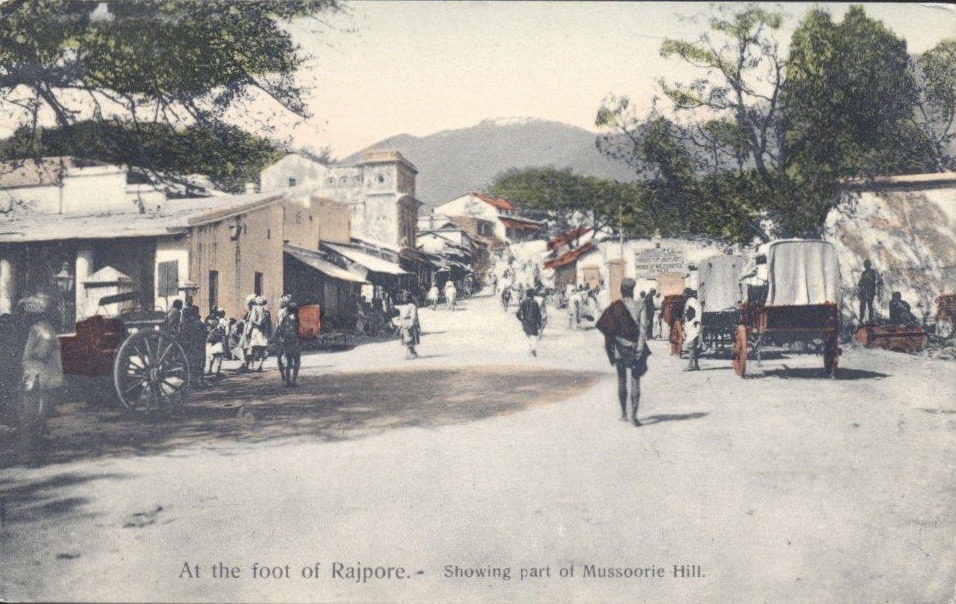
A week’s spit and polish restored it. Value added, he sold it as an Edwardian sofa, making a neat profit. From then on there was no looking back; he turned into an antique dealer. Remember, those were times when you could still stumble upon old sticks of furniture littering the hill station. The furniture rental shops of Parmanand & Sons and Prem Chand Jain & Sons on the Mall were stuffed to the ceilings with almirahs, desks, rocking chairs, Tall Toms and chest-of-drawers. Grand pianos too were available for hire-purchase, but for those you had to go to Godin’s piano shop. Whilst in upmarket Landour, residents and visitors were guaranteed to find everything ‘perfectly fresh and of the first quality’ and shikaris going into the interiors found ‘ammunition, camp chairs and tables’.
Andy Verma, in the 1970s, founded our first upmarket bakery and named it La Suisse. Years later he needed no chairs or tables as he supervised the men working in his inflight catering kitchen in London. Then the phone rang.
‘What are you doing Andy?’ a familiar voice wormed its way through the phone, even as he tried to get his orders right.
‘Sit down! Andy,’ the voice urged. ‘I’ve got something I must tell you.’
But that is how this story ends, which begins with two girls from London who were Andy’s houseguests at Ralston in Barlowganj. They had chanced upon a glass walking stick at Mohan Singh’s shop. He wanted an astronomical sum that was way beyond their reach.
‘Wish we could buy it!’ they chit-chatted over supper.
‘You can do it. Just convert your money into rupees, that should make a nice fat wad, and show it to him. Make him an offer to which he can’t say no!’ suggested Andy.
And that is exactly what was done. The ploy worked.
‘Done and dusted!” So thought Andy until the phone rang.
‘Christie’s just auctioned it for a hundred thousand pounds!’ chuckled the girl. That glass walking stick turned out to be crystal! Probably dating back to the time of Maharaja Dhuleep Singh’s stay in these hills! Wasn’t he interned in Castle Hill Estate in the summer of 1852-53?’
Andy ended the tale with: ‘Please, not a word to Mohan Singh about this affair,’ adding, ‘He’d never get over it.’
Ganesh Saili born and home-grown in the hills belongs to those select few whose words are illustrated by their pictures. Author of two dozen books; some translated into twenty languages, his work has found recognition worldwide.