By OUR STAFF REPORTER
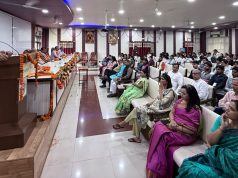
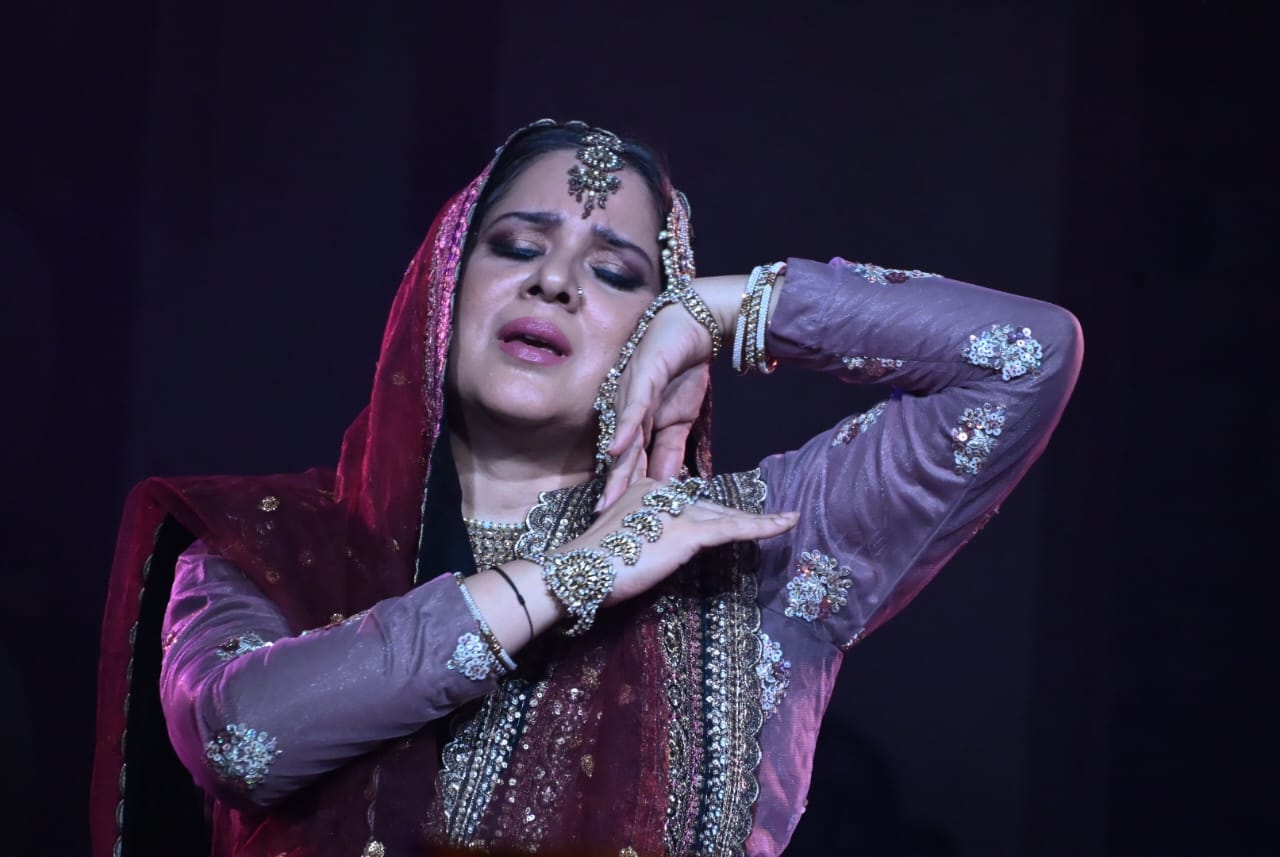
Dehradun, 29 Oct: In Monday’s ‘Virasat Mehfil’, the ruthless nature of men was reflected in a narrative surrounding courtesans. Shabu Bajrangi was Raunak Sharma on the stage of Virasat, where Manjari Chaturvedi narrated the story of Nawab Jaan, set before 1857, when courtesans entertained people in Old Delhi with ghazals, mujras, and dance. During those times, women were often viewed solely as courtesans, entertaining minds but never receiving recognition for their artistic contributions. Chaturvedi emphasised that art does not discriminate between men and women, asserting that it should never be divided by gender.
She acknowledged that society is male-dominated, yet this has historically hindered women from emerging as artists. The dance, art, music, and mujra seen today have all been preserved by those tawaifs. “For the past 15 years, I have been striving to keep alive the arts presented in those times, ensuring that future generations recognise the significant contributions of tawaifs in preserving art,” she said.

During the cultural evening in Virasat Ki Mehfil, Ekant Kaul, alongside Manjari Chaturvedi, left a profound impression on everyone present.
Famous artist Ekant Kaul played the role of Mirza Ghalib on the Virasat stage, where he immersed himself in the beauty and artistry of a courtesan in the streets of Chandni Chowk in Old Delhi.
The presentation by artist Manjari Chaturvedi, who touched everyone’s hearts, was highly appreciated. Manjari Chaturvedi is a scholar with a postgraduate degree in Environmental Science from Lucknow University. She trained professionally in Kathak dance at the Kathak Kendra of the prestigious UP Sangeet Natak Akademi, initially learning under Arjun Mishra in the Lucknow Gharana. Additionally, she studied abhinaya under Kalanidhi Narayan at Protima Bedi’s Nrityagram and closely explored Baba Bulleh Shah’s contributions to Punjabi Sufi traditions. The influences of great Sufi saints Maulana Rumi and Amir Khusro also shaped her creative approach to dance.
Chaturvedi began her career as a Kathak dancer, aiming to merge diverse musical forms from Rajasthan, Kashmir, Awadh, Punjab, Turkmenistan, Iran, and Kyrgyzstan. She is particularly drawn to Sufi mysticism and incorporates movements reminiscent of whirling dervishes into her performances, coining the term Sufi Kathak for her style. Over her career, she has delivered stunning performances at more than 300 concerts across 22 countries. For the past two decades, Manjari has been active worldwide, collaborating with many international artists in Global Fusion. The Courtesan Project, initiated by Manjari Chaturvedi, aims to eliminate the social stigma surrounding courtesans and tawaifs, granting them the respect they deserve as fine artists.
“The Lost Songs and Dances of Courtesans—Gender Discrimination in Arts and How It Shapes Art for the Future” is a project that documents the lives and stories of incredible female artists, reviving the dance and narratives of women marginalised for their performances in music and dance, who have been overlooked in the documented history of performing arts. Addressing the myths and misconceptions surrounding courtesans is essential, especially as terms like ‘prostitute’ and ‘whore’ are often misused interchangeably, perpetuating historical gender inequality.
Unsung records reveal that men practicing these arts are honoured as “Ustad” (Masters), while women are relegated to being labelled as “Naach Ladkiyan” (Dancing Girls). Generations of former male court dancers boast about their family lineage with pride, while female court dancers often live in shame, reluctant to disclose their lineage or connections to the royal courts. Gender discrimination in the arts persists, ostracizing these women and positioning them as “lesser” than their male counterparts.
Popular cultural artist Mahesh Kale gave a classical singing performance at Virasat, beginning with Raga Rageshwari, followed by semi-classical compositions and some of his own works. He was accompanied by Pandurang Pawar on tabla, Shubham Ugale on pakhavaj, Abhinay Rawande on harmonium, and Prathamesh Lad on flute. Apoorv Dravid provided Prakashan, and Mandar Wadkar served as the sound engineer. Ankur and Swami assisted with tanpura and singing.