All Around the World with the Most Travelled Indian
 By Nitin Gairola
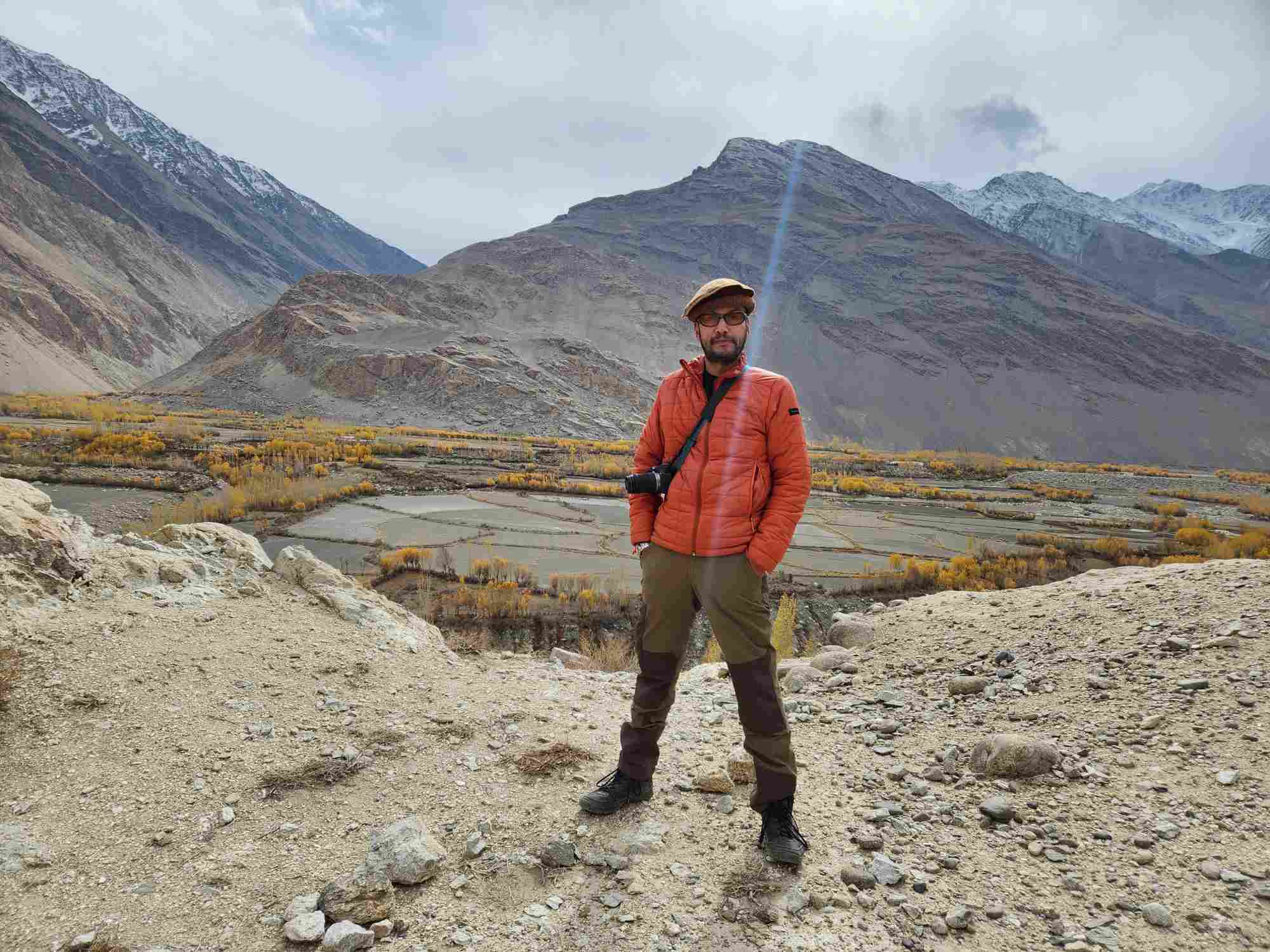
For some reason a lot of my visits are to areas of potential conflict although I keep our safety the top most priority and always try to balance out risk-reward (to the best of my understanding of this concept). I guess this kind of travel is in some way linked to my love for adventure and also linked to the fact that my grand-dad was in the army and my great grand-dad was a hunter (yes, ‘hunting’ was actually a profession way, way back then and I am glad it isn’t now). However I don’t believe for one moment that an actual war or a crisis is an adventure since that would be a very naive view. The aspects of the army which interest me are things like research, strategy, geographic mapping, survey missions etc. Maybe I do see my trips as half academia and half adventure and that is what brought us to the Wakhan Corridor in Tajikistan and Northern Afghanistan this November.
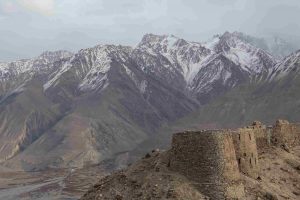
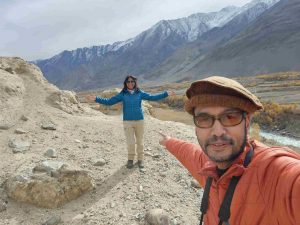
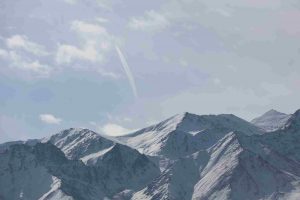
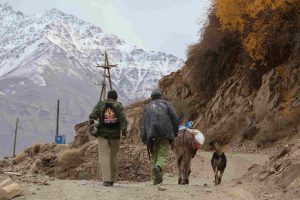
So after the Afghan market at Ishkashim, our ace driver Anzur took us further into the Wakhan Valley and to the ruins of some ancient and obscure fort that we had no idea about. But the highlight of that fort was actually the snow covered Hindu Kush Mountains which formed the backdrop to the ruins. These Hindu Kush Mountains are connected to the Himalayas and the Karakorum Ranges and they all reach up to the Pamirs from the south (but all three from different directions). The Tien Shan, Altul Shan, Kunlun and the Tibetan Plateau do the same from the North and from the East. That’s why this meeting place of mountains is also referred to as the Pamir Knot, since the Pamirs are at the center of the highest mountain ranges on Planet Earth. It is a very, very special place indeed, especially for those who love the mountains as I do.
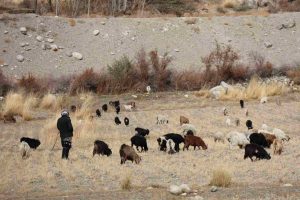
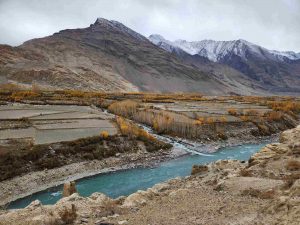
The Hindu Kush landscape leading up to the Pamirs is rugged and remote and the ancient ruins just add to the feeling of distance from everything, and to the mystery and the aura. From here we went through semi desert lands and in one portion even saw small white sand dunes which had desert weeds strewn over them. Soon our scenery again changed as we drove past grasslands where we met a few goat herders. And as our car was snaking up the mountain road to another fortress that time forgot, we witnessed blue rivulets cutting through gravel plains. This view from the vantage point lent it a very alien and otherworldly look.
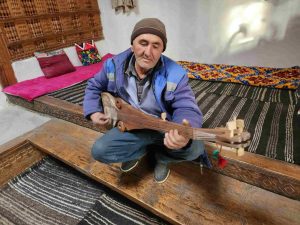
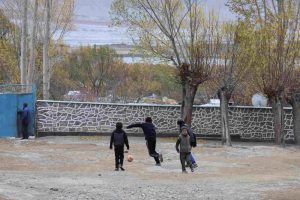
Throughout the day we covered huge distances and stopped at many random locations. One of the most charming experiences was a village near an old sun dial. Since this was winter, there were absolutely no tourists around and we had everything to ourselves. There we saw a few school children playing football and it just reminded me of the Afghanistan scene from ‘The Secret Life of Walter Mitty’ (do check out this soul searching Hollywood movie). We just stood there and watched the children play and barring a smile nothing was said or expressed. As we were looking on, an old man took us inside his place and played a song for us on a string instrument called the rubab. Many days later (upon googling) I got to know that the rubab is the national musical instrument of Afghanistan. Again no words said and nothing exchanged. You see, I had offered money but the old man refused to take it and he just pressed the note against my palm and closed it with both hands and with a wrinkled smile. It was a brief moment when two people with two very different stories crossed paths. The stories would diverge once more.
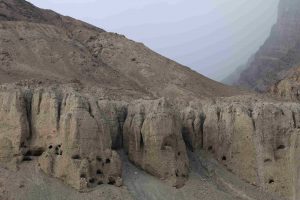
After this poignant incident we reached a very strange spot. We saw numerous ancient Buddhist caves on the steep slopes of barren brown mountains. Anzur was not able to explain much since he knew very little English and he wasn’t really a guide, but an expert driver. In any case, we immediately asked him to stop the vehicle. We just had to check out these caves which looked eerily similar to the ones at Bamyan where the statues were destroyed. This made me realize that some Buddhists in the distant past would have taken this north-western route from India to reach Tibet, China and other parts of the Orient.
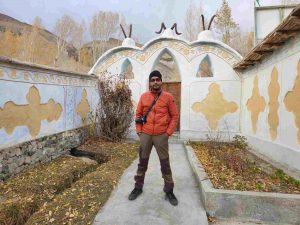
After exploring the caves and an ancient Buddhist stupa on a hill, we rushed back to our vehicle as it was getting dark in a hurry, with the November sun going behind the hill. Now we had only one job left to do which was to find a home to sleep in. While Anzur had a few contacts in Langar village, it so happened that three out of three were not opening their doors and there was no sign of life in the homes anyway. Maybe they had all left for a warmer abode which was not at a height of 10,000 odd feet (around 3,000 meters) as Langar was. It was rather weird going from home to home in order to find a place to sleep. But then we did find the home of a nice man who let us in. There was no electricity that night, which made it all the more strange. Imagine an old man carrying a lantern in a large house where you are the only other people. Just to add to the spookiness, all this was in a village without a soul and with no electricity or wi-fi and in a very remote part of the planet. However to our relief we heard the sound of a baby crying from the backroom and then he brought the little one to us saying she was his granddaughter. While no one else from the household came to meet us that night or the next morning (we knew more people were at home), our host made us comfortable in the main room and we were served hot soup with bread and biscuits.
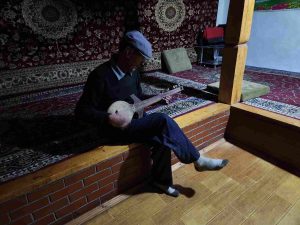
And just like the old man at the sun dial, our host also broke into a song with the rubab. This had to be the strangest night of my life. Here was a man passionately singing a song in the most haunting voice I have heard, breaking the silence of the most silent of nights. And after the heartfelt song and hearty meal, we walked out in the open and saw the faintest of snowflakes against the yellowish light of the lantern. It was possibly the first hint of snowfall this season and we knew what was coming the next day as we were to go up to 14,000 feet in the Pamirs. And with that thought we went off to sleep. A sleep that was hard to come by – but not because of any fear, rather in anticipation of what the next adventure would bring. We would be out of the high altitude Wakhan Valley and into the even higher Pamir Mountains. And the winter was coming.
Nitin Gairola is from Dehradun and has travelled the natural world more than almost any Indian ever. He has set world travel records certified by India Book of Records, has written for Lonely Planet, and holds National Geographic conservation certifications. He is also a senior corporate executive in an MNC and in his early days, used to be a published poet as well. More than anything else, he loves his Himalayan home. Reach him at: www.facebook.com/MostTravelledIndian/ ; www.instagram.com/MostTravelled_Indian/; nitin.gairola@gmail.com