Beyond 2030
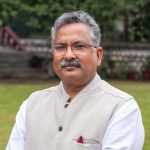 By Dr Durgesh Pant
As the world approaches 2030, the timelines of two important global commitments, the Sustainable Development Goals (SDGs) and the Sendai Framework for Disaster Risk Reduction, are drawing closer. Both have shaped our understanding of resilience, vulnerability, sustainability and the protection of human lives. But as we begin looking beyond 2030, an important question emerges: whose voices will shape the next global framework for disaster risk reduction?
Perhaps some of the most important answers will come not from conference halls or policy documents, but from remote Himalayan villages, where people have lived with uncertainty, adapted to changing landscapes and developed an understanding of nature deeply rooted in experience.
The Himalayas are not merely a geographical frontier. They are a living landscape of communities navigating fragile ecosystems, changing weather patterns, landslides, flash floods, earthquakes and other hazards. For those living here, resilience is not an abstract concept or policy vocabulary. It is a lived reality reflected in decisions about livelihoods, agriculture, water, homes and everyday survival.
The Himalayas have, in recent years, witnessed an increasingly complex and challenging landscape of disasters from flash floods, cloudbursts, landslides and glacial hazards to earthquakes and extreme weather events. These events have disrupted lives and livelihoods, tested infrastructure, and underscored the fragile relationship between human settlements and an evolving mountain ecosystem. Yet, alongside these challenges, communities across the Himalayan region are continuously learning, adapting and finding ways to mitigate risks, prepare for emergencies and build resilience. Their lived experiences, local knowledge and understanding of an increasingly unpredictable environment make them not merely beneficiaries of disaster management efforts, but critical stakeholders in shaping its future.
As we begin imagining a framework beyond Sendai, it is imperative that these voices are heard.
The experiences of a farmer in a remote village, a teacher preparing children for emergencies, a young student witnessing changes in local weather patterns, or a community responding to a sudden disaster can offer insights that are difficult to capture through data alone. The next framework must recognise that disaster risk reduction cannot be designed exclusively from the top down. It must also emerge from the ground up.
In Uttarakhand, the idea of collective resilience is deeply intertwined with the memory of Silkyara.
In November 2023, when a portion of the under-construction Silkyara tunnel collapsed, 41 workers were trapped inside. What followed was a 17-day rescue operation that tested engineering capabilities, institutional coordination, leadership, patience and human determination.
The successful rescue was also a testament to decisive leadership at the highest levels of government. Under the guidance of Prime Minister Narendra Modi, the operation received sustained national attention, with him personally monitoring developments, seeking regular updates and ensuring that no effort or resource was spared. His emphasis on a whole-of-government approach brought together central agencies, specialised experts, technology and resources from across the country and abroad.
At the state level, Chief Minister Pushkar Singh Dhami led from the front. Remaining present at the rescue site in Silkyara, he personally oversaw the operation, coordinated with central agencies and international experts, and remained deeply engaged with the welfare of the trapped workers and their families. His leadership reflected not only administrative resolve but also empathy and an unwavering commitment to bringing every worker home safely. The continuous coordination between the Centre and the State, backed by scientific expertise, institutional collaboration and determined leadership, demonstrated how governance can rise to the occasion in moments of extraordinary crisis.
As rescue teams confronted nearly 60 metres of debris, the operation required a combination of technologies, specialised expertise and, ultimately, unconventional approaches. When mechanical drilling encountered obstacles and the auger machine became stuck, the rescue effort turned to manual excavation. Rat-hole mining experts were brought in to undertake the final stretch of horizontal digging inside the rescue pipe. Working in teams, they manually excavated debris, collected it into small trolleys and moved it out through the narrow passage.
Their work demanded extraordinary precision, courage and perseverance in incredibly difficult conditions. Meanwhile, parallel rescue approaches, including vertical drilling and efforts from other directions, continued.
After 17 days, all 41 workers emerged unhurt.
But Silkyara was much more than an engineering success. It was a moment when the entire nation held its breath. Families waited, rescue teams persisted, institutions worked together, and prayers travelled from across the country and around the world. People who had never met the 41 workers felt deeply connected to their fate. When the workers finally emerged, the relief, joy and emotion were collective. It was a triumph of labour, courage, ingenuity, collaboration and faith; a reminder that even in the most difficult circumstances, hope can sustain us.
The Himalayas also occupy a unique place in India’s spiritual and cultural imagination. Revered as Devbhoomi, the mountains in Uttarakhand are not simply landscapes of extraordinary ecological significance but living spaces of faith, tradition and spirituality. Across Uttarakhand, communities share an intimate relationship with local Deities, sacred peaks, rivers and forests, which shape their cultural identity and collective consciousness. Near Silkyara, Baba Baukhnag is revered as the guardian Deity of the region, with a deep-rooted place in the faith of local communities.
The Silkyara tunnel itself became closely associated with this faith during the rescue operation. Following local appeals, a shrine dedicated to Baba Baukhnag was re-established at the tunnel entrance, where villagers, rescue personnel and even international tunnelling expert Arnold Dix offered prayers. The significance of this association was further recognised in April 2025, when the temple was consecrated and the Uttarakhand Chief Minister announced that steps would be taken to name the tunnel after Baba Baukhnag.
The Silkyara rescue, therefore, represents a remarkable intersection of technology, leadership and spirituality. Advanced engineering and scientific expertise, decisive institutional leadership and the collective faith and prayers of thousands came together during those 17 extraordinary days. For us, this is a reminder that progress and tradition need not stand apart; both can coexist in the pursuit of human safety, hope and resilience.
This is precisely why WSDM is close to our heart. The World Summit on Disaster Management (WSDM) is not just an annual event hosted in Uttarakhand; it is an occasion to honour the labour, courage, determination and prayers that made the triumph of Silkyara possible. It is a way of keeping that memory alive, not merely by celebrating what was achieved, but by carrying forward the lessons it taught us.
As we mark the third anniversary of Silkyara through WSDM, under the theme “Resilience Starts at Home: Anticipating Risks, Building Resilience, Transforming Futures”, we are reminded that resilience begins with people, their communities and their ability to prepare, adapt and support one another.
WSDM is an effort to decentralise the conversation on disaster risk reduction, to bring diverse experiences and perspectives onto the same platform. Its strength lies in connecting the grassroots with the global, bringing village-level realities into conversations with district and state institutions, national agencies, universities, researchers and international experts.
The conversation on disasters must not remain confined to those who study them or those who administer responses. It must include those who experience them first-hand. Communities living in vulnerable geographies, students, young researchers, teachers, local practitioners and people whose livelihoods are directly affected by changing climate patterns must have a voice in shaping solutions.
The Himalayan region has much to contribute. Its communities possess generations of knowledge about landscapes, water systems, forests, seasons and local vulnerabilities. This traditional wisdom, when brought together with contemporary science, technology, research and policy, can help shape more grounded and effective approaches to disaster risk reduction.
The voices from remote villages are not peripheral to the global conversation; they are essential to the next framework we build.
WSDM seeks to create this convergence. World Summit on Disaster Management has emerged as the largest collective of people & institutions on Disaster Resilience in the past few years.
Scientists, policymakers, institutions, researchers, students, practitioners and communities share a platform to exchange ideas, question assumptions and find solutions. The participation of students and young researchers is especially encouraging with representation across all the continents. It is equally important that the people most affected by disasters are not merely recipients of knowledge, but contributors to it.
The Summit’s blended and distributed approach further reflects this spirit. By combining physical and virtual participation, leveraging technology and connecting people across geographies, we seek to make dialogue more accessible while reducing unnecessary travel and its carbon footprint. A platform discussing disaster resilience and climate action must also be mindful of how it convenes.
As we look beyond 2030, the next framework for disaster risk reduction must be shaped not only by global targets and institutional commitments, but by lived experiences, local realities, scientific evidence and the wisdom of communities. Resilience must reach schools, households, villages and livelihoods. It must recognise that vulnerability is unequal and that preparedness cannot be meaningful unless it includes those most at risk.
The Triumph of Silkyara taught us that when the world comes together, hope can prevail even in the most difficult circumstances. The Himalayas remind us that the people who live closest to risk often hold invaluable knowledge about resilience.
World Summit on Disaster Management (WSDM) is our way of honouring that lesson, remembering the rescue of 41 lives, the extraordinary people who brought them home, and the prayers that accompanied them, while building a future in which more lives can be protected.
Because resilience cannot be built for communities without listening to them. It must be built with them, and it must begin at home.