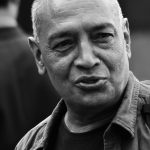
 By Ganesh Saili
Don’t expect a stream in Wolfsburn. It’s the first property after the Char Dukan where a freshly painted army sentry post stands next to a garish signboard which warns you to stay away, if you know what’s good for you!
In the once-upon-a-time days, my father would take me along to meet the Mem Sahib who lived there. Mrs Edith Walsh was the last Anglo-Indian owner of Wolfburn. Her only child, a boy, had emigrated to New Zealand. Left with no option, she willed half the property to Mr Sun, who worked in Kwality, and the other half to the Armenian, Mr Godin, who had a shop along the Mall. It dealt in the hire and sale of pianos.
My father’s first employment was as a meter-reader with the electricity board. This required him to go through the hill station from lane to street, hovel to house, shack to bungalow, jotting down digits registered in the meters. He would arrive home at dusk, with tales that still ring in my ears to this day.
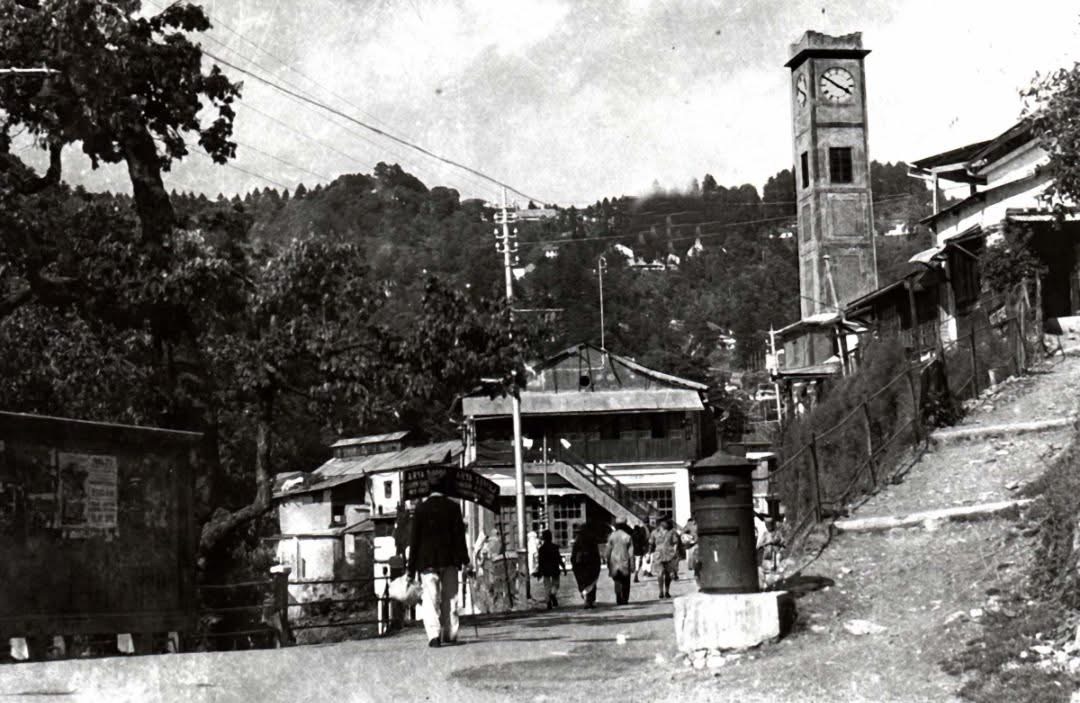
Pic Courtesy Internet
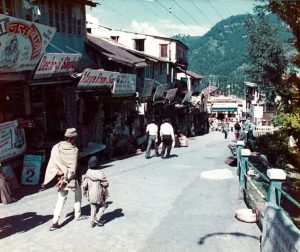
Our hill station’s tradition of boarding houses dates back to the early 1900s. With the influx of missionaries in Landour, three old bungalows, within walking distance of the Landour Language School housed in Kellog’s Church were given licenses to run guesthouses: Rokeby, a mere three-minute walk, Fairview, six minutes, and Wolfsburn, barely five minutes away.
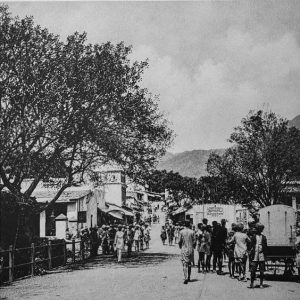
I miss the warmth of my father’s hand. Ah! For the touch of a vanished hand! Setting off from lower ramp – with shops to the right and homes to the left – turning sharply to the east where the road forked: one road climbed past the dandi-shed while the other went on to the Company School. This was the shortest way to Landour’s Church Flat, though the one to the right had a much easier gradient. At the top of the ridge, hidden from the general public by a screen of majestic deodars, is St Peter’s Church. At 7850 feet above mean sea level, it is the station’s highest point, towering some fifteen hundred feet over the highest points in Mussoorie.
Pic courtesy: Rahul Kohli
To our left is the Upper Mall, or western Circular Road, a very pleasant walk leading to a house that is now only a ruin. I used to look forward to these forays! Especially the one that led to the six-acre spread of the estate: the old bungalow with its Doric pillared veranda wrapped around, topped with a thatch-roof, covered by a tin-roof. This was home to Mrs Edith Walsh, the end of the trail of an Anglo-Indian family. She always had a chunk of barley sugar for me. It left me with a sweet tooth that I have to this day.
When I saw last her, she had had a stroke, which had left her like a crumpled bird, to be carried around in a dandy to be placed in a patch of sunshine under the shade of a horse chestnut tree. I still remember the white cabbage-leaf butterflies fluttering around its candelabra flowers. In rapt attention I heard her rattle off the day’s needs: ‘Ek chatank dhania! Thora sa haldi! Thora namak! Adha seer chawal!’ Her helpers scurried to gather the provisions. She made sure the store was locked and the keys back to the confines of her embroidered bag.
Up until the 1960 our winters were very severe; like most folks she went down to the warmer climes of Dehradun’s Chukhuwala. Wolfsburn was left in the care of Kalyan Singh, her caretaker. This arrangement worked, year after year, until one cold winter’s night, aged ninety years, she faded away quietly. Then, one night, the chowkidar, pale as a sheet, crumpled and disheveled, almost succeeded in knocking down our front door.
‘Saili Saab! Saili Saab!’ the words tumbled out of his mouth, sloshing and bumping into one another in a haste to get spoken. Breathlessly, he stammered: ‘She’s back! Walsh Memsaab is back! Last night, she rattled the chain of the outhouse door, screeching: ‘Kalyan Singh darwaja kholo! Kalyan Singh darwaja kholo!’
We never saw him again. He escaped to the safety of his home in the mountains, breathing fear instead of air, and vanished into anonymity.
(Ganesh Saili, born and home-grown in the hills, illustrates his words with his pictures. Author of two dozen books, some translated into twenty languages, his work has found renown worldwide.)