Garhwal Post Bureau
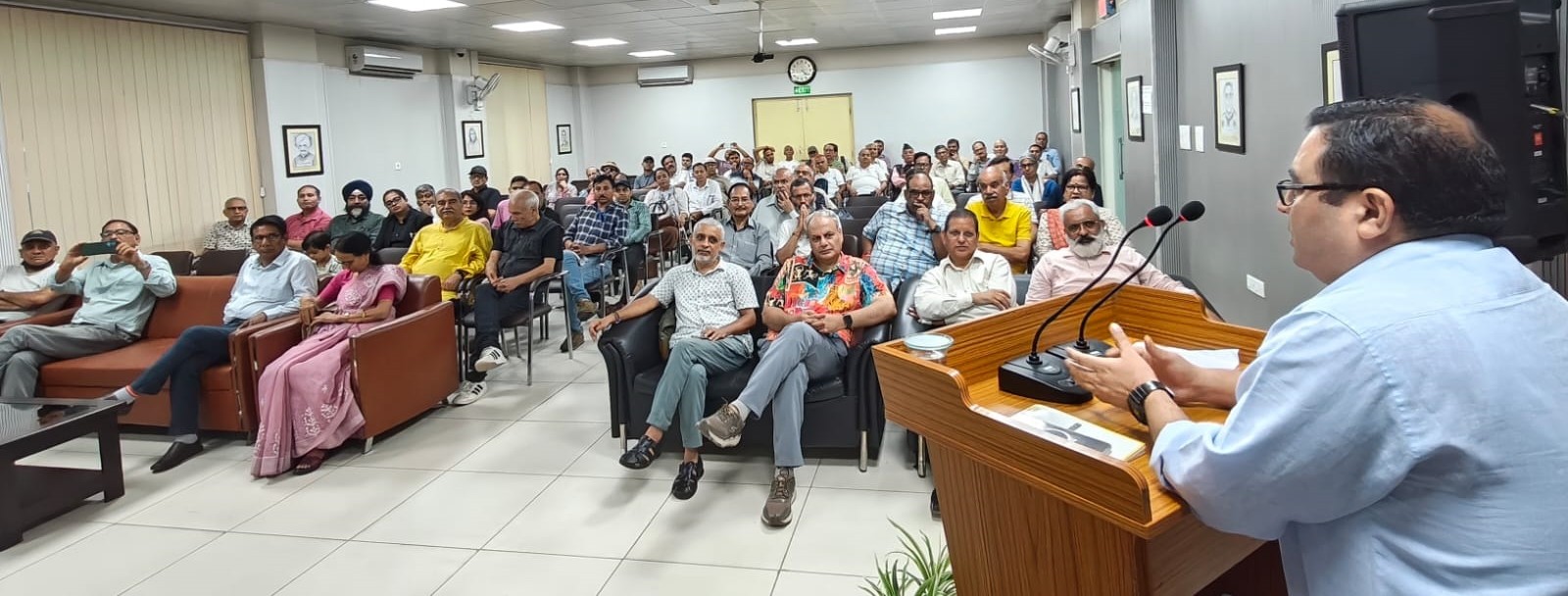
Dehradun, 31 Aug: With the objective of understanding Uttarakhand’s natural and cultural heritage, promoting public dialogue on its diverse dimensions, and fostering greater social sensitivity towards environmental conservation, the Doon Library and Research Centre organised a special illustrated lecture, slide show and documentary presentation on Monday on the theme “Valley of Flowers: Myth and Reality.”
During the programme, noted photographer and traveller Chandrashekhar Chauhan, through his years of travel experience and rare photographs, presented several dimensions of the world-famous Valley of Flowers National Park in Chamoli district, including its natural beauty, biodiversity, geographical features, folk beliefs and environmental challenges. The programme was conducted by Sandeep Gusain.
Chandrashekhar Chauhan said that the Valley of Flowers is often perceived merely as a beautiful valley filled with colourful flowers, whereas its actual character is far more diverse and complex. Situated amidst the high mountain ranges of the Himalayas, the valley forms part of an extremely sensitive ecosystem where weather, altitude, topography, water streams and vegetation interact continuously to shape and transform the landscape. According to him, understanding the Valley of Flowers requires looking beyond a few popular views and observing its changing natural forms across different seasons.
Through the illustrated presentation, he systematically showcased photographs taken at different times in the valley. Some photographs captured vast stretches of flowering meadows, while others showed how rain, mist, clouds and sunlight transformed the mountain landscape into distinctly different forms. Along with various species of flora and flowers, the mountain slopes, streams, rocky formations and surrounding landscapes of the valley were also presented through photographs.
He further explained that the beauty of the Valley of Flowers lies not merely in its flowers but in the entire natural system that sustains them. Altitude, temperature, rainfall and Himalayan climatic conditions influence the biodiversity of the region. From this perspective, the valley represents a fragile natural environment where even minor changes can have wider ecological consequences. He emphasised the need to understand this delicate natural balance and regulate human activities accordingly.
In the context of the theme, “Myth and Reality”, Chauhan also discussed various folk beliefs and popular perceptions associated with the Valley of Flowers. He observed that in Himalayan society, nature has never been regarded merely as a resource; it has been an integral part of folk life, faith, traditions, memories and folklore. Therefore, the myths associated with the Valley of Flowers need to be understood within their broader cultural context.
He also pointed out the importance of recognising the difference between popular images of natural heritage sites and their actual environmental conditions. Attractive photographs can highlight the beauty of a place, but understanding its ecological sensitivity, biodiversity and conservation needs requires looking at the wider natural environment. The slide show was an attempt to develop precisely such a broader perspective.
A special feature of the presentation was that the audience got an opportunity to see several views that ordinary visitors generally do not encounter during their limited trips to the valley.
During the presentation, special attention was also given to Bhyundar Valley and the environmental conservation efforts being undertaken there. It was informed that conservation-related activities have been carried out since 2002 through the Eco-Development Committee, with the participation of local communities. In cooperation with the Forest Department and villagers, efforts are being made towards cleanliness, disposal of plastic and biodegradable waste, and maintaining ecological balance.
The slide show also highlighted the crucial role of local communities in the conservation of the Himalayan environment. People whose lives have been closely connected with these landscapes and natural resources for generations possess valuable knowledge and experience, and their participation should be given adequate importance in conservation policies and activities. Conservation measures are likely to be more effective when local knowledge and community participation are integrated rather than relying solely on externally designed interventions.
The growing popularity of the Valley of Flowers also brought into focus the need to maintain a balance between tourism and the environment.
Tourism is an important means of bringing people closer to nature and generating interest in natural heritage, but in sensitive Himalayan regions, tourism activities must remain within the framework of environmental discipline. The discussion underlined the need to take seriously the pressures created by unregulated human activities, waste and increasing visitor impact on fragile natural areas.
Every visitor to a place such as the Valley of Flowers, it was emphasised, should understand that they are not merely visiting a tourist destination but entering an extremely sensitive natural heritage area. Responsible tourism means not only appreciating nature but also accepting the responsibility to protect it.
Along with the slide show, a special 12-minute documentary was screened. It presented the journey to the Valley of Flowers, its natural surroundings, mountain landscapes and biodiversity through moving images. The documentary connected the audience with experiences that cannot be fully conveyed through words and still photographs alone. The combination of visuals and sound made the natural environment of the valley more vivid and immersive.
An open dialogue and question-and-answer session was organised towards the end of the programme. The audience raised questions concerning the biodiversity of the Valley of Flowers, flower and plant species, environmental changes, the impact of tourism, the role of local communities, experiences of photography and issues related to conservation. Chandrashekhar Chauhan responded to the questions on the basis of his field experiences. The interaction turned the programme into a participatory dialogue rather than a one-way lecture.
On behalf of the Doon Library and Research Centre, Programme Officer Chandrashekhar Tewari welcomed the guests and audience and highlighted the purpose and contemporary relevance of the programme. He said that along with appreciating Uttarakhand’s natural heritage, it is equally important to understand the relationships between nature, society and culture that lie behind it. He described the effort to bring this important subject to a wider audience through the speaker’s experiences and photographs as highly meaningful.
Among those present at the programme were Librarian DK Pandey, Dr Kalyan Singh Rawat ‘Maiti’, Lokesh Ohri, Ashok Singh Mahar, Jai Raj, Himanshu Ahuja, Dwijendra Bahuguna, Vijendra Rawat, Prateek Panwar, Sunder Singh Bisht, Dr Lalta Prasad, Vijay Bhatt, Beena Benjwal, Surendra Sajwan, Sudhir Bisht, Jadish Babla, KB Naithani, Badrish Chhabda, Dr Arun Kuksal, Bharti Anand, Jagdamba Prasad Maithani, Alok Sarin, Hari Om Pali and Yogendra Negi, along with a large number of readers, young readers, journalists, writers, litterateurs, researchers, photographers, nature and environment enthusiasts, and people interested in travel.