The Books from My Shelves – 7
By Sanjeev Chopra
I am grateful to NS Napalchayal for this invitation to review my top 10 favourite books from the last decade — a monumental task made more difficult by the fact that I tend to accumulate a fairly vast range of books for reading and reviewing, as a consequence of the VoW Book Awards which are also now in their tenth year. Taking inspiration from the same eight categories of the VBA, I have decided to compile the following choices:
In the category of Children’s Literature, my favourite from over the years would have to be Achintyarup Ray’s charmingly illustrated title Jhupli’s Honey Box (Tulika Books), about the real-life wonder of a little girl who lives in the dense jungles of the Sundarbans, where the forest-dwellers traditionally gather honey but at great risk to their lives from the crocodile-infested waters. To alleviate her own worries about her father, Jhupli comes up with the ingenious plan of honey-boxes which will ensure that the produce is gathered in the comfort of their own homesteads. The cooperation of the forest rangers also becomes a factor in this story of success between the forest and its people.
My favourite Young Adult Writings title is this year’s VBA Winner Huthuka Sumi, who has written the novel Giants (HarperCollins) about the vast mythical universe of the Nagas. The protagonist of this story is a young mute boy named Kato who becomes the storyteller for a kindly giant friend named Kene. Traversing a range of wonders both external and internal, this is a magnificent debut about coming of age.
A difficult category to choose just one book for is English Non-fiction: I have three contenders. The first is Ankur Bisen’s Wasted (Pan Macmillan) which casts an important spotlight on the systemic failure of sanitation across both the public and domestic space due to faultlines in waste management along caste, class and gender. The second is Manoj Mitta’s Caste Pride (Westland), which elaborates further on the fissure of caste, which has relegated communities to backward lives despite the spate of reservation across sectors. Finally, in moving from institution to individual, the third pick is Ishtiaq Ahmed’s biography of Jinnah, which takes an exhaustive and critical look at the personal and religious motivations of Pakistan’s first Prime Minister.
The enduring cost of the Partition is reflected in Manreet Sodhi Someshwar’s The Radiance of a Thousand Suns (HarperCollins) which moves from Punjab to New York, and from 1947 to 1984 and beyond, as my selection from English Fiction. The book weaves together stories from the Mahabharata which resonate in the contemporary, as well as the poetry of Bulle Shah.
In Hindi Fiction, my choice would be Soni Pandey’s sensitive book Suno Kabir (Lokbharti Prakashan), about the village of Azamgarh which is – like most other villages in India – neither fully the idealised space of Mahatma Gandhi’s words, and nor the absolutely craven den which Dr BR Ambedkar has decried. The characters of this village represent the changing face of the nation itself in this compelling debut story.
Sudhir Vidyarthi’s Bidaai De Ma (Rajpal and Sons) is my choice for Hindi Non-fiction. We know about the freedom fighters who laid down their lives for our country, but it is rarer to know about them from the memories of their mothers and sisters. The freedom fighters have been immortalized in statues and museums, but the words of their mothers and sisters have been given their credit only in this sensitive, moving book by Sudhir.
For translation from the Bhashas of Bharat into Hindi, I have enjoyed Amrita Bera’s translation of Manoranjan Byapari’s Bhaaga Hua Ladka (Eka Westland) about a young boy who has to run away from home and build a new life for himself in the harsh world. At the opposite end of the spectrum of age is the protagonist of my choice for the English Translation category — Jerry Pinto’s translation of Rajendra Banahatti’s Marathi book My Last Autobiography, about a nonagerian whose family seems to be waiting for him to pass on to the next realm although he is stubbornly holding on to life.
This then is a short – very short – overview of the books I have enjoyed reading in the last decade of VoW. I am looking forward to compiling another list of this type soon for all the books which have added value to my bookshelf over the many decades of my life before that !
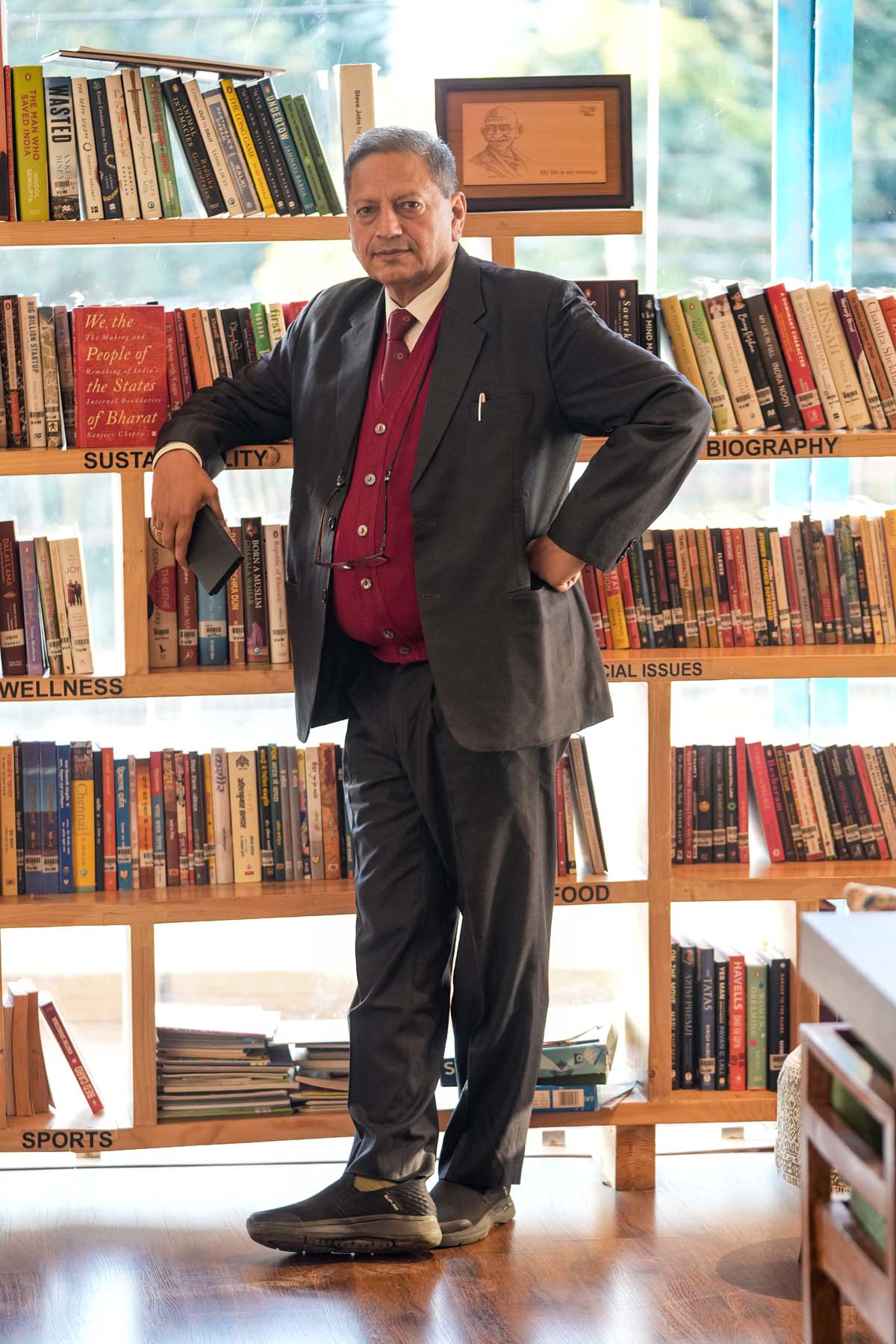
Dr. Sanjeev Chopra is the curator of the Valley of Words : a pan India Literature and Arts festival based out of Dehradun. He is currently a Senior Fellow of Contemporary History at the Prime Ministers Memorial and Library and a Trustee of the Lal Bahadur Shastri Memorial . He is also on the Academic Council of the National Centre for Good Governance and the National Institute of Disaster Management . His recent books include The Great Conciliator: Lal Bahadur Shastri and the Transformation of India, and We the People of the States of Bharat : the making and remaking of India’s internal boundaries.)