By Arun Pratap Singh
Garhwal Post Bureau
Dehradun, 5 Sep: The five-year-old tiger rescued from Salt block in Almora district would now undergo a DNA test to establish whether the animal was responsible for the fatal attack on 21-year-old Shalu Negi last month or not. The tiger is currently lodged at the Dhela Rescue Centre of Corbett Tiger Reserve, but whether it will eventually return to the forest or remain in captivity could depend on the outcome of the forensic examination.
Just to point out, Shalu Negi was killed in a tiger attack in the Salt area of District Almora last month, triggering considerable anger among local residents. Following the incident and pressure from villagers, the Forest Department launched an intensive operation to track the tiger believed to be responsible for the attack. A specialised team comprising personnel and experts from forest divisions other than Almora was constituted, and search operations continued in the forest for several days.
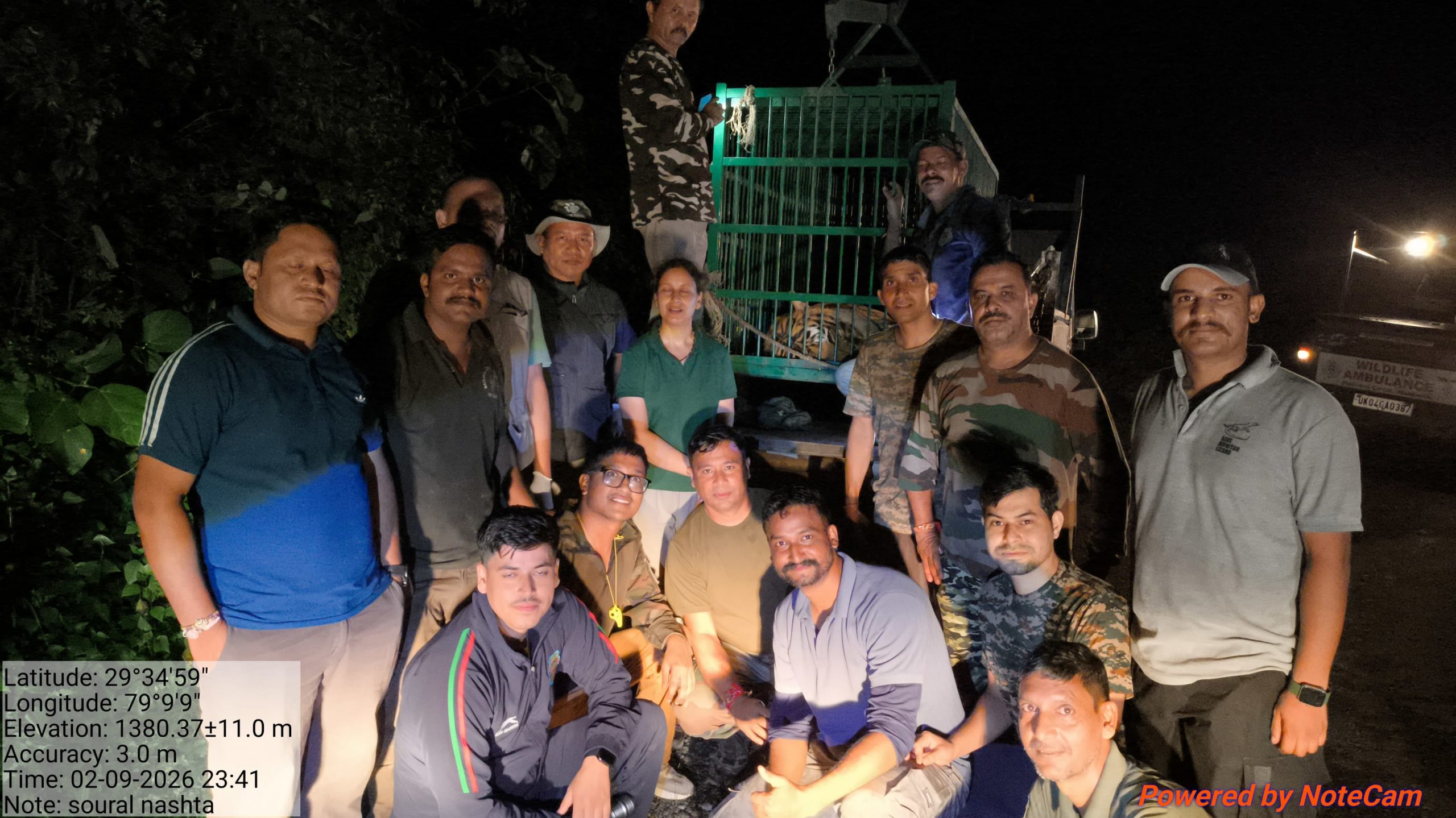
The department kept a close watch on areas where the tiger was suspected to be moving, using camera traps and other surveillance methods to establish its presence and movement patterns. After days of sustained efforts, the team finally succeeded in rescuing an adult tiger on 2nd September. The animal is estimated to be around five years old and was subsequently shifted to the Dhela Rescue Centre for further observation and assessment.
However, the crucial question of whether the rescued tiger is the same animal that attacked Shalu Negi remains unanswered. Samples collected from the victim’s body that may help establish the identity of the attacking tiger have been sent for DNA examination. The DNA profile of the rescued tiger will now be compared with the samples obtained from the victim to determine whether the two match.
The investigation is not expected to be confined to the Shalu Negi case. Samples collected from other people killed in tiger attacks in the same area will also reportedly be examined. Their comparison with the DNA of the rescued tiger would possibly help establish whether the animal has previously been involved in attacks on humans or whether the fatal incident involving Shalu Negi was its first such attack.
There is also another possibility that the Forest Department may have captured the wrong tiger. If more than one tiger is moving through the forests of the area, the animal rescued during the search operation may not necessarily be the one responsible for the attack. This makes the DNA examination particularly significant, as visual identification alone may not conclusively establish the tiger’s involvement.
If the DNA does not match, the department could consider releasing the tiger back into the wild after assessing its overall condition and behaviour. If the DNA matches and further examination establishes that the tiger has previously attacked humans, however, releasing it back into the forest could become difficult. In such a situation, the animal may have to remain at the Dhela Rescue Centre and be managed in captivity for the rest of its life.
Nainital Forest Division rescue expert Dr Himanshu Pangti reminded that the tiger had been rescued and shifted to the Dhela Rescue Centre and that the department was awaiting the results of the DNA examination. The report is therefore expected to be the key piece of evidence determining the next course of action. Even if the DNA samples match, the final decision regarding the tiger’s future will rest with Chief Wildlife Warden, Neena Grewal.