Around the World with the Most Travelled Indian
 By Nitin Gairola
I have just completed my 5 features on the ‘big 5’ of Africa – Elephants, Lions, Leopards, Rhinos and Cape Buffalos and as the regular readers would know, in these I wrote about my experiences of seeing them in their wild habitats. And as most may also know by now, the ‘big 5’ is a term coined by colonial hunters in Africa during the 19th century, to list the 5 most dangerous and hardest animals to kill for sport (not necessarily the 5 biggest, although all are quite big). Now one may think, just as I did, that these tales of men wanting to feel like men by killing innocent animals was a thing of the past. But as it turns out, this unholy tradition continues to be alive to this day and goes by the name of ‘trophy hunting’. These ‘hunters’ pay truckloads of greenbacks to track and slay large charismatic animals and after the kill, they take a few body parts back home as well – such as the skin, horns, antlers, the entire head etc. The grand idea is to place these body parts as souvenirs or trophies in the man cave of their abodes. Naturally the abodes here are mansions since it takes a lot of money to pay for such activities. This also gives a good understanding that some of the wealthiest people on Earth are not the ones with the most well-formed perspectives on life. And let me add that, yes, this activity is legal in quite a few countries still and that’s where trophy hunting becomes a very controversial and difficult subject.
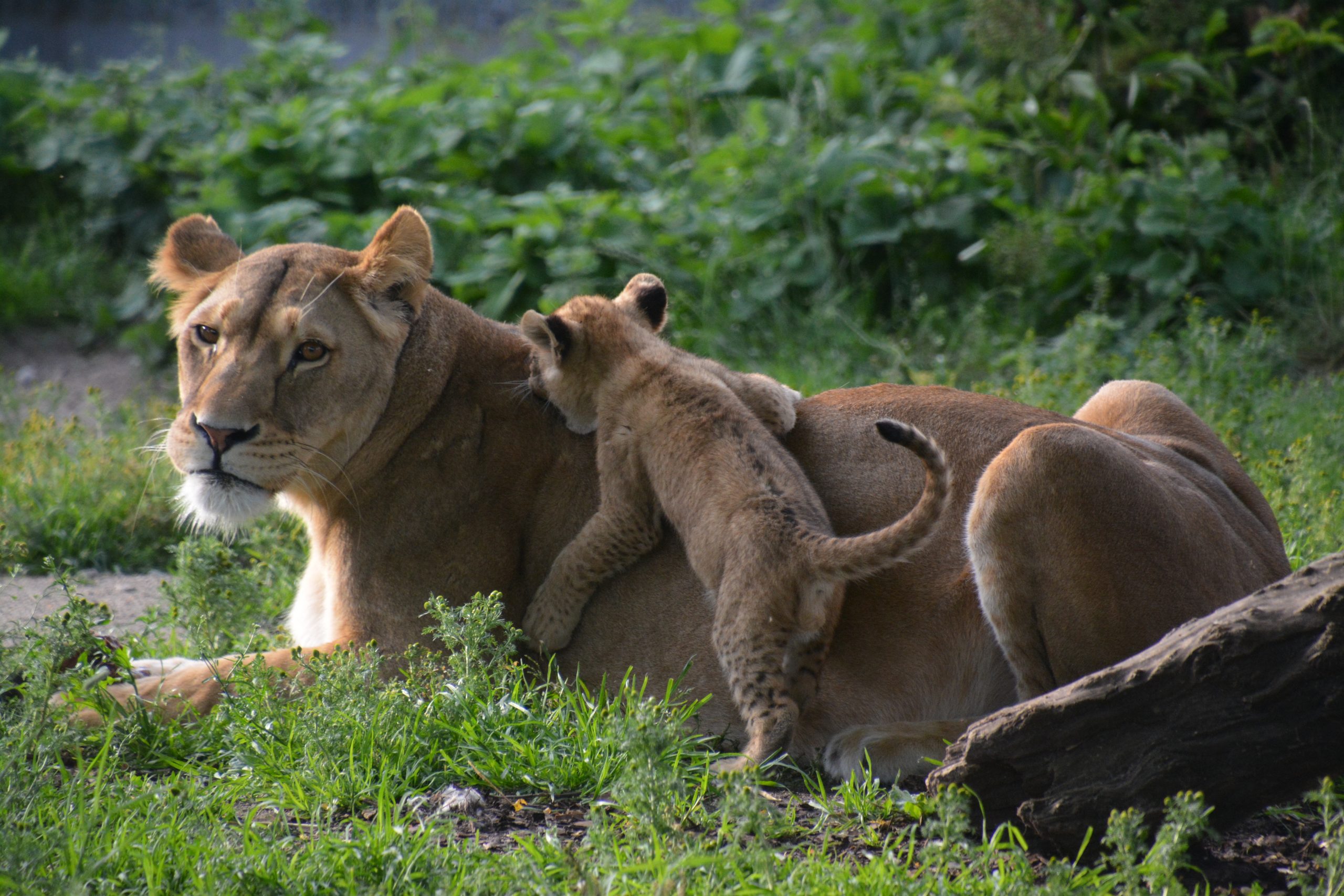
Many renowned conservationists say that the money from trophy hunting helps local communities, as the animals overall are worth more alive than dead to those living near them i.e. only a few are hunted in this vile sport but the money gives incentive to ensure that the overall wild population is maintained at a healthy level. If this were not to be the case, then it is very likely that all big animals would have been eradicated and eliminated from the grasslands which in turn would likely become farmlands. No human likes human-wildlife conflict as it impacts livestock, livelihoods and sometimes lives too, and so killing all apex predators and large animals in a region of human activity (outside the protected boundaries of a national park) is actually considered a preferred option. Who am I to judge otherwise since I don’t live with these animals but just go on safaris and then write about them once I am back in the comfort of my home.
Here are some facts – when it comes to killing lions for sport, the recommended quota is 0.5 lions per 1,000 square kilometres of assigned land managed for trophy hunting, which is naturally outside park boundaries. However, in some areas outside this hunting zone (and outside national park boundaries), the level of killing of lions by locals is at least 100 times higher. Lions, for some, are pests and not an endangered and iconic species as you and I consider the lion to be.
Besides, the area of land managed for trophy hunting in Africa is greater than all of its protected national parks combined – and it is almost the size of Iran or Mongolia or nearly half of India. And if we were to take the case of Tanzania alone, it has around 2,000 lions or 8% of the global lion population, in lands managed for trophy hunting. Hence if for instance, this trophy hunting were to be banned in Tanzania, suddenly these reserves (which are not government national parks) will be put to alternative economic use by the communities and then all these lions would, in all probability, be gone.
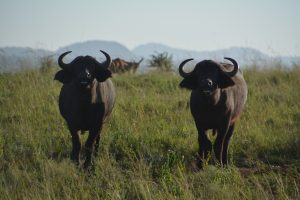
And to give you the economic view at a per hunt level (we will get into the high-level macro money flow in a bit), the price is around USD 45,000 for an elephant kill in some parts of Africa and around USD 35,000 for a leopard. These are staggering amounts and they need a replacement income for the locals in order for them to want these lovely beasts in their backyards. I say lovely beasts since they are ‘lovely’ to us tourists & travellers who love animals but they are no more than ‘beastly beasts’ for those whose daily lives are adversely impacted by them.
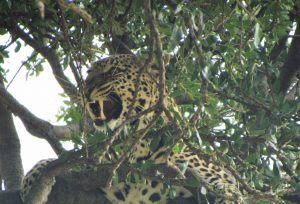
Another surprising (and shocking) fact is that the 8 out of the top 10 countries ranked for their record in conserving large mammals, allow trophy hunting as a legal sport. And one these countries is number one in the world of conservation and that is Botswana. Their whole wildlife economic model is made only for the elite, wherein they cater to either the ultra-rich hunters or the sufficiently rich safari tourists. No budget safaris in this country, which means less pressure on the animals from the tourists.
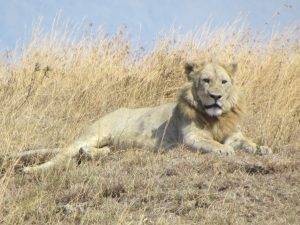
But on the whole, this subject of trophy hunting was really on the fringes until a decade ago and then suddenly it became mainstream. This is when an American dentist, Walter Palmer, killed a healthy male lion in Zimbabwe nicknamed Cecil and how I wish it were the other way around. Ever since then, trophy hunting is out of the shadows and is a hotly debated topic.
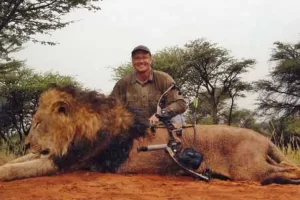
And while we have the reasons why some normal, good people support the economic benefit of trophy hunting (but not the act of it), there is an equally strong economic case against it. Some say that trophy hunting doesn’t deliver for either people or wildlife in the way that it’s claimed. In their view, the hunting blocks in many African countries are being abandoned because they don’t make money. Besides, due to mismanagement in allowing permitted quotas, they have actually have led to a decrease in overall big 5 animal populations.
There is also the issue that it has a colonial angle to it where rich, white people impact the resources of Africa and it prevents other ways in which conservation can be funded. And in the colonial view there are divided opinions as well. So when the whites kill African animals, many Africans call it colonialism but when their developed governments ban trophy hunting, then also it is hailed as colonialism since, as per many Africans, it should be upto the African people to decide what to do with their ‘resources’. And the sad part in all this is that you can’t argue with either view. That’s how complex this world actually is, even though so many media houses try to make it sound very easy to understand. The real world is complicated and messy, let me assure you.
And for just a bit, let’s move out of the economic view and get face to face with the fact that trophy hunting is downright cruel. I am sure most of us would agree that it would take a very twisted mind to feel good about himself or herself after killing an animal – with a gun or bow & arrow or with bare hands (though I would love to see some hunters go into this fight with their bare hands).
But we live in an economic world so I have to drag myself out of basic compassion and morals and ask the big money question – what replaces trophy hunting? If it were to be banned around the world or in some countries, what happens to the funding? Here almost everyone agrees that something has to replace this economic model in order to preserve the populations of the animals we all love so much.
Safari tourism as a replacement model is only a small part of the answer for three main reasons. One is that safari tourists pay a lot less than safari hunters and hence more numbers are needed, which in turn may adversely impact the wild and wildlife itself. The second reason is that maintaining government run national parks is expensive i.e. it takes more funds to maintain the parks than what comes in. The third and biggest concern is that a large part of trophy hunting takes place in areas that are remote, not too scenic and do not have mass infrastructure and hence are not the ideal places to bring tourists.
So, tourism is not the panacea clearly, and that’s why there are some other alternate views proposed by experts which include the value of animals linked to ecosystem services they provide when alive. For example, it is assumed that a single forest elephant in Africa helps trees store around 10,000 tonnes of carbon dioxide per square kilometre, by weeding out smaller trees, which allows the big ones to grow larger. Hence the carbon value of a single forest elephant is around USD 1.75 million. But there are two things to remember here – One is that we have specifically spoken of the ‘forest elephant’ of the forests (naturally) and not the larger bush elephant of the Savannah and that’s why the experts can publish a higher value of carbon savings; And secondly, how do humans attach a value to carbon? Some suggest that the major global corporations can possibly leverage this to showcase their ESG (Environmental, Social Governance) focus to the investors, which in turn can increase the value of their stock. This is a far more viable and realistic option in the economic world.
At this point, the readers would be expecting a conclusion but this conclusion would need to remain very inconclusive as there are no easy answers. I have seen what national park protection can do – say to the gorilla numbers which are rising every year in Rwanda, Uganda and Congo (I also contributed my mandatory protection fund to their governments). I am also pretty convinced that lands set aside for hunting ensure necessary breeding for profits, which might not be ethical, but it allows the numbers of a species to increase. I can’t say the same for lands which are neither national parks or hunting reserves.
But my heart badly wants to make a case against trophy hunting and that’s why I have to state a fact which is that none of the big 5 species is threatened with extinction. That’s why, in my view, the protection of a national park is sufficient for these animals although what it requires is continuous foreign funding, something Mr. Trump wanted to stop altogether. When we compare a developed country’s aid to a less-fortunate nation, the money from trophy hunting seems like small change. For example, the money generated from trophy hunting in Southern Africa (which is the epicentre of this business) is around USD 200 – 400 million per annum. Compared to it, the US provides around USD 6 billion or 6,000 million in aid to Africa every year. On this you may also add that the national parks across Africa generate a revenue of USD 400 million p.a. as well, but as alluded to earlier, the downside is that it takes around 3 to 4 times this tourist revenue to maintain the parks. So, in the end it really boils down to funding from global governments, NGOs and philanthropic foundations and of course, from MNCs leveraging their ESG scores to position and propagate their brands.
This is how complicated a subject trophy hunting is but, in the end, I have tried to nudge the conversation against it, but with the condition that the governments, MNCs, billionaire-backed foundations and us safari tourists play our part. Else, I’m afraid, we will lose all that we love and the world will never be the same without these animals.
Nitin Gairola is from Dehradun and has travelled the natural world more than almost any Indian ever. He has set world travel records certified by India Book of Records, has written for Lonely Planet, and holds National Geographic conservation certifications. He is also a senior corporate executive in an MNC and in his early days, used to be a published poet as well. More than anything else, he loves his Himalayan home.