Culinary Chronicles
The Great Expatriate Transformation
 By Yasmin Rahul Bakshi
There seemed to be a curious law of nature that Einstein had somehow forgotten to document. It concerned expatriate relatives and the remarkable transformation that seemed to come over them whenever they landed in India.
I first witnessed it at one perfectly ordinary afternoon when relatives from abroad arrived at our cottage. It was a warm day and the house was quiet with everyone going about their usual routine. Then the relatives arrived.
Now, abroad, these very same people had been spectacularly self-sufficient. They had mowed their own lawns and cleared snow from driveways. They had unclogged drains, washed cars, carried groceries and packed lunches with astonishing efficiency. They had even assembled complicated furniture using instruction sheets containing six diagrams and no recognisable language. They had been capable people. Very capable people!
Then their flight had landed in India and something magical happened. Somewhere between the airport and our front door their holiday mode had switched on. It was almost beautiful to watch. The suitcases had entered the house and suddenly everyone seemed to have remembered that they had relatives. Why would anyone have walked to the kitchen when there were people who loved them? Why would anyone have poured their own water when somebody could have poured it for them with affection? Why would anyone have made tea when an entire household was already debating whether they preferred masala chai or Darjeeling?
They had not merely come home. They had settled in. There they sat comfortably on the sofa with their sunglasses still perched on their heads and stories from abroad flowing freely. Within minutes my living room had acquired the atmosphere of a very cheerful royal court.
Then someone became thirsty. There had been no demand and there had been no instruction. There had simply been a gentle observation – “Oh… some water would be lovely.”
That had been enough. Three members of the household had risen simultaneously. “Cold water?” “Normal water?” “Put some ice.” “No no. He has just travelled. Do not give him too much ice.” Within seconds a glass of water had appeared. It had not been merely a glass of water but a presentation. The glass had been chilled and the tray had arrived. Someone had probably added a coaster for good measure.
Our guest had taken a sip and smiled appreciatively. Everyone was happy. This had been the Indian hospitality operating at full capacity. I had found the whole transformation extremely entertaining because I knew that only a day earlier this very person had probably taken the rubbish out and cleaned his own kitchen and loaded his own dishwasher without a single relative rushing to assist him.
Then a year later I travelled abroad to stay with them and discovered the second half of this fascinating law. Apparently the transformation worked both ways.
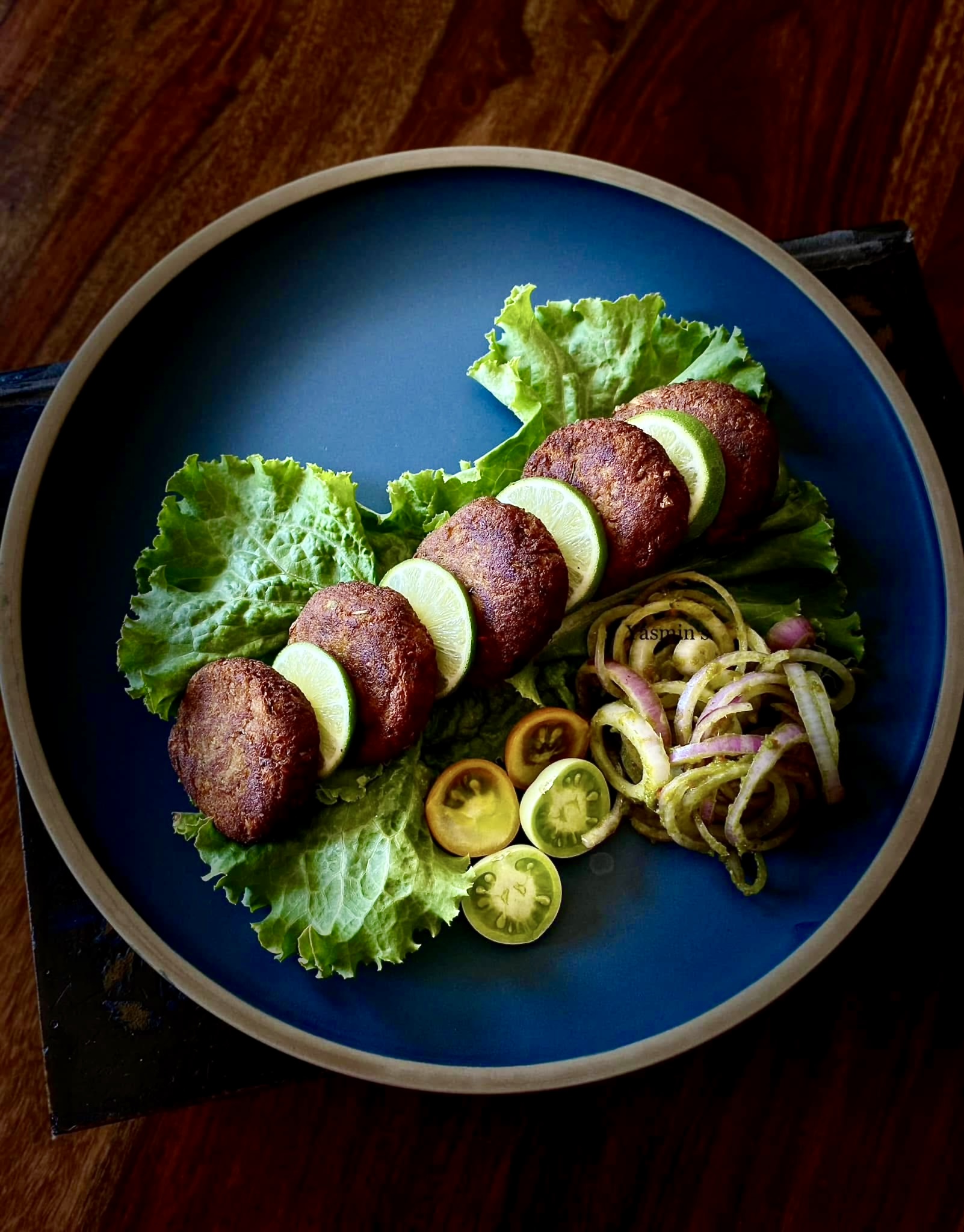
It was midnight and outside it had been bitterly cold. Upstairs everyone had gone to sleep. My little girl was finally asleep among half packed suitcases and my flight home was barely twelve hours away. I should have been packing. Instead I found myself standing in the kitchen staring at a huge steel bowl containing almost two kilos of steaming dal and meat mixture for Shaami kebabs.
There was no grinder and there was no food processor. There was only me and a wooden rolling pin. It was the same rolling pin with which I had rolled parathas that very morning because apparently visiting relatives abroad were not meant for taking a holiday. It meant opening a temporary branch of my kitchen in another country.
I had turned the rolling pin upside down and begun pounding the mixture. THWACK. THWACK. THWACK. For the first ten minutes I had been enthusiastic. After twenty minutes my wrist had begun negotiating its working conditions. After forty minutes my shoulder wanted to know whether overtime was being paid. By fifty minutes I had stopped making Shaami kebabs and appeared to be participating in some ancient culinary fitness programme.
Then I heard footsteps. Into the kitchen wandered the gentleman of the house wearing extremely comfortable sweatpants and carrying a freshly made cup of coffee. He looked wonderfully relaxed.
I looked at the coffee. I looked at him. Then I looked at my rolling pin and suddenly remembered the glass of water in India.
What an extraordinary recovery he had made! In India walking ten feet to the water purifier had seemed entirely unnecessary. Here he had not only walked into the kitchen but had located the coffee and made it himself. Foreign air clearly possessed remarkable restorative properties.
He cheerfully placed a few spices on the counter and said, “Just a quick batch before you leave. Nobody makes them like you.”
Quick?
I looked at the enormous bowl and then at the clock and then at my half-packed luggage. I laughed and continued pounding. THWACK.
That was when I finally understood the Great Expatriate Transformation. When they came to India they had become our honoured guests and when we had gone abroad we had somehow become their visiting chefs. They had arrived carrying chocolates and gifts. We had arrived carrying recipes.
Within twenty-four hours we had inspected their spice cupboards and reorganised their refrigerators and wondered aloud why there was nothing proper to eat in the house. Soon there were parathas on the tawa and kebabs in the freezer and dal simmering somewhere in the background. Everybody was delighted.
That had simply been how our families had worked. They had come home and allowed themselves to be thoroughly spoiled and then we had gone to their homes and spoiled them right back. There had always been laughter and there had always been food and there had always been someone insisting that everyone eat more. Somehow there had also always been a container being packed for the freezer.
Perhaps Einstein had known about this law after all. Perhaps he had simply decided that Indian family physics was far too complicated to explain. No matter which country we had been in, the roles had eventually reversed. Someone had relaxed on the sofa and someone had landed up in the kitchen.
Eventually we had all taken turns.
Although, somehow, I always seemed to get the midnight shift with the rolling pin.
Ingredients:
- Mutton mince – 500 g
- Chana dal – ½ cup
- Onion, roughly chopped – 1 medium
- Ginger, chopped – 1½ tbsp
- Garlic – 8–10 cloves
- Dried red chillies – 3–4
- Cumin seeds – 1 tsp
- Coriander seeds – 1½ tsp
- Black peppercorns – 8–10
- Cloves – 4
- Green cardamom – 3
- Black cardamom – 1
- Cinnamon – 1-inch piece
- Bay leaf – 1
- Salt – 1½ tsp or to taste
- Water – ¾–1 cup
- Green chillies, finely chopped – 1–2
- Fresh coriander, finely chopped – ¼ cup
- Fresh mint, finely chopped – 2 tbsp
- Onion, very finely chopped – 1 small
- Lemon juice – 1 tbsp
- Egg – 1
- Ghee or oil – for shallow frying
Method:
- Wash and soak the chana dal for 30 minutes then drain.
- Put the mutton mince, chana dal, roughly chopped onion, ginger, garlic, dried red chillies, cumin seeds, coriander seeds, peppercorns, cloves, cardamoms, cinnamon, bay leaf and salt into a heavy pan.
- Add ¾ cup water. Cover and cook over low heat until the meat and dal are completely tender. Add a little more water only if required.
- Remove the lid and continue cooking until all the moisture has evaporated. The mixture should be completely dry.
- Remove the bay leaf, cinnamon and black cardamom shell if desired. Cool the mixture completely.
- Grind to a very fine and smooth consistency.
- Add green chillies, fresh coriander, mint, finely chopped onion and lemon juice. Mix well.
- Add the egg gradually and knead well. Use only as much egg as required to bind the mixture.
- Divide into 18–20 portions. Shape into balls and gently flatten into round kebabs.
- Heat a little ghee or oil in a heavy frying pan.
- Shallow-fry over medium heat until evenly browned on both sides.
- Serve hot with mint-coriander chutney, onion rings and lemon wedges.
(Yasmin Rahul Bakshi is an accomplished senior consultant Chef and a food historian. A widely travelled Army wife from the Mussoorie hills with exposure to international cuisines & preserving recipes with the medium of food photography and digital content creation in the form of stories.)