 By Ganesh Saili
Seventy-two years ago, on April 22nd, 1944, the Austrian Heinrich Harrer (along with six others) escaped from a POW Camp in Premnagar. He got away through Clouds End in Mussoorie, walked along the watersheds of Bhatwari and Hursil, before arriving in Lhasa. He was part of the Third Reich’s stormtroopers sent out in search for the famed kingdoms where monks were said to live forever.
How else could the Third Reich have hoped to last three thousand years?
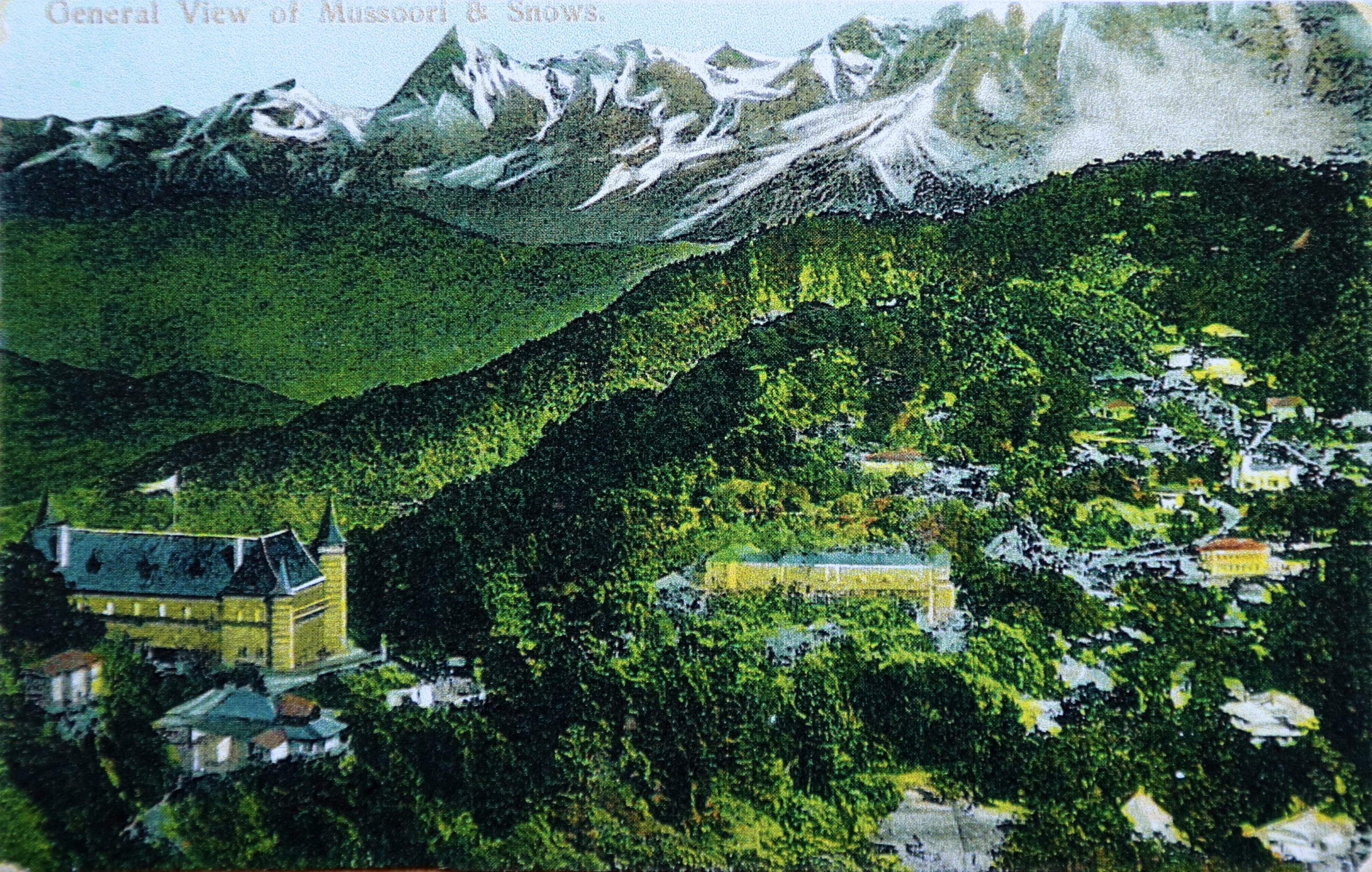
Our magic mountain is a mere nineteen square miles – give or take. This is where I was born; this is where I grew up and this is where I have spent a lifetime.
In 1838, when Fanny Parks wrote about this hill station it was still in its teens. Feeling flippant, she plays a prank on one of her men accompanying her. asking him to gather stinging nettles. He grabs one, and yells: ‘It has stung me; it’s a scorpion plant!’
Twenty years later from Australia, came John Lang, who left us exaggerated accounts of his times, He eventually came to rest on a knoll in the Camel’s Back Cemetery.

Then in 1936, Lowell Thomas in, Land of the Black Pagoda, gives us that famous quote: ‘There is a hotel in Mussoorie where they ring a separation bell at dawn so that the pious may say their prayers and the impious go back to their own beds!’
My forebears often spoke of their roots in the Garhwal Himalaya; the journey of his patriarchs from the little village of Sail in the border district of Chamoli has now become a part of me.
For forty long years, I have wandered through these hills of home, always wanting to do a book on Garhwal. That quest is best explained by a Zen story. Two monks are returning to their monastery. Arriving at a riverbank, they see a woman in all her finery wishing to get across. What can they do? Celibate monks are not supposed to touch a woman. Impulsively, one of them picks her up, slings her across his shoulder, crosses the river, puts her down and carries on.
In the middle of the night, the other monk, still fuming, awakens the other: ‘Horrid man! You’re not a monk! You touched a woman back there!’
‘What woman?’ he blinks. ‘That one? I left her there, but you are still carrying her!’
Often, I find that I am like the bad monk; I have carried some of my books for too long. What can I say about publishing my first book, Days of Wine & Roses in 1992?
It reminds me of the tale in which a writer is greeted by St. Peter.
‘Let me show you hell!’ he says, taking the late lamented to a room where there are rows of writers sweating away, chained to their desks.
Then he takes him to Heaven where the same scene is repeated: rows of writers chained to their desks, scribbling away.
‘What’s the difference!’ he asks.
‘Ah!’ says St. Peter. ‘Up here you get published!’
My next book, A Passage Through India, was a coffee table. It had some images of our great nation. India has been often described as a ‘melting pot’ of races and religions. But to me, it is a glittering mosaic of different languages, faiths and cultures; varying climatic zones; lush greenery and arid desert; rivers and mountains; slick city life and unchanged tribal living. In this book, and in others, I pulled these diverse pieces together to create a beautiful mosaic. Of course, some pieces remain elusive. But then, India too, remains elusive. Hence its eternal fascination.
My broken toys: the jeep with wheels missing; the gollywog without eyes; the rag doll with one leg that can still walk through the memories of my childhood. They bring hope, they bring back lost friends, and bring back to life the love of music long after I thought it had gone.
They have served me well in the past, and I must return the favour. Without them, who am I? No more than an old scribe on an old typewriter.
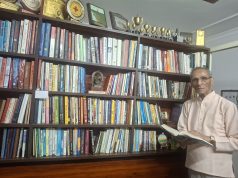
Ganesh Saili, born and home-grown in the hills, belongs to those select few whose words are illustrated by their pictures. Author of two dozen books, some translated into twenty languages, his work has found renown worldwide.