The Books from My Shelves
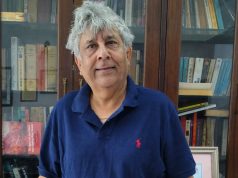
By Dr Vijay Kumar
My journey of inner self-understanding through the wisdom of books began in 1980, soon after I joined BITS Pilani. It began with curiosity: as a teenager of just over fifteen, I wanted to explore for myself the depth and meaning of spirituality. My first serious encounters were with the writings of Jiddu Krishnamurti, which opened a door that, nearly four decades later, I have never quite closed.
Discussions with friends, years of self-study, and live interactive sessions with Vedantic scholars at BITS Pilani, and later, a J Krishnamurti discourse at IIT Bombay in 1985, broadened that initial curiosity into a sustained exploration. Much of this formative learning unfolded during the Jupiterian cycle of 1988-2000, after I joined the Indian Forest Service in 1988 – a fitting coincidence for a period devoted to knowledge, teachers and expansion.
What follows is a selection of ten important books that I happened to read between 1980 and 2004. Each carries with it youthful memories of my university days or the early years of my professional journey.
- The Hindu-Yogi Science of Breath (1904): Yogi Ramacharaka
Publisher: Yogi Publication Society, Chicago
Ramacharaka presents breathing as the meeting point of physiology, prana and disciplined consciousness. Practical exercises link bodily vitality, mental steadiness and spiritual development. Its nature-centred premise is that intelligent living follows universal rhythms. Breath becomes a trainable resource for self-command, resilience and clarity, although its medical claims are best read in their historical context.
My first lesson in conscious breathing: This was the first significant book on breathing techniques and yogic exercises that I encountered at BITS Pilani. It awakened my interest in the scientific basis of Pranayama and showed me how conscious breathing could become a means of balancing the elements of earth, water, fire, air and space (the Panch Tatva) within the body.
- The First and Last Freedom (1954): J Krishnamurti
Publisher: Harper & Brothers, United States; Victor Gollancz, United Kingdom
Krishnamurti examines fear, belief, authority, desire and the division between the observer and the observed. Freedom begins through choiceless awareness, not ideology or gradual self-improvement. Spiritually, truth emerges through direct perception; ethically, justice requires seeing people without inherited prejudice. One of the book’s central paradoxes is that clear action arises from radical attention rather than psychological calculation.
Its lasting influence on me: To observe sensations without attachment is to loosen the grip of ego, cultivate compassion, reduce prejudice and open the way to a more direct understanding of the self. This book had an enormous impact on my rational outlook from the early 1980s onwards.
- Silent Spring (1962): Rachel Carson
Publisher: Houghton Mifflin Company
Carson exposes how indiscriminate pesticide use moves through soil, water, wildlife and human bodies, revealing nature as an interdependent community. She combines scientific evidence with moral imagination and challenges institutional secrecy. The book presents environmental protection as a question of justice across species and generations, while also offering a practical model: document harm, communicate it clearly and seek reform.
A call towards environmental responsibility: The book deepened my belief that earth, water, air, fire and ecological space must be protected through informed collective action. Environmental justice, in this sense, becomes a form of selfless service and a path beyond human-centred ego. Silent Spring strengthened my growing urge to work for environmental protection from the late 1980s onwards.
- Meditation and Mantras (1978): Swami Vishnudevananda
Publisher: OM Lotus Publishing Company
Swami Vishnudevananda offers a structured path through concentration, mantra, japa, meditation, breath regulation and yogic philosophy. The mind is trained through steady practice, ethical preparation and devotion. Spiritual unity softens ego-driven conflict, while regular discipline gradually turns aspiration into habit. Nature appears as an ordered field animated by prana and consciousness.
A companion on the inward journey: The book taught me to harmonise the stability of earth, adaptability of water, discipline of fire, movement of air and spaciousness of awareness, and then to direct the resulting calm towards compassionate service and inward awakening. Along with the works of Swami Vivekananda, it became an important companion in a journey encouraged from childhood by my father.
- The Balanced Scorecard (1996): Robert S. Kaplan and David P. Norton
Publisher: Harvard Business School Press
Kaplan and Norton translate vision into coordinated objectives and measures across financial, customer, internal-process and learning-and-growth perspectives. The framework balances present performance with future capability. Read more broadly, it reminds us that what institutions choose to measure ultimately shapes behaviour. Environmental stewardship, human development and social responsibility must therefore become explicit goals rather than rhetorical additions.
From a bookshelf to a lifelong working companion: I first encountered this book on my father-in-law’s bookshelf in the mid-1990s. Its emphasis on balancing people, planet, purpose, learning and resources stayed with me. Since then, it has become something of a personal, professional and PhD companion, continually reminding me that strategy should reward contribution, responsibility and reflective leadership.
- Tattva Bodha of Sankaracharya (1997 edition): Traditionally attributed to Adi Shankaracharya
Publisher: Central Chinmaya Mission Trust
This introductory Advaita Vedanta text maps the qualifications of a seeker, the bodies and sheaths, the individual self and Brahman. Its central insight is non-dual awareness: beneath changing identities lies one consciousness. This understanding of spiritual equality weakens rigid separations, while discrimination between the permanent and impermanent helps clarify values, priorities and action.
A continuing escort through life: The text encouraged me to see the five elements as changing appearances within one underlying awareness, and to act without selfish attachment while honouring equality and serving the larger whole. For almost three decades, it has remained a continuing companion on my journey through life.
- Development as Freedom (1999): Amartya Sen
Publisher: Alfred A. Knopf, United States; Oxford University Press, United Kingdom and India
Sen redefines development as the expansion of substantive freedoms – the capabilities to live, learn, participate and avoid preventable deprivation. Markets, public services, democracy and social opportunity are judged by their human consequences. Justice is therefore both the goal and a means of development. Policy, in this view, must remove interconnected forms of unfreedom rather than pursue income growth alone.
The freedom that development must protect: For me, Sen’s argument extends naturally to securing clean air, water, land, energy and habitable space. Expanding freedom requires policies rooted in justice, responsibility and an awareness of humanity’s shared interdependence.
- Good Work: When Excellence and Ethics Meet (2001): Howard Gardner, Mihaly Csikszentmihalyi and William Damon
Publisher: Basic Books
The authors ask how professionals can combine excellence, engagement and ethics amid market and institutional pressures. Studies of journalism and genetics show that skill without responsibility can damage society or nature. Justice depends on accountable institutions as well as individual moral agency. Enduring achievement therefore requires personal purpose, professional standards and the common good to remain aligned.
When excellence acquires meaning: The book reinforced for me that professional talent reaches its highest value when placed in the service of society. Excellence must be accompanied by stewardship: protecting nature, upholding justice and recognising that ethical work contributes not only to society but also to one’s own growth.
- The First 90 Days (2003): Michael D. Watkins
Publisher: Harvard Business School Press
Watkins provides a roadmap for leaders entering new roles: accelerate learning, match strategy to the situation, negotiate expectations, secure early wins, align the organisation and build coalitions. Its deeper lesson is one of stewardship: strategic speed should never override fairness, people or institutional purpose. Sustainable leadership begins by observing the environment before attempting to transform it.
A practical companion in leadership: The book taught me to enter transitions by first listening – to people, institutions and the wider environment – before acting. It emphasised fair early wins, self-awareness and service to the institution. Since 2003, it has become something of a soulmate in both my personal and professional journeys.
- Hindu Predictive Astrology (1938): B. V. Raman
Publisher: Raman Publications, Bangalore
Raman systematises classical Jyotisha (planets, houses, yogas, dashas, transits and life themes) into a practical predictive method. Beneath the technique lies a spiritual view of human life within a larger cosmic order. Its deeper lesson is disciplined synthesis rather than reliance on isolated rules; humility, evidence and ethical restraint are particularly important when predictions may influence another person’s choices.
Why it remains special to me: This book has a special place on my shelf because Raman was among my earliest gateways into serious Jyotish in 1988. His writing appealed strongly to the analytical side of my mind. Astrology, I felt, was not to be accepted merely because it was ancient; its principles had to be studied, applied, observed and tested. That spirit of disciplined inquiry shaped my approach from the very beginning.
After nearly four and a half decades, reading and contemplation remain for me a continuing exercise in self-understanding: a way of returning to books, and through them, of reading myself anew at different phases of life.
(Dr Vijay Kumar, PhD, is a retired officer of the Indian Forest Service (1988 batch, Uttarakhand cadre). An alumnus of BITS Pilani, IIT Bombay, Swinburne University (Australia), NLSIU Bangalore and NLU Jodhpur, he holds a Doctorate in Environmental Governance, an MTech in Geotechnical Engineering and an MBA in Strategy & Finance. A Vedic astrologer and Vastu researcher for over 38 years, he studied Jyotish at Bharatiya Vidya Bhavan, New Delhi, and now pursues his calling as a freelance consultant from Dehradun.)