The Books from My Shelves
By M Ramachandran
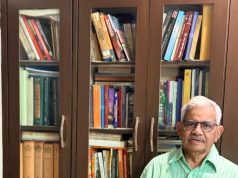
Books no doubt have formed an essential part of my life, while studying and now also. Hailing from Keralam, persons like me grew up under the influence of the highly literate Malayali society. The libraries, which are there in every corner of the state, are indicative of people’s hunger to read as much as possible, be it newspapers, periodicals or books. Years after retirement, when I came back to my city of Kochi, it was very exciting for me to go back to the Public Library which had influenced me considerably during my college days and during preparation for the All India Service (AIS) examination.
During our childhood, academic studies were the most important thing in life. No novels, no other reading. Of course, one got exposed to the lives and messages of Mahatma Gandhi, Rabindranath Tagore, Jawaharlal Nehru, Swami Vivekananda etc. The only extra option or access available in the normal course were weeklies and magazines which carried short stories, poems, some excerpts of novels. It was a great thrill when I could add books like Selected Modern English Essays, Essays by Francis Bacon and the like.
When I was in Dehradun it was one of my keen desires that we should have a State Library befitting the stature of the newly created state. Efforts were initiated and today I am so glad to find that the Doon Library & Research Centre, very devotedly guided by committed persons like Dr BK Joshi, NS Napalchyal, N Ravi Shanker and others is doing so well. This is particularly encouraging the youngsters to take full advantage of the books and facilities there.
It was during my stint in Dehradun at the state headquarters that I got this idea of bringing out a book. The occasion came when the then President of India, Dr APJ Abdul Kalam was scheduling a visit to the city. It struck me that various senior officers of the newly created state had made immense contributions in helping set it up and their efforts and contributions should get recorded for posterity. I could quickly put together the book, ‘Uttaranchal – Ideas That Worked’ and get it released by the intellectual President, Dr Kalam, during his visit. That gave me confidence and that is how I became an author, with twelve books published so far, all mostly on the subject of development and governance. This journey has been inspiring and rewarding and it has also had its lessons. On the one hand what is very critical at the beginning for the writer is how to get a good publisher. Then comes the key question as to how the readers will receive the book.
What motivates you to write?
As I wrote in the preface to my service history book ‘The Mavericks of Mussoorie’, my efforts were fuelled by the encouragement of two eminent persons in public life whom I must give credit to. One is S Jaypal Reddy who was Union Minister for Urban Development and who steadfastly believed that bureaucrats should write. Second is M Venkaiah Naidu, former Vice President of India who, at the launch of my books, vociferously articulated his belief that books were important to share ideas and spark discussions. I am glad this is happening and this trend I believe, is the very essence of our society, much different from various other countries. Books are of value to us.
What is your current reading?
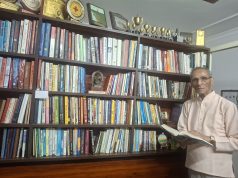
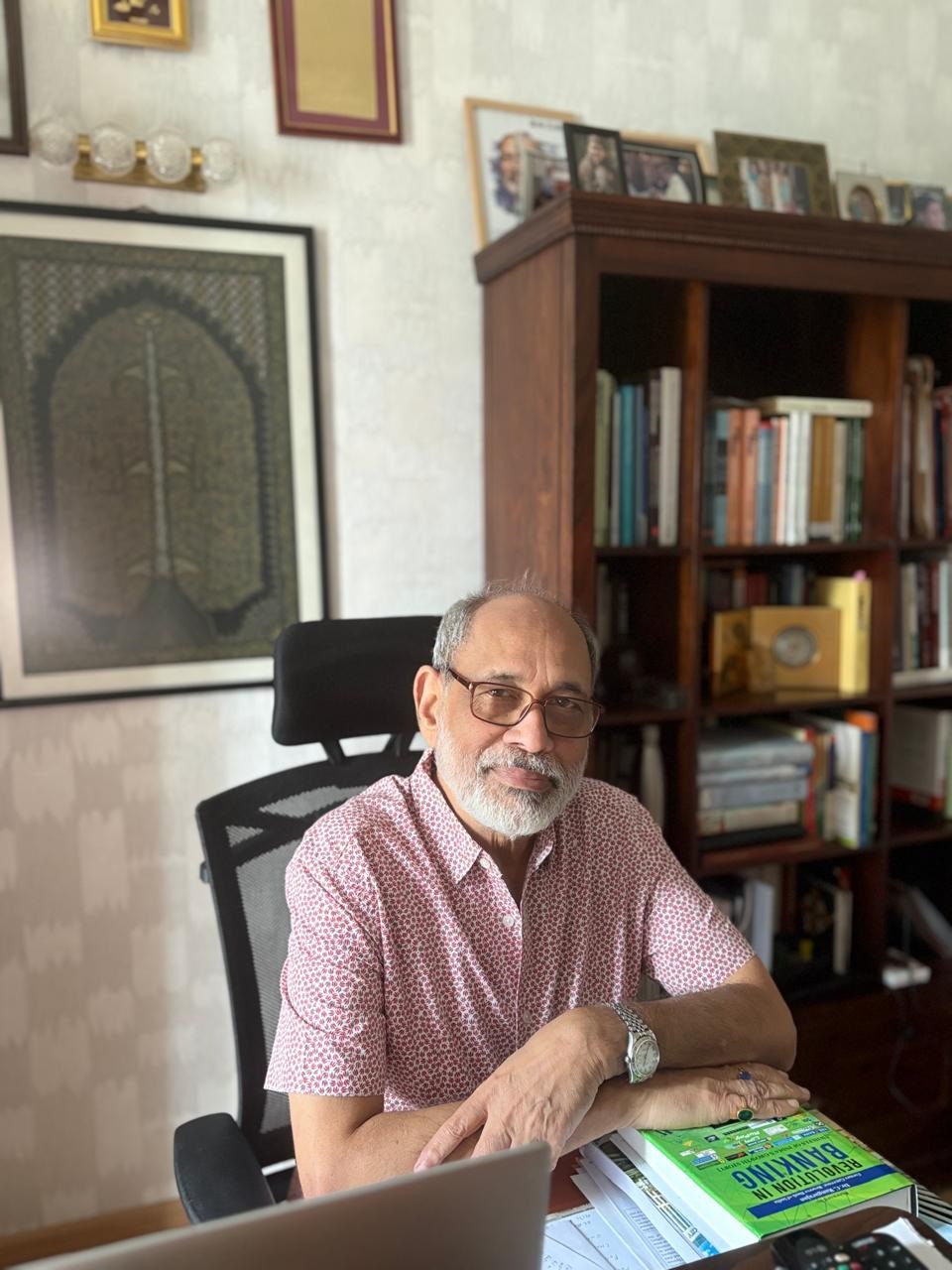
As I said, having worked actively in the urban sector and since I continue to be active in the sector, guiding various activities, my attraction also is towards books broadly in the area of public administration, governance and citizen issues. On my shelf next to me I have favourites like Duvvuri Subba Rao’s Who Moved My Interest Rate, Just A Mercenary, Vinod Rai’s Not Just An Accountant, his recent edited book, When Audit Matters, my other batchmates like Veena S Rao’s The Asuras of Antariksh, Falguni Rajkumar’s Rainbow People, Sujit Banerjee’s Himalayas And Me, Nirmal Bansal’s Revolution in Banking. Two books on Kerala History are for serious reading when one gets into a mood.
In ‘Who Moved My Interest Rate’, Subba Rao talks about his turbulent five years as the Governor of RBI, the challenges he had to face , implications of Monetary Policy changes, his belief that the RBI needs to think global and act local, his occasional skirmishes with the government, the challenges to autonomy which come up and finally discussing how he now misses the authority to move the markets by his spoken word. In his second book, Just A Mercenary, Subba, looking back at his life and career asks himself as to what motivated him. Was it just a sense of duty, an obligation to do your best just because you are getting paid for it or was he driven by a higher calling – the need to give back to society for all that he had received. So he asks ‘was I just a mercenary or was I more’. It is fascinating to read this book to find his answer to the introspection.
Vinod Rai’s book, Not Just An Accountant is as he calls it, the Diary of the Nation’s Conscience Keeper. This former C & AG has dealt in detail with various case studies and these portray a diversity in failures, as he argues. He believes public accountability is indeed the essence of democracy and asks why do we repeat the same mistakes, why do we allow a small segment of less than one percent constituting the elected and selected public servants to be rulers while the rest ninety nine percent remain ruled. In his recently edited book ‘When Audit Matters’, Vinod argues that the positive contribution of public audit to good governance is something which is not easily acknowledged. He emphasises the point that it has to be recognised that auditors are seeking to suggest performance improvements.
Veena Rao’s book is a riveting novel which goes into the details of how deals are made out of the taxpayers’ money while building a satellite, how they mature and get exposed and finally also get buried, again at further cost to taxpayers. Falguni Rajkumar, in his book on Reinventing North East India, draws attention to the basic differences between the North-Easterners and other Indians in the country which he says is the key to successful communication and which will also provide the reasons of the North-Easterners’ reluctance and inability to assimilate into the national mainstream inhibiting fraternisation. For Sujit Banerjee, the pristine beauty of the Himalayas never fails to inspire him. Settled in Ramgarh, he finds helping the people in the area has given a new purpose to his life. Nirmal Bansal in his co-authored book reflects on the transformative journey of Indian banking, also offering a forward looking analysis of the sector.
Two other publications which are of great value and which are also placed next to me are Heaven on Earth, The Universe of Kerala’s Guruvayur Temple and Temples of Garhwal. The book on Guruvayur in Keralam is by Pepita Seth, born in London, who kept coming to Kerala and spent seven years in research and documentation of this famous temple. This research work portrays all aspects of life within the temple, chronicles the temple’s myth and history and provides a one of its kind description of the temple’s origins as well as its various rituals. Temples of Garhwal is a unique publication having more than one hundred sketches of various temples drawn by the great artist, Rathin Mitra who did it sitting at each of the venues.
‘Vision for a Resilient Urban India’ which explores the key question today as to how can cities become more resilient and inclusive amidst rapid urban transformation and development aspirations and ‘India’s Urban Transformation’ which brings together views of experts about shaping a shared vision for our urban transformation, are the very recent additions on my table.
Since I now chair the Kochi International Centre, remaining in touch with authors and books remains a priority in order to organise book discussions and workshops. Before I conclude, I must say the variety of newspapers, magazines, and professional articles which keep coming every day as part of the digital library has drastically changed the approach to knowledge enhancement. But I am in that category where a printed publication in hand is of utmost value.
And finally to the question my good friends ask me, as to when my next book is expected, my response is – ‘yes, I am at it’.
(Dr M Ramachandran is a retired IAS officer who was Chief Secretary Uttarakhand and then Secretary to Government of India in the Ministry of Urban Development)