Garhwal Post Bureau
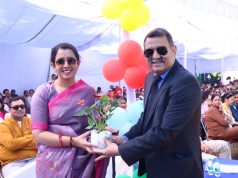
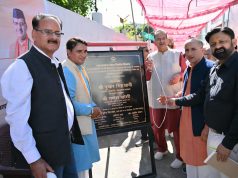
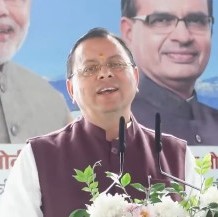
Dehradun, 30 Oct: Chief Minister Pushkar Singh Dhami today participated in the PM-Kisan Utsav Diwas programme at the Survey Auditorium in Hathibarkala, Dehradun, as Prime Minister Narendra Modi released the 24th instalment of the Pradhan Mantri Kisan Samman Nidhi (PM-Kisan) scheme from Banaskantha in Gujarat. Under the latest instalment, an amount of Rs 18,690 crores was transferred through Direct Benefit Transfer (DBT) to the bank accounts of more than 9.34 crore farmers across the country. In Uttarakhand, more than 8.08 lakh beneficiary farmers received Rs 161.96 crores under the scheme.
Congratulating the beneficiaries, Dhami thanked PM Modi and Union Agriculture Minister Shivraj Singh Chouhan, describing the PM-Kisan scheme as a major initiative providing direct financial assistance to farmers. He said that while around four lakh farmers in Uttarakhand benefited when the first instalment was released in 2019, the number of beneficiaries in the state has now crossed eight lakhs.
The CM also noted that the farmers play a crucial role in ensuring the nation’s food security and make a significant contribution to the economy through their hard work. He noted that the Central Government has been implementing several schemes for the welfare, security and prosperity of farmers. Referring to the Pradhan Mantri Fasal Bima Yojana, he said farmers are being provided financial protection against crop losses caused by natural calamities, while the Soil Health Card Scheme is helping them adopt cultivation practices suited to soil conditions. He added that natural farming, modern agricultural technologies and improved irrigation facilities are also being promoted.
Dhami said the state government is continuously working to enhance farmers’ income and make agriculture more profitable. Irrigation through canals has been made completely free in Uttarakhand, while Rs 200 crore has been earmarked in the budget to support initiatives aimed at increasing farmers’ income. He said more than 350 modern polyhouses have been established in the state with an investment of about Rs 115 crores, boosting protected cultivation.
Highlighting the challenges of rain-fed farming in hill areas, he said the state government has approved the Uttarakhand Climate Responsive Rain-Fed Farming Project at a cost of Rs 1,000 crore to make agriculture more resilient and sustainable in changing climatic conditions.
He further said efforts are being made to ensure better returns for farmers and reduce post-harvest losses through the development of cold chains, cold storage facilities, controlled atmosphere storage and food processing infrastructure. Under the Mehak Kranti Policy, seven Aroma Valleys are being developed and aromatic crop cultivation is being promoted on 23,000 hectares.
Dhami said the state government has provided Rs 1,100 crore in the supplementary budget for the procurement of paddy and wheat. Special emphasis is also being given to hill agriculture, food processing, cooperatives, fisheries and beekeeping to create additional livelihood opportunities and strengthen the rural economy. He urged farmers to adopt modern technologies and scientific farming practices while making full use of government schemes, reiterating the government’s commitment to farmers’ welfare and rural prosperity.
Agriculture Minister Ganesh Joshi said the PM-Kisan scheme has played an important role in meeting the agricultural needs of farmers. He added that the state government is also encouraging the cultivation of aromatic and medicinal crops such as lavender and dandelion in hill areas to increase farmers’ income and generate employment opportunities. He also thanked the Chief Minister for deciding to provide additional assistance to disaster-affected farmers over and above the prescribed disaster relief support.
Among those present on this occasion were Doiwala MLA Brij Bhushan Gairola, Uttarakhand State Farmers Commission Chairman Rajendra Singh Chaudhary, Pratap Singh Panwar, Jyoti Kotia, Agriculture Secretary Dr SN Pandey, Director General Agriculture and Horticulture, Dr Anand Srivastava and a large number of farmers.