 By Ganesh Saili
‘There is only one thing you should not waste in life, and that’s life itself,’ said Virginia Woolf.
This loss is irreparable, but this journey is inevitable, too.
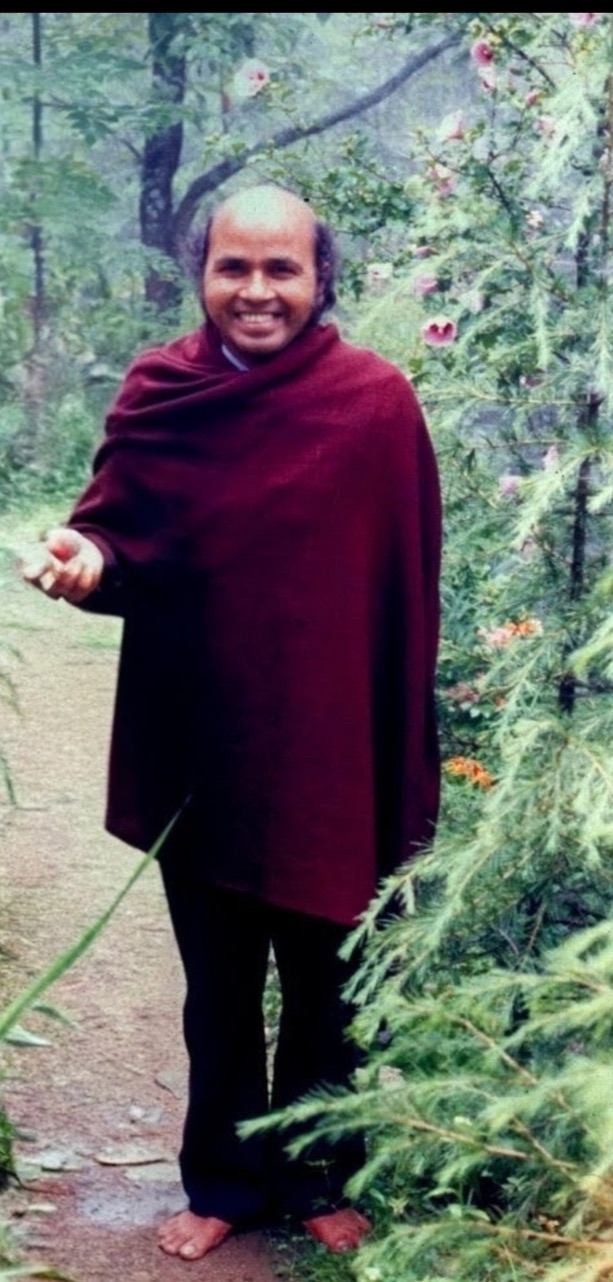
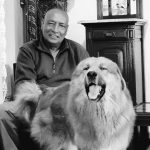
Sudhakar Misra was the son of Alak Prakash Misra, a village vaid or herbalist; his mother was a refugee from Burma. He grew up in Mandawar, district Bijnor in Uttar Pradesh, the middle of three brothers and a sister. The eldest, Prabhakar, was the Director of the Indian Photo Interpretation Institute; he followed his children to the United States, where he passed away a couple of years ago. The youngest, Kusmakar, developed schizophrenia and was boarded out of the Indian Air Force where he had been an airman in the 1960s. His little sister, Sarita, married a young Pilot Officer, Muttuswamy. Their life began in Connaught Castle Hotel off the Mall Road in Mussoorie.
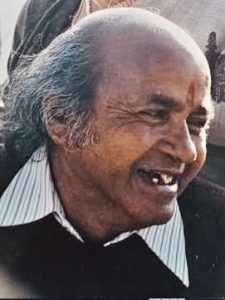
Pic courtesy: Brig.Manu Misra (retd)
‘Chance rather than choice has always played an important part in my life,’ Sudhakar said to me once. It saw him board a bus in Khatauli; a fellow traveller was curious and sucked up to him to whom he paid no attention. Intrigued, the man blurted: ‘Aren’t you a Block Development Officer?’
‘No! I’m not!’ said Misra.
‘Then you must be an ADO (Assistant Block Development Officer)’, the man persisted.
‘Who are you, then?’ he demanded irritably.
‘I’m a teacher!’ said Sudhakar, adding, ‘I teach at the Dalchand College!’
The man’s tone changed. ‘You’re just a master in Dalu’s school?’ he spat in disgust. ‘Does he manage to pay you a salary?’
Why was a mere teacher sitting in the Upper-class chit-chatting with his wife? The fellow was hopping mad. Their cardinal sin was that the two lovebirds, newly married, were taking with each other in public! The self-appointed enforcer of public decency was outraged beyond belief.
‘Oh! The dark patches that still stalk the land!’ shrugged Misra.
Yet he effortlessly straddled the gap between the two worlds, comfortable living in both, so far apart, so different from each other.
‘At times you don’t realize how good the old days were until they are gone. Old roads, and especially the old paths, have so much to offer in our sped-up times!’ he said.
When I posted the news about his cremation in Nalapani, it attracted posts from his old students from all over. For instance, Padam Vir Singh IAS, who was the Director of the Lal Bahadur Academy of Administration, now living in retirement in the Doon, had this to say: ‘A true friend, philosopher and guide and a loving person. Will miss him greatly. I used to always compare him to the best at Stephens and MIT where I happened to study. I personally found him to be the best.’
Shivani Tripathi, a girl who grew up in Mussoorie, says: ‘It is difficult to put into words the loss of someone who was so much more than a professor to me. Sir was a mentor, a guide, a dear friend and the person I would turn to whenever I needed intellectual guidance or a thoughtful perspective. A legacy of thought, wisdom and inspiration. Mr Misra was an institution in Mussoorie, an iconic teacher in the truest sense. He had a world of wisdom to share with anyone who cared to ask, and the most infectious sense of humour, with a Sufi’s laughter that seemed to echo across the hills. I can still picture him walking up and down the hills with his cloth jhola, never missing an opportunity to hop onto a passing scooter or motorbike for a lift. He was a character, a storyteller, a teacher, and a piece of Mussoorie’s soul.’
I once asked him to explain the adage that a real teacher is one who combines the qualities of a saint, a cook, a water-carrier, and a khaar?
I remain grateful to him for straightening that one out for me. ‘Do you know what a khaar is? A donkey! To be a good teacher you must also carry the weight of your pupil’s ignorance!’
Sudhakar Misra was truly a phenomenon. Goodbye, my friend! I, and all who knew you, shall miss you – until we meet again.
Ganesh Saili, born and home-grown in the hills, belongs to those select few whose words are illustrated by their pictures. Author of two dozen books, some translated into twenty languages, his work has found renown worldwide.